Personal injury lawsuits can be incredibly daunting to file.
No one has ever walked into your shoes, and a majority of people haven’t ever stepped foot in the courthouse either. The upside? If you know your rights and responsibilities early on, it can make all the difference to your case.
The other thing you need to know…
When there are 39.5 million people that sustain a personal injury that needs medical treatment every year in the United States alone, chances are you aren’t the first person this has happened to. Fortunately for you and me, the legal process exists to help victims like us to recover from our losses.
What you’ll discover:
- Understanding Your Rights After an Injury
- The Essential Steps to Filing Your Claim
- Building a Strong Case
- What to Expect During the Process
Understanding Your Rights After an Injury
Personal injury cases are designed to protect you and I if we have been hurt as a result of someone else’s negligence.
It may be a car accident, a slip and fall, or a workplace injury – your rights are there to protect you.
The first thing to understand is that the key to any personal injury claim is negligence on the part of the defendant. You need to show that your injury was caused by another party’s carelessness, which is why knowing your rights is so important. Filing your claim is going to take a qualified personal injury attorney, and you’re going to want one on your side as soon as possible to protect your interests and make sure that all important deadlines are met.
Simple enough, right?
Well, here’s something else you should know…
Only about 5% of personal injury claims are heard in front of a judge or jury in a courtroom setting. The rest are either dismissed or settled before trial, meaning that the attorney’s skills at negotiation will be just as important as their ability to stand in front of a courtroom and argue your case.
Step 1: Get Medical Care Immediately
This one is a no-brainer.
If you have sustained an injury and it needs medical attention, then by all means see a doctor. This not only makes sure you are protected and taking care of your injuries, but it also establishes an official record that will support your claim.
Don’t wait and hope that your injury will heal. Some injuries have no immediate symptoms, but they still need to be treated. Don’t take the risk with your health and your case.
Insurance companies will try and downplay your injuries if you didn’t go see a doctor in a timely manner.
Step 2: Document Everything
Documentation is key.
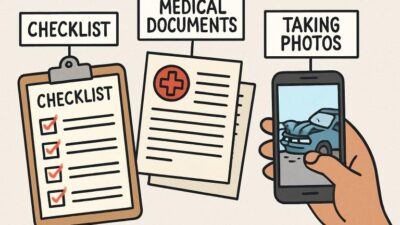
If you have suffered an injury that wasn’t self-inflicted, then you will need evidence to support your claim. This is going to mean gathering up photos of the incident, your injuries, and property damage. You will also want to contact information for any witnesses to the event. Keep any receipts for medical bills as well.
This may be a pain, but you will need evidence to support your case.
- Take photos and videos of the incident
- Get names and phone numbers of witnesses
- Keep copies of all medical records and bills
- Save information on lost wages and time off work
- Document any communications with insurance companies
This all becomes evidence that will help establish your case, so be diligent.
Step 3: Reporting the Incident
This one may not be necessary in every case.
If you were in a car accident then you will need to report this to the police. If it was a work injury then you will want to report this to your boss. If you fell and injured yourself on a public or private property, then you should contact the owner or manager.
There are different reports for different injuries. They all, however, provide an official statement that the incident happened and creates an exact timestamp for when the incident occurred.
Don’t get too hung up on whether this is a necessary or not. If in doubt then better safe than sorry.
Step 4: Avoid Common Mistakes
Talking too much. Talking to insurance adjusters without legal representation, in particular. Insurance companies are not your friends, and their only goal is to pay out as little money as possible.
Don’t fall into these common traps that victims make.
- Don’t give recorded statements to insurance companies
- Don’t post about your accident on social media
- Don’t accept early settlement offers
- Don’t sign documents without attorney review
- Don’t miss important filing deadlines
The problem is that an early settlement offer may seem like a lot, but the chances are that this is much less than your claim is actually worth.
Step 5: Legal Representation
And this is the step that ties everything together.
The attorney will be able to evaluate your case, lay out your options, and handle all the tedious paperwork that is required. They will be familiar with your state’s statute of limitations, making sure that your case isn’t thrown out on a technicality.
Most injury lawyers will work on a contingency basis, which means that they don’t get paid unless you win your case. This means that there is no upfront fee or hidden costs that most people are concerned about.
Step 6: Filing the Lawsuit
The last step, if all else fails, is to file a personal injury lawsuit against the party that has caused you your injuries.
The lawyer will prepare the paperwork for a complaint that will be filed with the court, which will lay out the allegations against the defendant and list the damages that you are suing them for. The defendant then has a set period of time in which to file a response to the complaint. The discovery process then starts, which is when each party can request information and evidence from the other side.
The whole thing can take a while.
The average tort lawsuit lasts around 23 months. Motor vehicle accidents tend to be over slightly quicker at 20 months, whereas medical malpractice cases can take longer than 31 months.
Patience is a virtue.
Building Your Strongest Case
The strength of your case is going to be determined by several factors working in tandem.
Good medical evidence that shows your injuries and how they were caused. Proof that the defendant’s negligence is what lead to your harm. The proper calculation of damages, including medical expenses, lost wages, and your pain and suffering.
Your attorney is going to be able to help you calculate what you could be owed and help you prepare for depositions and trial testimony should your case get to this point.
Wrapping Things Up
Filing a personal injury lawsuit is about knowing your rights and taking action in the proper order.
The steps of getting medical care and documentation after your injury are important and necessary. But don’t let your excitement to get the process started cause you to make some common mistakes. Consult an experienced attorney as soon as possible after the incident and let them guide you.
The whole process may feel like it’s moving at a snail’s pace, but having the right legal representation can be the difference between a fair settlement and settling for less.
To recap quickly:
- Get medical treatment as soon as you are injured
- Document everything from your accident
- Report the incident to proper authorities
- Don’t talk to insurance companies without a lawyer
- Consult an attorney early in the process
- Be patient, these things take time.
Know your rights and protect them. Filing a lawsuit is about understanding your responsibilities as well, and doing the things necessary to put yourself in the best possible position to get the compensation that you deserve.