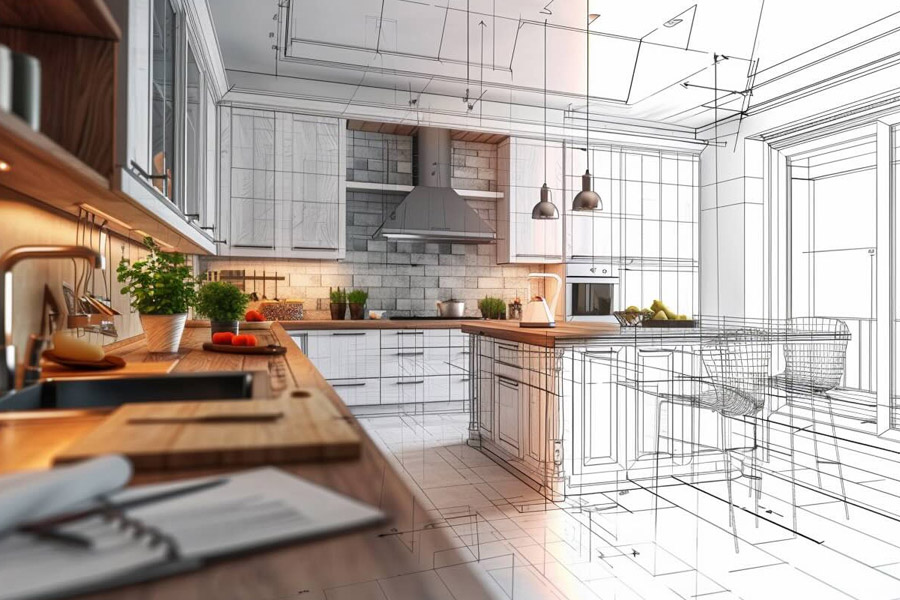
Start with a Vision You Can Feel
Every great kitchen begins as a feeling, observes leading property management company, pdtmanagement.com. Maybe it’s the frustration of a sticky drawer, a dim corner where breakfast goes to sulk, or a fridge jammed into a tight spot like it took the last seat on a crowded bus. Under those little annoyances is a dream: a kitchen that flows, glows, and brings people close. Sketch it. Jot down the moods you want. Are you after calm and minimal, or lively and social? Don’t worry about perfection yet. In this early stage, emotion is the fuel and clarity comes later.
Budget: Build the Guardrails
A budget is less buzz-kill and more boundary—it keeps your imagination in play but on a court you can actually win on. Typical ranges vary: light refreshes might land around the mid five figures, while full transformations can rise significantly depending on size, materials, and complexity.
Break it into sensible buckets:
- Cabinetry: 30–40%
- Appliances: 15–20%
- Benchtops, splashback, and flooring: 20–25%
- Labor, plumbing, and electrical: 20–30%
- Contingency buffer: 10–15% (you’ll almost certainly use this)
This structure makes trade-offs visible. If you fall in love with stone, maybe you dial back on high-cost hardware. It’s a balancing act, not a sacrifice.
Layout: Flow, Zones, and Ergonomics
Design starts with physics and movement. The classic work triangle (fridge, sink, cooktop) still shines, but modern kitchens thrive on zones—prep, cook, clean, and store—so everything happens in a natural rhythm.
Think like a choreographer:
- Traffic flow: Keep walkways clear and separate from the main prep lane.
- Proximity: Dishwasher near sink; trash and recycling close to prep; pantry near fridge.
- Clearances: Aim for at least 36 inches (about 900 mm) in primary paths and comfortable space around islands.
- Landing zones: Leave counter space beside the fridge and cooktop for unloading and plating.
Picture yourself chopping on the island, pivoting to rinse, then sliding a tray into the oven—all without a single awkward detour. That’s the layout working quietly in your favor.
Lighting and Electrical: Layered Light and Smart Power
Lighting can make the same kitchen feel either flat or cinematic. Use layers:
- Ambient: Ceiling fixtures or recessed LEDs for overall brightness.
- Task: Under-cabinet lighting and focused pendants over benches.
- Accent: Wall sconces or toe-kick lighting for depth and mood.
A friendly, natural look is achieved with warm-to-neutral (2700–3000K) colour temperature. Outlets should be ample and well-planned like storage. Place power near prep areas, in an appliance garage, or in a walk-in pantry. A licensed electrician can install dedicated circuits, GFCI outlets near sinks and dimmers for ambience. Avoid clunky fixes with smart locations, safe loads, and clear switch lines.
Storage: The Silent Genius
Storage isn’t about more; it’s about smarter. Drawers bring contents to you. Pull-outs stop the “socks in the dryer” phenomenon of lost spices. Corner solutions reclaim dark, forgotten zones, and vertical trays tame baking sheets and cutting boards.
Tailor it to your life:
- Coffee lover: A powered nook behind doors for the espresso ritual.
- Bulk shopper: Deep, wide drawers with dividers for pantry goods.
- Minimalist: Flat fronts and integrated appliances to preserve calm lines.
- Sustainability-minded: Built-in bins for waste separation and compost.
When every tool has a home, the kitchen turns from stage to symphony.
Style and Materials: Personality with Longevity
This is where texture, tone, and touch take center stage. Stone benchtops bring durability and presence; timber adds warmth. Matte surfaces whisper sophistication; gloss bounces light for a brighter feel. Mixing materials—like timber cabinetry with quartz tops and brushed metallic accents—creates a layered, lived-in rhythm.
Design for the long game:
- Cabinets: Durable finishes, well-made hinges and glides, and door styles that won’t age overnight.
- Benchtops: Quartz is low-maintenance; natural stone is beautiful but may require sealing.
- Splashbacks: Texture or subtle pattern can elevate a simple palette.
- Hardware and tapware: Think of them as jewelry—small pieces, big personality.
Trends are fun, but timeless forms, quiet neutrals, and quality details make your kitchen feel fresh for years.
Appliances: Function First, Form Right Behind
Appliances shape the design more than many expect. Induction may need specific electrical capacity; a French-door fridge can drive cabinet sizing; a powerful cooktop demands proper ventilation.
Make smart choices:
- Cooking: If you cook daily, invest in reliability and performance. Induction brings speed and safety; gas offers familiarity and flame control.
- Ventilation: Choose a hood with adequate capture area and airflow for your cooktop.
- Refrigeration: Counter-depth models keep lines clean; measure clearances for doors and walkways.
- Efficiency: Energy-smart appliances save on bills and reduce environmental impact.
Function leads, aesthetics follow—and together they make the kitchen hum.
Pros and Project Management: Worth Their Weight
Kitchens combine plumbing, electricity, carpentry, and design. Professionals anticipate and address surprises by aligning structure and style. Designers aid with layout and finishing, builders manage timetables and trades, and qualified pros ensure safety and compliance.
Expect a clear sequence:
- Design, measure, and approvals
- Ordering materials (lead times matter)
- Demo and rough-in for plumbing/electrical
- Walls, paint, and flooring
- Cabinet install
- Benchtop templating and installation
- Appliances, splashback, and hardware
- Punch list and fine-tuning
Good management turns chaos into choreography.
Timeline and the Temporary Kitchen
From design to installation, most projects take 8-12 weeks, with special elements or shipment delays adding time. Plan a microwave, electric kettle, toaster oven, and small prep table for temporary use. Plates and cutlery are placed in bins and baskets for easy cleanup. Simplify for a while to enjoy the grand unveiling.
The Finishing Touches
Small details make your room yours. Brushed brass or blackened steel handles. A light, comfortable tap that softens the scene. Pendants for the island, bar stools that fit, and a splashback with texture for quiet joy. Paint sheen and lighting temperature may transform a kitchen from new to personal.
FAQ
What’s a realistic kitchen renovation budget?
Most homeowners should plan for a mid five-figure investment, with full remodels rising based on size, materials, and complexity.
How long does a kitchen remodel usually take?
Eight to twelve weeks is typical from design to install, with custom cabinetry or delays adding time.
Is the work triangle still relevant?
Yes, but zones often suit modern living better—prep, cook, clean, and store mapped for smooth movement.
Quartz or natural stone for benchtops?
Quartz delivers low maintenance and consistency; natural stone brings unique character but needs more care.
Are drawers better than shelves in base cabinets?
Drawers improve access and visibility, reducing the “back-of-the-cupboard” problem.
Do I need permits?
Usually for electrical, plumbing, or structural changes—check local requirements and plan ahead.
Can I keep cooking during the renovation?
With a simple temporary setup you can handle basics, but expect some disruption.
Is induction worth the upgrade?
If you value speed, safety, and easy cleanup, induction is a strong choice provided your electrical supports it.
How much lighting should I plan?
Use three layers—ambient, task, and accent—with dimmers and warm-to-neutral temperatures for comfort.
Do I need a designer?
A designer streamlines decisions, optimizes layout, and helps avoid costly mistakes, especially in complex projects.