Key Takeaways
- Ribbon width should fit the size, purpose, and viewing distance of the project.
- Texture affects how ribbon looks, feels, folds, ties, and holds its shape.
- Color is most effective when it supports the larger palette instead of competing with it.
- Structured ribbon is ideal for defined bows, while soft ribbon works better for draping and movement.
- Testing a short piece before cutting the final length can prevent waste and improve the result.
Why Ribbon Choice Matters More Than It Seems
A ribbon may be a small part of a finished project, but it can change the entire impression. A narrow velvet accent can make a simple card feel intentional. A wide bow can give a plain package presence. The right material can also bring together a wreath, table setting, floral arrangement, or handmade gift without overwhelming the main design.
Whether you are shopping locally through a craft ribbon and supplies store near Salt Lake City or working from a collection you already have, start by thinking beyond color alone. Ribbon has long been used for tying, ornamenting, clothing, packaging, and decoration, and its wide range of materials makes it useful for both practical and decorative projects. Learn more about its origins and uses in this overview of ribbon textile history.
The best ribbon is not automatically the shiniest, widest, or most expensive option. It is the one that fits the project’s scale, behaves the way you need it to, and adds the right amount of visual contrast. Before choosing, consider where the project will be displayed, how closely it will be viewed, and whether the ribbon needs to tie, drape, frame, cover, or stand out.
Start With the Project’s Purpose
Ask one straightforward question before selecting a spool: What does the ribbon need to do? That answer will guide nearly every other choice.
- Hold a bow: Choose a ribbon with body and enough structure to form loops that stay in place.
- Add a narrow accent: Pick a slim ribbon that will complement the design without hiding it.
- Create movement: Select a soft, flexible material that drapes naturally around branches, fabric, or package edges.
- Finish an edge: Use a durable ribbon with clean, stable edges for sewing, binding, or trim work.
- Make a statement: Consider a wider ribbon, bold pattern, rich texture, or high-contrast color.
Choosing the Right Ribbon Width
Width determines visual weight. A ribbon that is too wide can swallow a small box or card, while one that is too narrow may disappear on a large wreath or display. As a practical rule, the smaller the item, the slimmer the ribbon should usually be.
- Very narrow ribbon: Best for gift tags, jewelry packaging, stationery, miniature crafts, and delicate paper details.
- Medium-width ribbon: A versatile choice for everyday gift wrapping, hair accessories, cards, and simple bows.
- Wide ribbon: Useful for larger packages, chair accents, wreaths, mantel displays, and decorative arrangements.
- Extra-wide ribbon: Best for oversized bows, event décor, and projects intended to be seen from across a room.
Before cutting, hold the ribbon against the project and step back a few feet. This simple comparison reveals whether the proportion feels balanced far better than viewing the ribbon alone on its spool.
How Texture Changes the Final Look
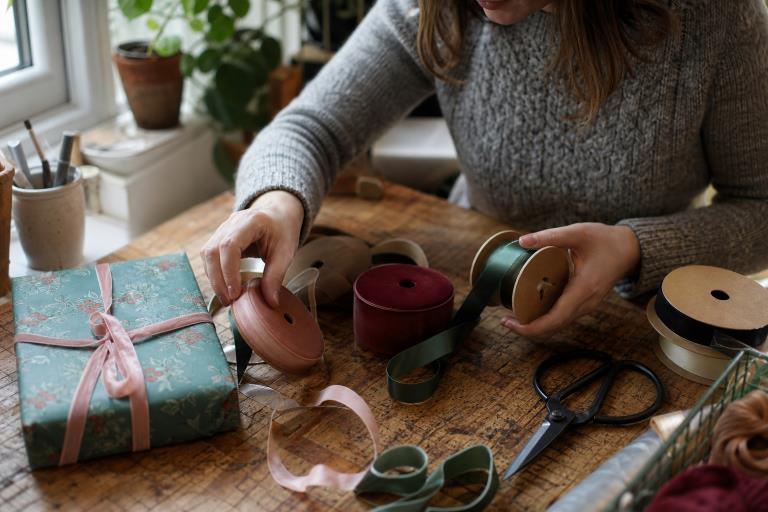
Texture creates mood as well as function. Smooth satin has a polished finish and reflects more light, making it useful for formal wrapping and crisp decorative details. Matte ribbon feels quieter and more relaxed, while ribbed grosgrain adds visible structure and holds a tidy knot well.
- Sheer ribbon: Creates a light, airy layer and works well over solid materials.
- Velvet or velvety ribbon: Adds softness, depth, and a rich seasonal appearance.
- Natural-fiber ribbon: Supports rustic, handmade, and casual styles.
- Wired ribbon: Helps bows and loops hold a fuller, more sculpted shape.
Let texture support the project rather than compete with it. A patterned package, busy floral arrangement, or detailed scrapbook page often benefits from a simple ribbon. A plain kraft box, solid vase, or neutral wreath can carry a more textured choice.
Match Ribbon to the Design Style
- Minimal: Use a solid color, clean edge, and simple knot or flat band.
- Traditional: Choose familiar seasonal shades, classic patterns, or a fuller bow.
- Rustic: Try matte finishes, natural fibers, soft neutrals, and gently uneven textures.
- Modern: Use one bold color, strong contrast, geometric pattern, or a simple oversized detail.
- Romantic: Consider soft colors, flowing materials, delicate trim, and layered loops.
- Playful: Mix bright colors, small prints, and varied widths with a clear unifying shade.
Using Color Without Making a Project Feel Busy
Start with a color already present in the project. Choose a closely related shade for a subtle layered effect, or use contrast when the ribbon should become a focal point. For example, deep green can add definition to warm neutral wrapping, a soft blue can freshen a pale surface, and a dark ribbon can ground a light floral arrangement.
Repeat the ribbon color somewhere else, such as on a tag, ornament, place card, or small floral detail. This repetition helps the design feel connected. If the project already includes a strong print, limit additional bold colors and choose a solid ribbon instead.
Layering Two or More Ribbons
Layered ribbon adds depth without requiring a complicated arrangement. Pair a wide base ribbon with a narrower accent, or combine a matte material with a subtle sheen. Keep one ribbon solid if the other has a prominent pattern. The most successful combinations share at least one feature, such as color family, width relationship, or texture level.
Current décor ideas also show how tactile materials can make a simple craft feel more complete. This ribbon garland project is a useful reminder that texture and repetition can elevate even a straightforward decorative element. Use trends as inspiration, but prioritize proportion and color balance over copying a look exactly.
Ribbon Ideas for Common Projects
Gift Wrapping
Match the ribbon width to the box size. Use a firmer material for large bows and a softer, narrower trim for small or delicate packages. Avoid bulky knots when the gift needs to be stacked or shipped.
Home Décor
Choose colors that work with nearby wood tones, fabrics, and wall colors. Wider ribbon reads better from across a room, while repeating one ribbon color in a few small places creates a pulled-together result.
Cards, Paper Crafts, and Wreaths
For paper projects, use narrow ribbon to avoid excess bulk and make sure the adhesive suits the surface. For wreaths and seasonal displays, use structured ribbon that can hold loops. Place the largest bow where it remains visible and does not block other focal details.
A Simple Five-Step Selection Method
- Measure the project: Note its size and how far away it will be viewed.
- Define the job: Decide whether the ribbon will tie, drape, frame, cover, or decorate.
- Choose texture: Select soft, sheer, smooth, ribbed, or firm ribbon based on the desired effect.
- Build the color plan: Match, complement, or contrast with the main palette.
- Make a test: Create a small bow or sample before committing to the full length.
Common Mistakes to Avoid
- Choosing ribbon by color alone.
- Using a wide ribbon on a very small project.
- Combining multiple bold patterns without a visual break.
- Ignoring how the material behaves when folded, tied, or glued.
- Checking color only under store lighting instead of the project’s actual setting.
- Cutting the final length before testing the design.
Frequently Asked Questions
What ribbon width works best for beginners?
Medium-width ribbon is a flexible starting point because it works for many small and medium projects and is usually easy to tie.
Should the ribbon match the project exactly?
No. A related shade or intentional contrast often adds more depth than an exact match.
How can ribbon edges be kept from fraying?
Use sharp scissors, fabric edge sealant, or gentle heat treatment when appropriate for the material. Always test a small offcut first and use heat carefully.
Conclusion
Choosing ribbon becomes easier when you begin with scale, purpose, texture, and color. A thoughtful width keeps the project balanced, the right texture improves both appearance and handling, and a clear color plan prevents visual clutter. Test a short piece before cutting, then let the ribbon finish the project instead of fighting for attention.