The future of Family Nurse Practice is dynamic and full of opportunity. As patient care models shift and technology rapidly advances, Family Nurse Practitioners (FNPs) are at the forefront, adapting to new responsibilities and emerging trends. For nurses seeking the education and skills to make a real difference in their communities, pursuing an online FNP degree is a crucial step toward meeting the growing demands in healthcare.
In every region, FNPs play a key role in bridging primary care gaps, working in tandem with other healthcare professionals. As the population ages and health systems face increased patient needs, the role of FNPs continues to grow in relevance. These providers are uniquely positioned to deliver patient-centered care that is accessible, innovative, and responsive to diverse needs.
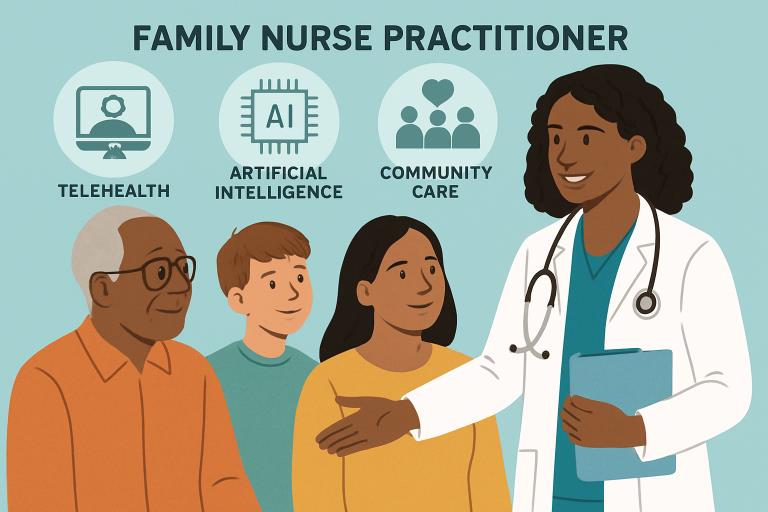
Significant trends are shaping the practice landscape for FNPs: telehealth, emerging technology like artificial intelligence, and a broader focus on preventive, community-based healthcare are driving the profession forward. FNPs are also experiencing expanded autonomy and pathways for specialization, empowering them to have an even greater impact on patient outcomes across a wide range of populations and settings.
Whether leading wellness initiatives, embracing new digital tools, or tackling the country’s mental health challenges, FNPs are demonstrating the agile, compassionate care that today’s health systems require. To understand the drivers behind these changes, it’s helpful to explore projections and emerging best practices in the field. For additional context, the American Medical Association offers resources and research on provider roles in expanding access to care.
Growing Demand for FNPs
The demand for Family Nurse Practitioners is accelerating at an unprecedented rate, driven by rising patient populations, an aging population, and shortages among primary care physicians. According to the U.S. Bureau of Labor Statistics, nurse practitioner jobs are projected to grow nearly 46% by 2031, reflecting one of the fastest-growing career paths in healthcare. This increase highlights the essential role of FNPs, particularly in rural and medically underserved communities where physician shortages are acute.
Expansion of Telehealth Services
The shift to telehealth has transformed how FNPs deliver care. Virtual visits now enable providers to consult with patients from the comfort of their own homes, reducing barriers related to transportation, mobility, and distance. Incorporating telehealth not only broadens patient access but also increases engagement, as patients can maintain continuity of care even in remote or hard-to-reach areas. Telehealth’s flexibility and reach have become indispensable, especially since the COVID-19 pandemic accelerated the necessity for virtual care platforms.
Integration of Artificial Intelligence
Artificial Intelligence (AI) is becoming an integral part of healthcare, and FNPs are tapping into these tools to elevate the care they provide. From streamlining patient data analysis to enabling more precise disease prediction and detection, AI supports FNPs with data-driven insights. These technologies are being utilized to recommend personalized treatment plans, enhance patient monitoring, and minimize care delays. By adopting AI-powered systems, FNPs can dedicate more time to patient interaction and clinical decision-making.
Emphasis on Preventive and Community-Based Care
Preventive care is emerging as a vital component of modern healthcare practice. FNPs are deeply involved in education initiatives, vaccination efforts, and chronic disease management in neighborhoods and local clinics. This emphasis reduces preventable hospitalizations, promotes public health, and empowers individuals to make healthier lifestyle choices. As more health systems prioritize prevention, FNPs continue to take leading roles in advocating and delivering these foundational services.
Increased Autonomy and Full Practice Authority
A significant trend across the country is the extension of full practice authority for FNPs, allowing them to diagnose, treat, and prescribe without mandatory physician oversight in many states. This increase in autonomy enables FNPs to function as primary care providers, independently managing their own patient panels and thereby increasing accessibility for communities that previously faced extended wait times or limited resources. These expanded clinical privileges reinforce the trust and confidence placed in nurse practitioners to deliver holistic, high-quality primary care.
Specialization and Advanced Education
As healthcare becomes increasingly complex, FNPs are turning to advanced certifications and specialty training in areas such as geriatrics, pediatrics, women’s health, and mental health. This specialized expertise enables them to meet the unique needs of patients, offer more targeted treatment options, and contribute to multidisciplinary teams. Ongoing education, at both the graduate and postgraduate levels, empowers nurses to take on leadership, research, and teaching roles, thereby expanding the reach and impact of family nurse practice.
Addressing Mental Health Needs
Mental health is an increasingly critical aspect of primary care. FNPs are uniquely positioned to screen for mental health conditions, provide counseling, initiate medication management, and collaborate with behavioral health specialists. By integrating mental health care with standard family practice, FNPs can provide more comprehensive support to their patients—reducing stigma and gaps in care for those struggling with anxiety, depression, and other concerns.
Embracing Technological Advancements
Technology is central to the ongoing evolution of FNP practice. The adoption of electronic health records (EHRs), remote patient monitoring devices, and innovative medical tools has streamlined workflows across care settings. These developments facilitate seamless communication between patients and care teams, provide more accurate records, and support timely, informed clinical decision-making. FNPs who stay current on these advancements are better equipped to drive operational efficiencies and exceed patient expectations.
As family nurse practitioners rise to meet new healthcare challenges, ongoing education, advocacy, and the ability to leverage technology will be vital in delivering forward-thinking, patient-centered care.