Have you ever looked in a drawer full of cables and wondered which one will power your machine without any trouble?
Using the inappropriate power cord may result in flickering screens, intermittent performance, or even an overheating risk. In many cases, the misunderstanding is caused by poor labelling or a lack of knowledge regarding the names of the cord.
However, the choice of the connector and rating is critical to the safety and reliability. Once equipped with the right knowledge, you can make decisions that will not cause frustration and protect your equipment.
It is very important to have a basic knowledge of the common types of cords, the differences, and their applications.
This article provides a guide on the major types of electrical cords, their practical usages, and how each cord can be applied to various settings and equipment.
1. Piggyback Power Cords: Multiple Device Flexible Solutions
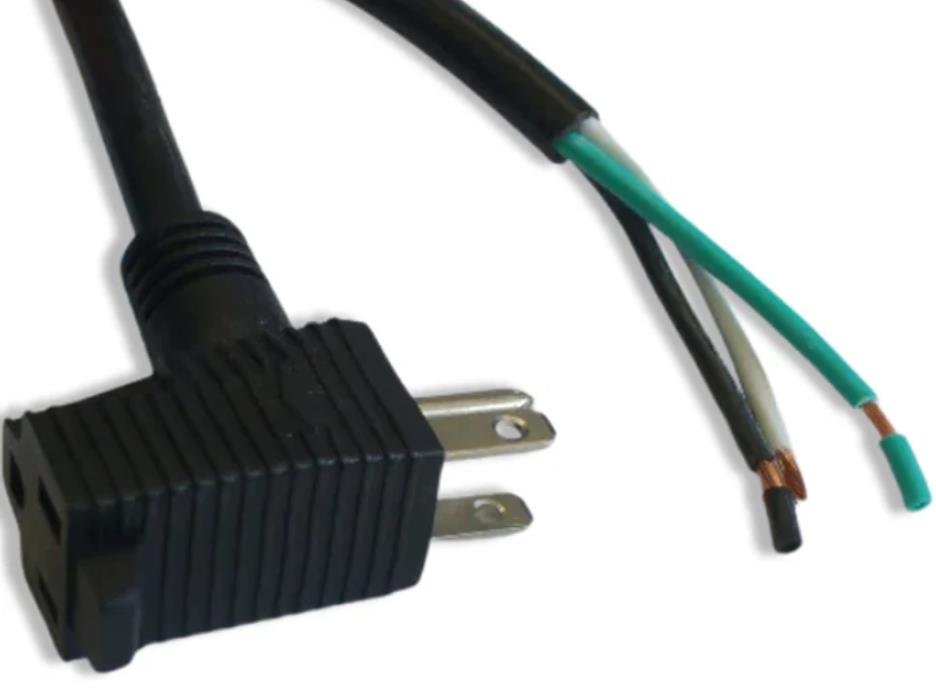
Piggyback Power Cords are good when you have to plug multiple devices into a single outlet. These electrical cord have an inbuilt second receptacle, which effectively gives an additional outlet to the end of the cord.
As an example, an 8FT NEMA 5-15PB to ROJ Power Cord allows you to have one device plugged into the wall and the other directly into the cord, simplifying your setup without having a second power strip.
This type of design can be particularly beneficial in entertainment centers or workstations where space is a problem, and various gadgets require quality power. Piggyback cords can be used with a wide range of household appliances and electronics because they are rated for household voltage and current.
2. NEMA 5-15P to ROJ Power Cords: Everyday Power for Basic Devices
The NEMA 5-15P to ROJ Power Cord is one of the most used types of cord. They can be used for normal household electricity requirements, such as lamps, small appliances, and several powered tools.
These cords can be used with most wall outlets in homes and offices with a standard three-prong NEMA 5-15P plug that supports up to approximately 15 amps. One of them is a 6FT NEMA 5-15P to ROJ 2IN Strip Power Cord, with a flexible length and suitable for general use.
It has reliable performance and is safe for use, whether operating a desk lamp or a workshop tool that may be plugged into a specific receptacle on a piece of equipment.
3. Power Cables/ROJ to 5-15R: Receptacle-Receptacle Connections
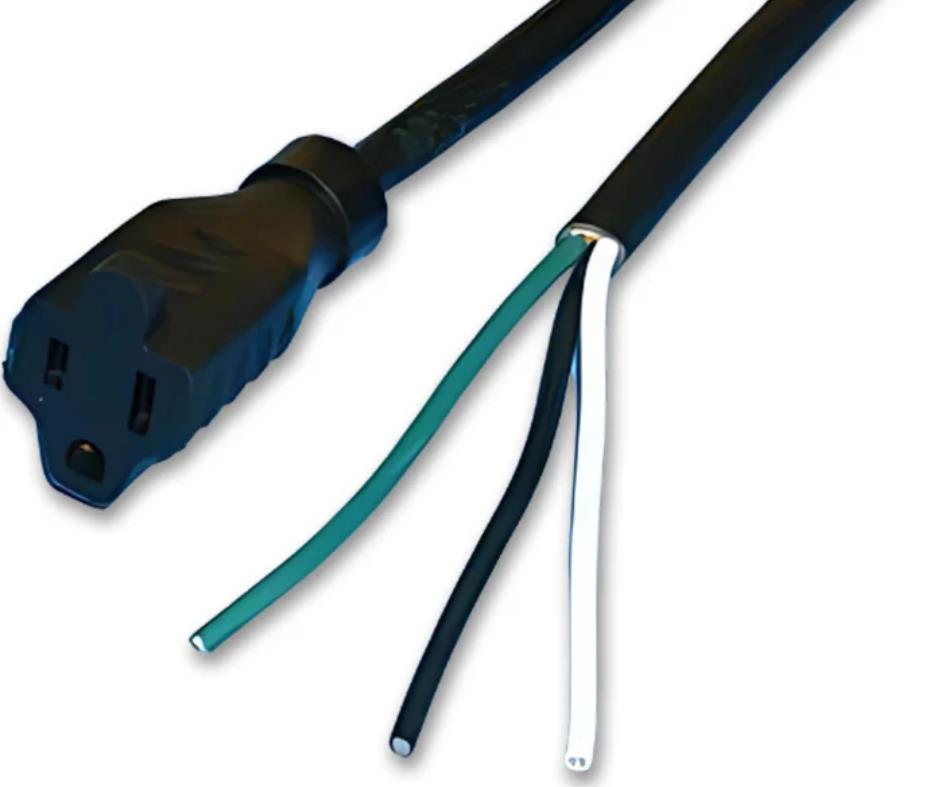
If your installation requires connecting a receptacle strip to an appliance or device connector, the Power Cables/ROJ to 5-15R types would be effective. These cords are normally used to convert a stripped outer jacket (ROJ) wire to a standard NEMA 5-15R receptacle.
As an example, a 3FT 14/3 SJTW BLACK 5-15R TO ROJ Power Cord may be utilized in any projects where you require installing a short extension or custom connection point between a machine and a corded outlet.
They are often used in custom wiring projects, prototyping projects, or repair projects where a socket connector is needed on one end, and no molded plug is needed on the other.
4. NEMA 5-15P to Blunt Cut Power Cords: Flexibility of Installation
NEMA 5-15P to Blunt Cut Power Cords offer valuable flexibility to wiring installations that require a direct connection to internal terminals or hard-wired instruments. The typical one is the 15FT NEMA 5-15P to Blunt Cut Power Cord, where the plug on one end is standard, and the other end is stripped so it can be properly fitted to equipment.
These cords are suitable in cases where specific manufacturer connectors are not required or when a permanent connection to distribution blocks is needed. They are also longer so that they can be used in larger workstations or server racks where routing has to allow spacing.
5. NEMA 1-15P to ROJ Power Cords: Two-Pronged Choices for Lower-Demand Appliances
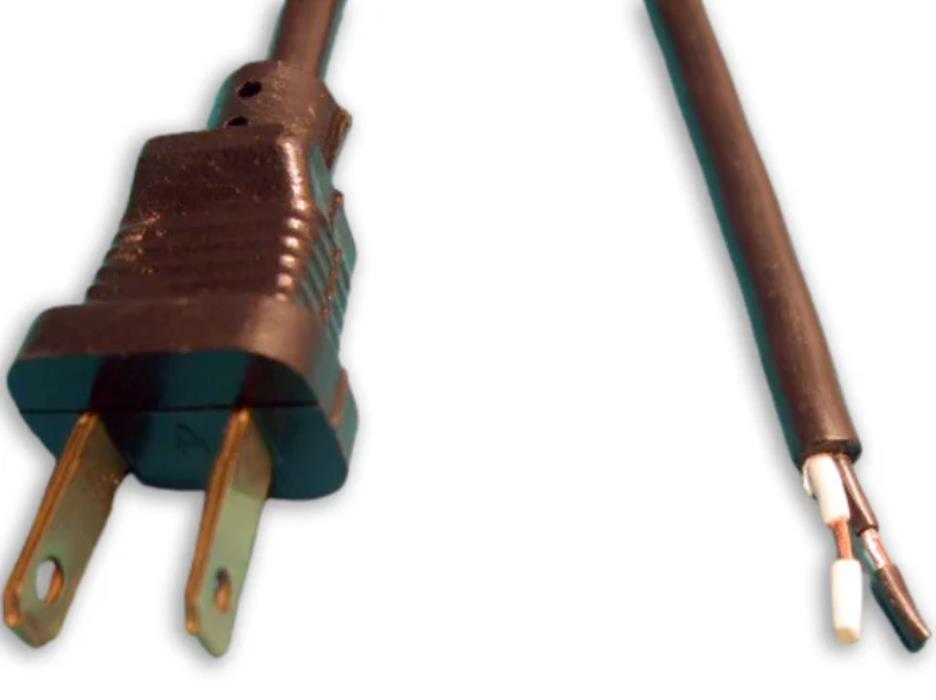
Three-prong safety grounding is not necessary in all devices. There are also smaller appliances that require a two-prong connection and NEMA 1-15P to ROJ Power Cords, which covers this prerequisite.
The 9FT NEMA 1-15P Polarized to ROJ 6IN Strip Power Cord is an example of a polarized two-pronged input, perfect for radios, small fans, or older electronics that do not require grounding.
These cords keep the polarized plug in place, ensuring proper orientation of the conductors and proper alignment of the live and neutral conductors, which makes the operation of less demanding loads safer.
6. NEMA 5-15PRA to ROJ Power Cords: Right-Angle Convenience
Some installations benefit from a plug that sits flush against the wall or avoids protrusion. That’s where NEMA 5-15PRA to ROJ Power Cords shine. These right-angle versions, such as the 6FT WHITE NEMA 5-15PRA SP to ROJ Power Cord, allow you to position furniture or equipment closer to the wall without bending or stressing the connection.
This makes them especially practical for tight spaces behind desks, cabinets, or entertainment units. Right-angle cords also reduce strain on the outlet, which can extend its lifespan and maintain a clean appearance.
7. 220V/240V Power Cords: Heavy-Duty Supply for High-Capacity Equipment
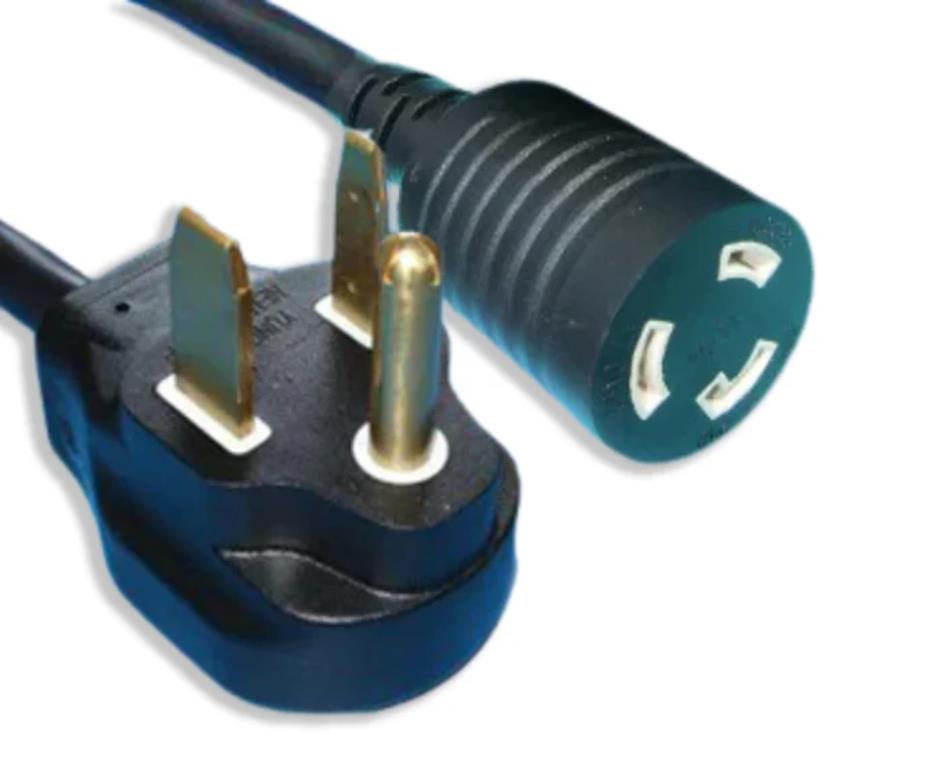
Some electrical needs extend beyond standard 120 V applications. 220V/240V Power Cords address high-voltage scenarios such as industrial machinery or specialized tools. For instance, the 8FT NEMA 6-15P to ROJ Power Cord supports 240 V applications and higher current draws required by heavy appliances or commercial tools.
These cords are engineered with thicker insulation and conductors to handle greater electrical loads, ensuring safety and stability in demanding environments like workshops or industrial settings.
Final Thoughts
Understanding the range of electrical cord types empowers you to choose the right connection for any situation. Whether you need a flexible Piggyback Power Cord for multiple devices, a dependable NEMA 5-15P to ROJ Power Cord for everyday appliances, or a specialized 220V/240V Power Cord for high-voltage equipment, matching the cord to its application makes all the difference.
Additionally, options like two-prong NEMA 1-15P to ROJ Power Cords and right-angle NEMA 5-15PRA to ROJ Power Cords offer practical benefits based on space and load requirements.
By considering how each cord’s design and rating align with your devices, you’ll power your gear safely and efficiently. With clear guidance and proper selection, you can confidently handle any electrical setup.