Key Takeaways
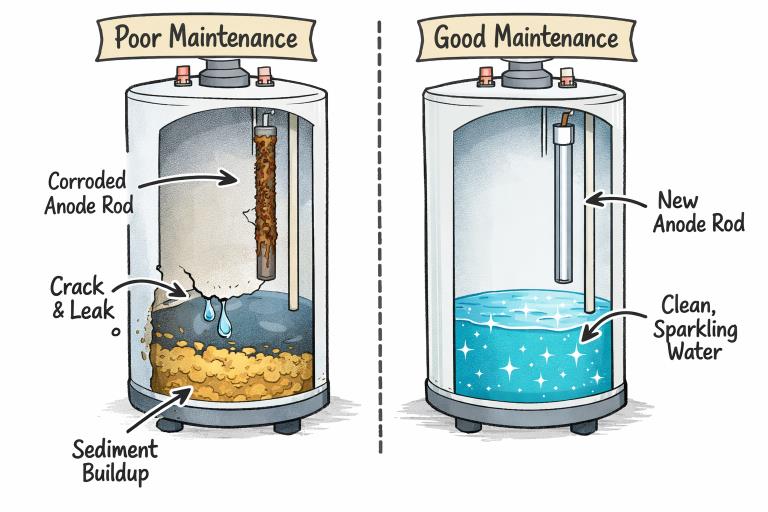
- Sediment buildupreduces efficiency and can cause overheating.
- Corrosionfrom a depleted anode rod leads to leaks and tank failure.
- High water pressurestresses the tank, increasing the risk of leaks.
- Regular maintenanceis crucial to prevent these issues and prolong the water heater’s lifespan.
Water heaters are indispensable appliances in modern homes, providing hot water for daily activities. However, they can fail unexpectedly, leading to inconvenience and costly repairs. Understanding the common causes of water heater failure and implementing preventive measures can help extend your unit’s lifespan. For residents in the Dayton, Ohio area, water heater repair Dean’s Plumbing offers expert water heater repair services. With years of experience and a commitment to quality service, Dean’s Plumbing is a trusted authority in the field, serving the local community with dedication and expertise.
Sediment Buildup
Over time, minerals such as calcium and magnesium in hard water settle to the bottom of the water heater tank, forming sediment layers. This buildup acts as an insulating barrier between the heating element and the water, reducing heating efficiency and causing the system to work harder. The increased strain can lead to overheating and eventual failure of the heating element. Regularly flushing the tank can help remove sediment and maintain optimal performance. Homeowners should drain their water heaters annually to prevent sediment accumulation. In areas with hard water, this maintenance may be required every six months.
If left unaddressed, sediment buildup can shorten the unit’s lifespan and increase energy bills due to inefficiency. You may notice signs such as unusual popping or rumbling noises, inconsistent water temperatures, or longer heating times. These are indicators that sediment has already begun to affect performance. Routine maintenance not only improves efficiency but also ensures a steady supply of hot water when you need it most. For best results, always turn off power or gas to the unit before flushing and follow manufacturer guidelines, or consult a professional if unsure.
Corrosion and Anode Rod Deterioration
Water heaters are equipped with an anode rod, a sacrificial component that attracts corrosive elements and protects the tank from rusting. Over time, the anode rod deteriorates, and once it’s fully consumed, corrosion begins to affect the tank itself. This internal rusting can lead to leaks and, ultimately, tank failure. Inspecting and replacing the anode rod every 3–5 years can significantly extend your water heater’s lifespan. Regular checks are especially important in homes with hard water, as higher mineral content can accelerate the rod’s deterioration. Signs that the anode rod may need replacement include rusty-colored water, a metallic taste, or a noticeable sulfur smell. Replacing this relatively inexpensive component is a simple yet effective way to prevent costly damage and maintain the efficiency and reliability of your water heating system over time.
High Water Pressure
Excessive water pressure can put undue stress on the water heater tank and its components. Most residential water heaters are designed to operate within a specific pressure range, typically 40-80 psi. When the pressure exceeds this range, it can cause leaks, damage to the tank, and even complete system failure. Installing a pressure-reducing valve and regularly checking the home’s water pressure can help mitigate this risk.
Thermostat Malfunctions
The thermostat controls the water temperature inside the heater. If it malfunctions, it can cause the water to be too hot or not hot enough. In some cases, a faulty thermostat can cause overheating, which stresses the tank and other components, potentially leading to failure. Regularly testing and calibrating the thermostat ensures it functions correctly and maintains the desired water temperature.
Age and Wear
Like all appliances, water heaters have a finite lifespan. Traditional tank water heaters typically last between 8 and 12 years, while tankless models can last up to 20 years with proper maintenance. As the unit ages, components wear out, increasing the risk of failure. Being aware of your water heater’s age and planning for replacement before it fails can prevent unexpected disruptions and potential water damage.
Preventive Maintenance Tips
- Annual Flushing:Drain and flush the tank yearly to remove sediment buildup.
- Anode Rod Inspection:Check the anode rod every 3-5 years and replace it if necessary.
- Pressure Monitoring:Install a pressure-reducing valve if needed and regularly monitor water pressure.
- Thermostat Checks:Test and calibrate the thermostat periodically to ensure accurate temperature control.
- Professional Inspections:Schedule regular inspections with a licensed plumber to identify and address potential issues early.
Conclusion
Understanding the common causes of water heater failure and implementing regular maintenance practices can significantly extend your unit’s lifespan and ensure a consistent supply of hot water. If you experience issues such as inconsistent water temperature, unusual noises, or leaks, it’s advisable to consult a professional. For residents in the Dayton, Ohio area, Dean’s Plumbing offers expert water heater repair services. With years of experience and a commitment to quality service, Dean’s Plumbing is a trusted authority in the field, serving the local community with dedication and expertise.