Key Takeaways
- Asphalt millings serve as a sustainable, budget-friendly alternative to fresh paving materials.
- Their application spans driveways, commercial parking areas, roadways, and agricultural paths.
- Proper preparation, compaction, and care are crucial for maximizing durability.
- Using RAP can significantly minimize project costs, environmental waste, and raw material demand.
Asphalt millings, also called reclaimed asphalt pavement (RAP), provide an innovative solution for paving needs that balances environmental responsibility with budget considerations. As more contractors and property owners seek eco-friendly alternatives, asphalt millings have become a leading choice for both residential and commercial construction. For additional insights on what asphalt millings are and their practical uses, check this https://arcosacrushedconcrete.com/blog/what-are-asphalt-millings/.
This comprehensive guide covers the advantages, potential applications, step-by-step installation guidelines, and key maintenance tips for asphalt millings. With their versatility and cost-saving potential, understanding how to maximize the benefits of RAP can lead to smart long-term decisions in paving projects.
Homeowners, municipalities, and businesses are increasingly turning to reclaimed paving materials not only for affordability but also for sustainability. Asphalt millings play a vital role in reducing the demand for new materials and lowering our carbon footprint through recycling and reusing existing resources. Recognizing the environmental impact of construction materials is more essential than ever.
From driveways to city streets, the appeal of millings spans a range of needs, reinforced by proven results. According to the U.S. Environmental Protection Agency, recycling efforts like these are crucial in mitigating emissions from traditional construction practices.
What Are Asphalt Millings?
Asphalt millings are produced when worn or damaged asphalt surfaces are removed from roads or parking lots and then crushed into small, gravel-like fractions. This recycling process preserves the existing asphalt binder and stone aggregate. Rather than hauling this material to a landfill, contractors can process and repurpose it for new surfaces. This not only saves on transportation and disposal fees but turns what might be waste into a valuable construction asset.
Benefits of Using Asphalt Millings
- Cost Savings:Since millings are recycled, they cost less than virgin asphalt for various paving jobs. On average, millings cost $10–$20 per ton, compared to $40–$80 per ton for hot mix asphalt. This lower cost makes them an affordable option for homeowners and businesses looking to save money without sacrificing durability. ([rockymountainstriping.com](https://rockymountainstriping.com/blog/pros-and-cons-of-using-asphalt-millings/))
- Strength and Longevity:When installed and compacted correctly, they create a stable, weather-resistant surface that lasts for years. Asphalt millings perform especially well in cold climates. They compact tightly, allowing snow and ice to melt faster, reducing plow damage and improving winter safety. ([rockymountainstriping.com.com](https://rockymountainstriping.com/blog/pros-and-cons-of-using-asphalt-millings/))
- Drainage Improvement:The granular nature of millings allows for superior runoff, reducing the risk of puddling or flooding during heavy rain.
- Environmental Stewardship:Choosing millings means fewer resources are extracted, and less landfill waste is generated, aiding sustainability efforts. Recycling asphalt pavement minimizes landfill waste and decreases the demand for new resources.
Common Applications
Reclaimed asphalt offers solutions for nearly any non-standard paving requirement. Its most common applications include:
- Residential Driveways:A solid surface alternative for homeowners who want durability and savings. Crushed asphalt is a popular choice for residential driveways. When compacted, it forms a smooth, durable surface comparable to fresh asphalt. ([koihocarbide.com](https://www.koihocarbide.com/how-to-reuse-asphalt-millings-a-sustainable-guide-for-cost-effective-road-maintenance.html))
- Parking Lots:Businesses and public facilities use millings to reduce expenses without sacrificing integrity.
- Major and Minor Roadways:Government agencies frequently opt for millings in repairs and new construction to stretch budgets further.
- Rural and Farm Roads:Agricultural businesses benefit from reduced dust, easier maintenance, and lower initial costs.
Installation Best Practices
- Surface Preparation:The foundation must be clear of debris, leveled, and graded to encourage water to drain away from the finished surface.
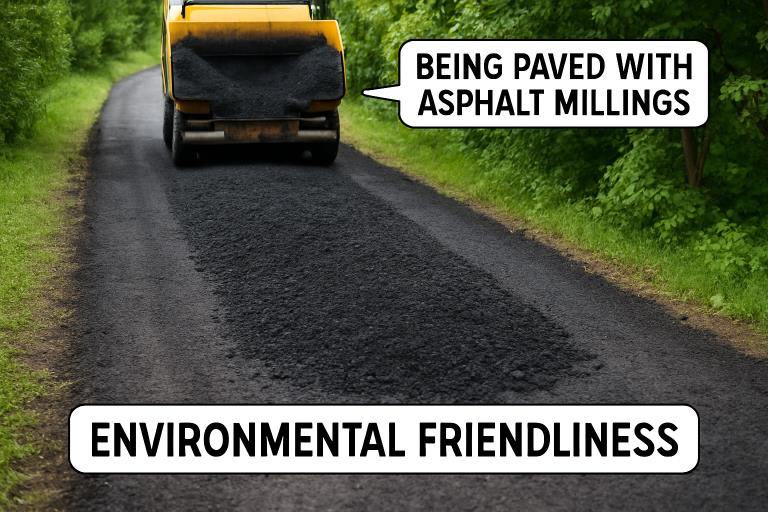
- Application:Apply an even 3 to 4-inch layer of asphalt millings across the prepared area.
- Compaction:Use heavy-rolling equipment, such as a vibratory drum roller, for multiple passes to ensure full compaction and a smooth finish.
- Optional Sealing:In regions with harsh climates or for maximum lifespan, a sealing product can be used to protect the surface from water and wear.
Maintenance Tips
- Inspect Regularly:Look for trouble spots such as developing cracks or potholes, and repair them promptly to prevent further damage.
- Vegetation Management:Remove weeds or grass that can weaken the integrity of the millings over time.
- Recompact When Needed:After heavy use or seasonal changes, an additional compaction pass can restore the surface’s smoothness and firmness.
Environmental Impact
The environmental benefits of switching to asphalt millings are significant. By keeping asphalt out of landfills, this practice diverts thousands of tons of material annually. Reusing existing pavements also reduces the need to mine and transport new aggregate and asphalt binder. The production and use of virgin asphalt generate substantial greenhouse gas emissions; recycling millings minimizes this footprint.
As recycling and climate change remain urgent issues, the construction industry is adopting such methods to comply with evolving regulations and environmental expectations. You can read more about sustainable transportation infrastructure through resources at the U.S. Environmental Protection Agency.
Cost Analysis
- Material Cost:Purchasing and transporting asphalt millings is less expensive than new asphalt mix, leading to direct savings. Asphalt millings projects cost an average of $15,250, with most homeowners spending between $7,875 and $22,625.
- Installation Labor:The process is straightforward and less time-consuming, with fewer specialty materials and tools required.
- Low Maintenance:Millings last for years with minimal intervention, reducing the long-term maintenance cost.
Conclusion
Asphalt millings offer a practical path forward for anyone seeking affordable, environmentally friendly paving solutions. By choosing RAP, you build a durable, flexible surface while reducing costs and supporting smarter resource use. Adopting these sustainable practices benefits budgets and the planet alike, making asphalt millings an excellent choice for a range of applications.