Know Your Machine: Read the Manual First
If you’ve ever stood at the control panel squinting at icons that look like hieroglyphics, you’re not alone. Every dishwasher has its own personality—quirks, cycles, and cleaning rhythms—and the manual is your cheat sheet. It tells you which program fits a pots-and-pans kind of night versus a wine-glasses dinner party, how often to clean the filter, and which detergent or rinse aid actually plays nice with your model.
A familiarity with the manual is useful and protective. Using the wrong settings or additives will void warranties, which can escalate a rental issue with your landlord. If the last tenant left without the paper copy, no problem. Open the door, note the model number on the frame, then find the digital version on the manufacturer’s website. Read for 10 minutes to avoid foggy glasses, tenacious odours, and unpleasant maintenance calls.
Give the Filter a Monthly Spa
When a cycle ends and you find pasta spirals glued to plates, the filter is sending an SOS. It’s the unsung hero under the lower spray arm, trapping crumbs and grease so water can flow freely. When it clogs, cleaning power drops and energy use creeps up.
Twist or lift the filter out—designs vary—then rinse it under warm water. A soft brush or old toothbrush dislodges the gritty stuff without scratching. Snap it back in securely and you’re golden. Do this once a month (more often if you’re running daily), and your machine will reward you with quieter cycles, cleaner dishes, and fewer surprises.
If you’d rather outsource, a professional deep-clean is fair game—especially before moving out. Many end-of-tenancy cleaning packages include appliance care and can help your place pass inspection with flying colors.
Show the Door and Gasket Some Love
The rubber gasket and the inner door are the front line between water and your kitchen floor. They also collect soap film, moisture, and stray bits that can turn into the musty smell no one wants. A quick wipe clears the stage.
Use a soft cloth or sponge with mild dish soap and warm water to clean the door edges, hinges, and every fold of the gasket. Follow with a damp cloth to rinse, then leave the door cracked for an hour to air out. Make this a weekly habit if you run frequent loads. While you’re there, scan for cracking or flattening on the seal—early catches prevent leaks and drama.
Heat, Steam, and a Cup of Vinegar: The Deep-Clean Cycle
When your machine feels tired—dull glasses, lingering odors—a hot cycle with white vinegar is a simple reset. Place a cup of plain white vinegar on the top rack and run the hottest program. The steam carries it through the lines and crevices, breaking down soap scum and light limescale.
After, flush everything with a quick rinse-only cycle. Sprinkle a light layer of baking soda on the bottom and run a fast hot cycle on another day for a deodorising encore. Avoid combining chemicals in the dishwasher and check your manual for brand-specific warnings.
Unclog Those Spray Arms
Spray arms are your pressure-washers-in-miniature, firing jets that do the heavy lifting. When the tiny holes clog with seeds, shells, or mineral grit, water distribution gets patchy and plates come out unevenly clean.
Remove the arms (most twist or unscrew), pour water through them, and carefully clean any obstructed nozzles with a toothpick. Wash, dry, reattach. Repeat every two months or sooner if streaky results occur. A short tune-up maintains cleaning power, cuts cycle times, and lets the machine drink energy and water instead of gulping it.
Fight Hard Water: Descale Like a Pro
If you live with mineral-rich water, you’ve seen the signs: chalky film, foggy glasses, and a machine that starts sounding overworked. Minerals slowly cake onto hidden parts, nudging efficiency downward. A dedicated dishwasher descaler or food-grade citric acid is your counterpunch.
Follow the product directions and run a full, empty cycle every three to six months. Regular descaling protects heating elements and spray pathways, cuts the risk of repairs, and keeps energy use in check. Think of it as routine maintenance—quiet, invisible, and absolutely worth it.
Gentle Tools, Better Results
Your dishwasher’s interior is durable, but not invincible. Stick to microfiber cloths, soft sponges, and silicone scrubbers for any hand-cleaning. Skip steel wool and aggressive pads—they scratch plastics and can scar stainless surfaces. Avoid harsh chemical cocktails, which can degrade seals and cause leaks. Mild soap and warm water are almost always enough, and quality cleaning tools last longer and shed less.
Smart Loading and Detergent Habits
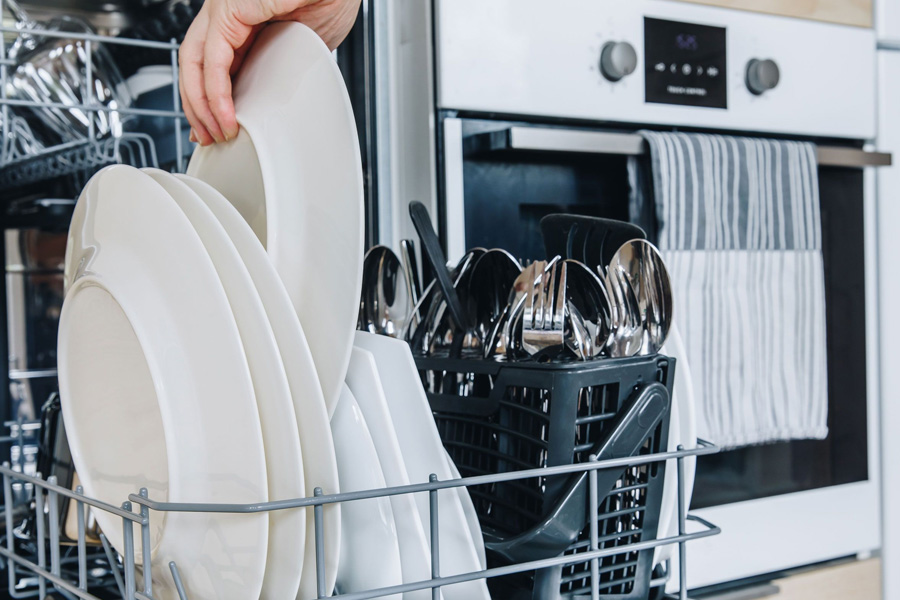
Good cleaning begins before Start. Without pre-rinsing, scrape off large food remnants and pile plates tilted towards the centre, bowls facing down and cutlery combined to prevent nesting so water can reach every surface. Prevent tall items from blocking the detergent cup or spray arms. To avoid warping, put plastic on top and pots and heavier things on the bottom rack.
If spotting occurs, especially in hard-water locations, use a good detergent and rinse aid. Pods are convenient and portioned; powder allows fine dosing; liquid is easy but overpours. Rinse aid and frequent descaling can clear hazy glasses, not detergent.
Keep the Drain Path Clear
If your dishwasher drains through the sink disposal, run it for a few seconds before starting a cycle to clear the passage. Check the faucet’s air gap (small cylinder) for debris by popping the cap. Clear drains prevent waste from backing up into the tub and reduce odours.
When to Call in the Pros
If you’re dealing with standing water, persistent leaks, or error codes that keep returning, it’s time to loop in maintenance. Document what you’ve tried, note model and cycle details, and report promptly. In a rental, timely communication shows care—and keeps problems from becoming costly.
FAQ
Do I need to pre-rinse dishes?
No—just scrape solids. Modern detergents are designed to bind to food soils; heavy pre-rinsing can actually reduce cleaning performance.
How often should I clean the dishwasher filter?
About once a month, or more often if you run daily cycles or notice gritty residue after washes.
Can I use bleach inside my dishwasher?
Only if your manual allows it, and never with stainless-steel interiors or mixed with vinegar or other cleaners.
What causes cloudy glasses?
Usually mineral deposits from hard water; use rinse aid and descaling to restore clarity.
Is vinegar safe for all dishwashers?
It’s generally fine in small amounts, but always check your manual and avoid prolonged contact with rubber parts.
Why does my dishwasher smell musty?
Residual moisture and trapped food in the filter, gasket, or drain path are typical culprits; clean those areas and air the door.
What water temperature works best?
Around 120°F (49°C) at the tap gives detergents the heat they need without scalding risk.
Do dishwasher cleaner pods actually help?
Yes—used monthly, they break down buildup in places you can’t reach and keep performance consistent.
Should I run the garbage disposal before a cycle?
If your dishwasher drains through the disposal, yes—clearing it first prevents backflow and odors.
How can I tell if spray arms are blocked?
Unevenly clean dishes, streaks on glassware, or persistent food bits often signal clogged nozzles.