Electric vehicles are gliding into driveways across North America, and with them comes the simple luxury of waking up to a “full tank.” That convenience hinges on picking the right home charger and installing it with care. Done well, charging is fast, safe, and seamless. Done poorly, it invites nuisance trips, overheated wiring, and headaches you didn’t sign up for. Here’s a clear, boots-on-the-ground guide to choosing the right EV charger and setting it up for years of trouble-free use.
Meet the Three Charging Levels
Not all charging is created equal. Think of charging levels as gears: each one trades speed for power requirements.
- Level 1 (120V): The cord that comes with most EVs plugs into a standard outlet. It adds roughly 3–5 miles of range per hour. Great for plug-in hybrids or super-short commutes.
- Level 2 (240V): The home favorite. It delivers 20–45 miles of range per hour depending on amperage, typically refilling overnight. Requires a dedicated 240V circuit and usually a pro install.
- DC Fast Charging: The highway hero. It charges from low to ~80% in under an hour, but it’s built for public sites with heavy infrastructure. It’s almost never practical or cost-effective at home.
For most households, Level 2 hits the sweet spot: fast, relatively affordable to install, and easy on your daily routine.
Size Up Your Electrical Service
Before falling in love with a charger, check your home’s electrical backbone. Your service panel and existing loads decide how big you can go.
- Panel capacity: Most modern homes have 200A service; older homes may have 60–100A. A licensed electrician can run a load calculation to see if there’s room for a new 240V circuit.
- Breaker and wire sizing: EV charging is a continuous load. As a rule of thumb, your charger’s maximum output should be about 80% of the breaker size (e.g., a 40A breaker supports a 32A charger). Long wire runs or hot environments may require upsized conductors.
- Subpanels and upgrades: If your main panel is full (or borderline on capacity), a subpanel or a service upgrade can future-proof the house for a second EV, heat pump, or induction range.
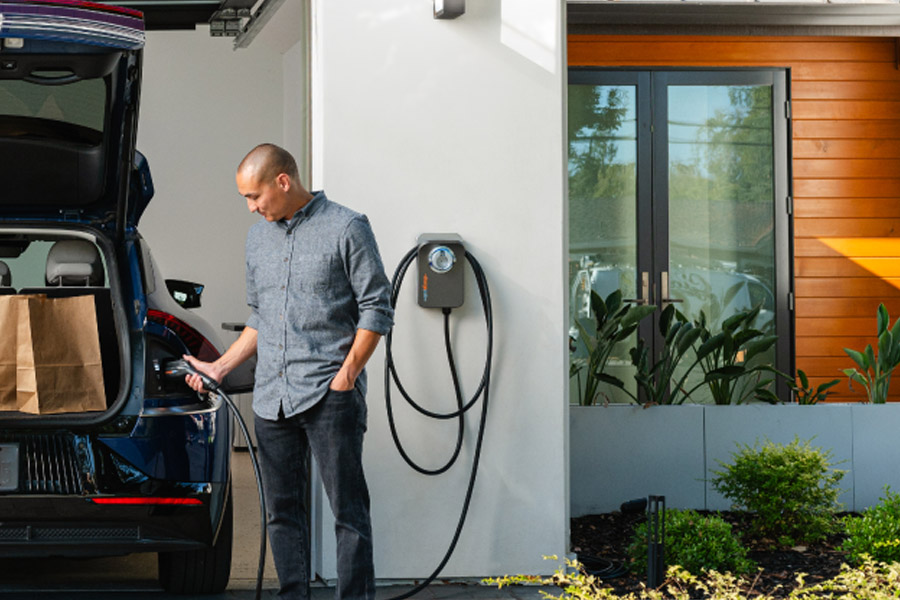
- Location and weather: Garages are ideal. For outdoor installs, look for a NEMA 3R or NEMA 4 enclosure and mount with a drip loop so rain can’t follow the cable into the unit. Keep the handle off the ground, and avoid direct sun or snow shedding zones.
- Mounting details: Wall-mount at a comfortable reach, typically chest height. Confirm you can hit a wall stud or use proper anchors, and plan a clean cable path to avoid trip hazards.
If you’re deciding between a NEMA 14-50 receptacle and a hardwired unit: receptacles offer flexibility, but hardwiring is more robust for high continuous loads and harsh climates.
Pick Features That Actually Matter
Charger shopping can feel like spec-sheet bingo. Focus on what impacts daily life, not just the buzzwords.
- Power and adjustability: Common Level 2 options range from 16A to 48A (3.8–11.5 kW). Adjustable amperage lets you dial output to match your circuit or time-of-use rates.
- Connector and compatibility: Most EVs use the J1772 connector; Tesla models include an adapter, and many chargers now offer NACS compatibility or swappable cables. If you plan to mix brands in your household, choose a flexible option.
- Smart charging: Wi-Fi or Bluetooth brings scheduling (to chase off-peak rates), energy monitoring, and load sharing between two ports. App quality matters—look for intuitive setup, reliable updates, and robust uptime.
- Cable length and management: A 18–25 ft cable covers most driveways and garage layouts. A tidy holster and a quick-release dock prevent grime and wear on the plug.
- Certifications and durability: Look for third-party safety listings and energy-efficiency certifications. Weather-rated enclosures and beefy strain reliefs prolong life.
- Extras that win the long game: RFID or PIN lock to deter unauthorized use, over-the-air updates, and open protocols that play nicely with smart panels and future home upgrades.
Installation Traps to Skip
A charger is only as good as its install. Here are the pitfalls pros avoid—and you should, too.
- DIY at high amperage: Level 2 chargers demand clean wiring, correct breaker pairing, and proper torqueing. A licensed electrician keeps you on-code and under warranty.
- Skipping permits and inspections: Many jurisdictions require permits. Paperwork and a passed inspection protect your insurance coverage and future resale.
- Undersized circuit or loose terminations: Continuous loads amplify weak links. Wrong wire gauge, mismatched breakers, or loose lugs can lead to nuisance trips or heat damage.
- Poor placement: Too far from the charge port, no room for cable sweep, or a blocked parking spot turns daily charging into a chore. Park the car, measure twice, mount once.
- Wrong protection devices: EVSEs have built-in ground fault protection. Layering the wrong type of GFCI at the breaker can cause nuisance trips; your electrician will choose a compatible approach.
- Outdoor receptacle oversights: If using a plug-in unit outdoors, use an in-use cover, weather-rated components, and a proper support for the heavy EVSE plug.
Budgeting, Rebates, and the Fine Print
The price tag varies with the home’s electrical reality—straight shots are cheaper; panel work and trenching add cost.
- Typical costs: A basic Level 2 install often lands between $700 and $2,000. Panel upgrades can add $500–$1,500 or more, depending on your utility and service entrance.
- Permitting and inspection: Budget a few hundred dollars and a bit of time for approvals. It’s worth it for compliance and resale value.
- Incentives: Many utilities offer rebates for smart, load-managing EVSEs, and off-peak charging programs can shave your bill. Federal and provincial/state incentives can cover a chunk of hardware and installation costs for eligible homes.
- Ongoing savings: Time-of-use rates make scheduled charging a quiet superpower. Some utilities even pay bonuses for enrolling in managed charging programs.
Keep receipts and installation documentation; incentives often require proof of purchase, a permit, and photos.
Build for Tomorrow’s Garage
Today’s sedan may become tomorrow’s SUV—or a two-EV household. Designing with headroom protects your budget and your walls.
- Think capacity: If you’re on the fence between a 32A and 48A unit, consider wiring for the higher option now, even if you cap the charger’s output in software.
- Dual-port and load sharing: Some chargers intelligently split one circuit between two cars, prioritizing whichever needs juice first or respecting a panel limit you set in the app.
- Smart panels and load management: Devices that monitor whole-home load can throttle charging to prevent main breaker trips and avoid expensive service upgrades.
- Solar and storage: Pairing a charger with solar lets you sip sunshine when it’s abundant; add a home battery, and you can shore up resilience during outages. If you’re eyeing vehicle-to-home (V2H) capability down the road, make sure your future charger and electrical system can support it.
Bring in the Pros
An experienced installer is your shortcut to a safe, clean, and code-compliant setup.
- Credentials: Look for licensed electricians with EV-specific training, proof of insurance, and a portfolio of recent installs.
- Scoping and quotes: Ask for a site walk, written estimate, and clarity on panel capacity, wire paths, penetrations, and any trenching. Good pros explain options, not just prices.
- Documentation: Expect permit handling, inspection coordination, and a packet with spec sheets, torque values, and warranty info. It’s the playbook for future service or resale.
Special Notes for Renters and Landlords
EV charging is now an amenity that attracts long-term tenants and increases property appeal.
- Renters: Get written permission before installing, and opt for reversible solutions if required by your lease. A plug-in Level 2 on a dedicated receptacle can be a good compromise where allowed.
- Landlords: Installing EV-ready circuits or shared smart chargers adds value and keeps you ahead of demand. Clear rules, usage tracking, and load management keep everyone happy and the panel calm.
FAQ
How fast will a Level 2 charger refill my EV?
Most Level 2 setups add 20–45 miles of range per hour, depending on charger amperage and your vehicle’s onboard charger.
Do I need a 200A panel to install a Level 2 charger?
Not always; a load calculation may show room on a 100A panel, and load management can help avoid a service upgrade.
Is a hardwired charger better than using a NEMA 14-50 plug?
Hardwiring is more robust for continuous high-load use and outdoor installs, while a receptacle offers flexibility if code and conditions allow.
Can one circuit feed two EVs?
Yes, with a dual-port charger or two units that support load sharing, you can intelligently split a single circuit between vehicles.
Will a smart charger really save me money?
Scheduling around off-peak rates and enrolling in utility programs can meaningfully cut charging costs over time.
What cable length should I choose?
Aim for 18–25 feet so you can reach the charge port whether you nose-in or back-in, without stretching or draping across walkways.
Do I need a permit for installation?
In many jurisdictions, yes; permits and inspections verify code compliance and protect insurance and resale.
Is outdoor charging safe in winter or heavy rain?
With a weather-rated charger and proper installation, outdoor charging is safe year-round and designed to operate in wet and cold conditions.