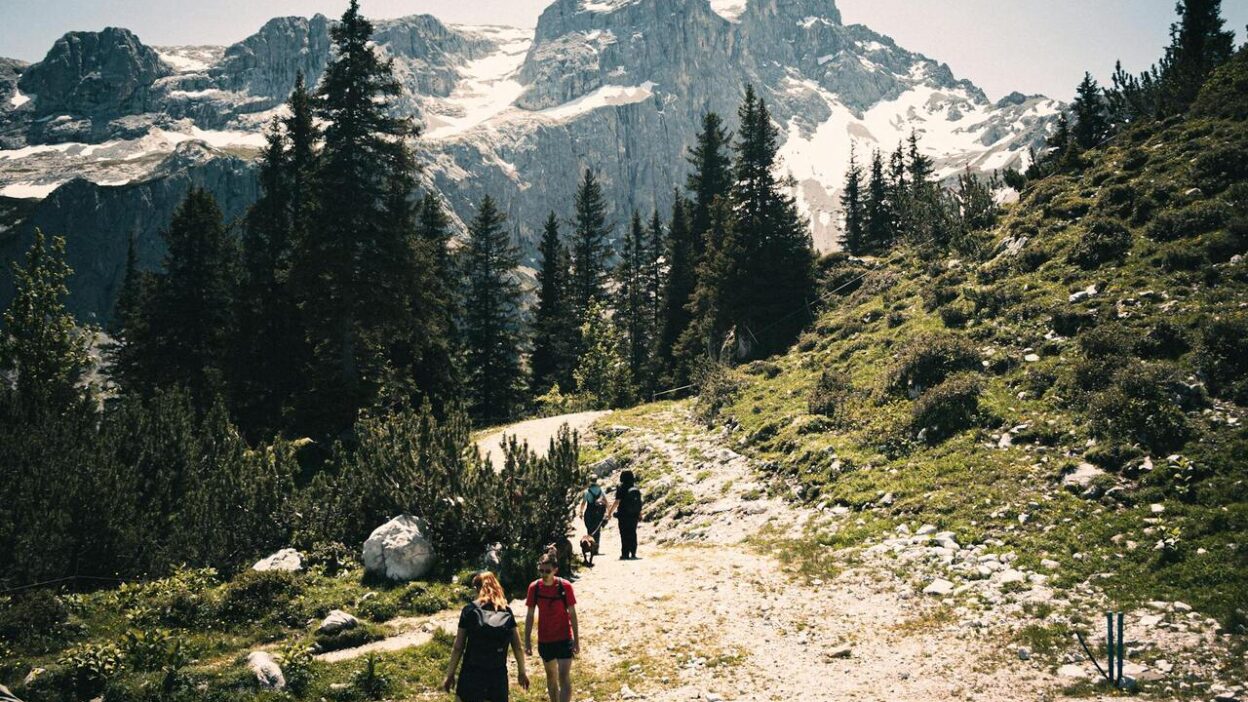
The term walking holidays sounds quite specific, yet experiences range widely – arguably moreso than other types of holidays. It’s controversial to say, but besides the history-specific museums, city breaks around Europe can sometimes feel samey, while the country you’re in hardly even matters at resort all-inclusives.
But for walking holidays, the terrain, culture and climate are going to have a huge impact on your trip.
Think about terrain type, not just difficulty level
Most people filter routes by difficulty rating. Easy. Moderate. Challenging. It sounds logical, but it tells you surprisingly little.
A rural trail walked in the 30°C August heat can ruin your enjoyment faster than a steep mountain climb tackled in mild October. But swap the rural trail for a coastal one (where you can dip into the water every hour or two), and suddenly it’s back to being pleasant. Rejuvenating, in fact.
The difficulty label doesn’t always capture these details. Some people are better at short, steep climbs than being on their feet for 12 hours – they are different kinds of difficult.
What actually shapes the experience is the environment you’re moving through. Monotony can be a challenge for some. But if you’re an avid birdwatcher, perhaps you’re distracted from that.
Coastal paths and culture: The case for Croatia
If your ideal end to a walking day is beach, cliffs, but a cold glass of white wine at a harbourside table at the end of each day, walking holidays in Croatia are worth serious consideration.
What makes Croatian coastal routes so good is the structure. Many stages combine walking with ferry crossings. There’s contrast. You hop between islands like Hvar, Korčula, and all along the Pelješac peninsula. It’s both on foot yet maritime.
The food is incredible and, while July and August are too hot, the temperatures are perfect for spring and autumn.
Forests, castles, and well-marked trails: Why Germany surprises people
Germany is chronically underrated as a walking destination. Most people associate it with cities (and even then, its architecture and castles are underrated).
Walking holidays in Germany often revolve around one of Europe’s densest long-distance trail networks, over 200,000 kilometres of waymarked paths. The Harz Witches’ Trail threads through the beech forest and medieval mining towns. The King Ludwig Way ends at Neuschwanstein, arguably the most theatrical trail finish in Europe. Rhine Valley routes have vineyards and castle ruins at almost every stage. Unlike most of Mediterranean Europe in summer, the trails are not overcrowded despite the waymarking being great.
Think about seasons
Timing and climate have a huge impact on your stamina, enjoyment and health. If you go during peak summer, you want to stay away from the Mediterranean. Shoulder season is arguably better, even in places like Scotland on the West Highland Way. Yes, there will be some rain, but you will find it easier to book hotels and avoid crowds. If you’re worried about accommodation, Orbis Ways, among other agencies, does the booking for you.
There’s no one perfect walking holiday, just as there isn’t one experience. Consider the climate and terrain before anything else, then consider the cultural elements.