With the commercial roofing industry undergoing rapid transformation, it is more important than ever for building owners and facility managers to stay up to date with the latest trends. In 2026, the focus remains on sustainability, technology integration, and resilience to address evolving business and environmental needs. Commercial property stakeholders are increasingly seeking advanced solutions for their roofing projects, underscoring the importance of reputable professionals like Farmers Commercial Roofing in delivering cutting-edge results. Staying ahead of these trends not only reduces operational costs but can also boost property value and compliance with local regulations.
For facility managers and commercial real estate investors, adopting state-of-the-art roofing practices can translate to greater energy efficiency and improved occupant comfort. The demand for green technologies and smart materials is on the rise, shaped by newly available incentives and market forces. Finding the right expertise to implement these trends has become essential, fueling the need for contractors with both technical knowledge and proven experience. As these advancements reshape commercial roofing, every stakeholder stands to gain from making informed decisions and aligning with industry best practices.
Sustainable Materials
As commercial building owners place higher value on environmental responsibility, sustainable roofing materials have become top priorities in new projects and retrofits. Recycled metal panels and single-ply membranes are recognized for their impressive durability and potential for end-of-life reclamation. These eco-friendly options not only help comply with stringent building codes but also offer substantial energy savings over time. In many cases, green materials can lead to reduced maintenance costs, improved insulation, and higher property ratings under certifications such as LEED and Energy Star.
Green Roofs
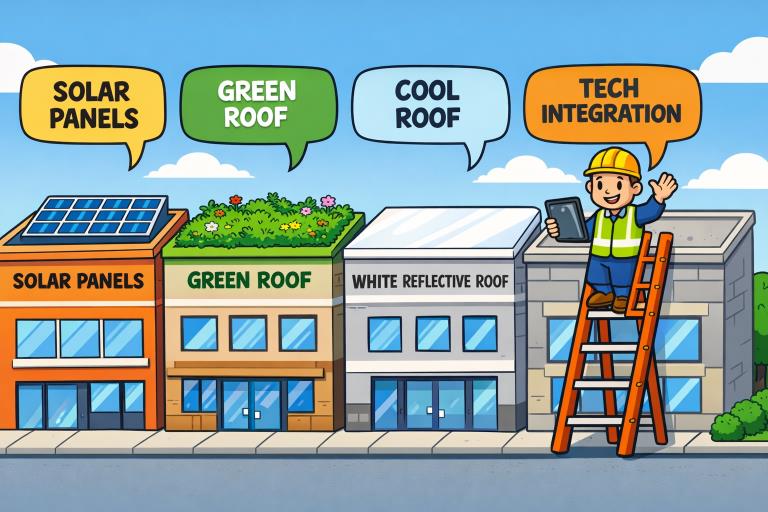
Green roofs are expanding rapidly in metropolitan settings, driven by their multiple environmental and social benefits. By establishing a layer of living vegetation, green roofs provide natural insulation, filter air pollutants, and help combat the urban heat island effect. They also create spaces for relaxation or urban gardening, adding both beauty and usable area to commercial properties. The projected growth of the global green roof market, expected to reach $6.74 billion by 2030, underscores the growing interest among developers and city planners in solutions that enhance sustainability and livability.
Solar Integration
Commercial buildings across the country are integrating solar technologies within their roofing structures to promote energy independence and reduce electricity costs. Solar roofs combine photovoltaic panels with advanced roofing systems to convert sunlight into electricity, often qualifying for federal incentives such as the Investment Tax Credit (ITC) and the Production Tax Credit (PTC). These incentives have sparked interest among businesses aiming to lower carbon footprints while improving operational cost structure. As rising energy prices become a growing concern for commercial property owners, solar integration provides a future-proof solution that aligns economic goals with environmental leadership.
Cool Roof Systems
Cool roofs have a significant impact on energy efficiency by reflecting a greater share of sunlight and absorbing less heat. Using light-colored coatings or highly reflective membranes, these systems are particularly vital in regions with high solar exposure. Not only do cool roofs reduce cooling demand and energy use, but they can also extend the roof’s lifespan by minimizing thermal shock and expansion. Industry forecasts suggest that the cool roof coating market could nearly double by 2032, driven by regulatory requirements and widespread recognition of the benefits of reducing building heat loads.
Advanced Technologies
The evolution of digital tools and smart platforms is reshaping how commercial roofing projects are managed and executed. Contractors now deploy specialized estimating software, ERP systems, and aerial measurement solutions to boost efficiency and project accuracy. Artificial intelligence and predictive analytics are steadily gaining traction within the industry, handling everything from maintenance scheduling to risk assessment. Recent statistics show that 38% of contractors now report measurable business impact from AI, up from 17% in 2025. This digital transformation empowers companies to deliver faster service, reduce errors, and enhance long-term maintenance planning. For a comprehensive analysis of roofing technology trends, see this overview from Roofing Contractor.
Resilient Designs
Achieving long-term reliability in commercial roofing requires materials and designs that can withstand extreme weather events and varying climate conditions. For instance, in coastal or hurricane-prone areas, metal roofing systems are increasingly preferred for their high wind resistance and robustness. In contrast, impact-resistant roofing is preferred in areas with frequent hail or severe storms. These resilient choices not only enhance safety for building occupants but also minimize repair costs and insurance liabilities. As climate change poses new risks, commercial properties must prioritize resilience to safeguard investments and maintain compliance with evolving standards.
Workforce Challenges
Labor shortages continue to pose significant obstacles for the commercial roofing sector. Reports indicate that more than 60% of contractors struggle to find qualified workers, a challenge compounded by increased demand and expanding project pipelines. Companies are addressing these pressures through referral programs, digital recruiting, improved employee benefits, and comprehensive training initiatives. Maintaining a safe work culture, investing in ongoing education, and embracing technology can all help attract and retain skilled professionals in a competitive landscape. Addressing workforce issues head-on is vital to ensuring commercial roofing projects meet quality and timeline expectations.
Conclusion
The commercial roofing landscape of 2026 reflects a dynamic industry moving toward eco-friendly practices, robust technologies, and resilient design strategies. Building owners and managers who stay informed and take action on these trends will be well-positioned to reduce costs, improve sustainability, and future-proof their properties. Aligning with forward-thinking contractors and leveraging advanced solutions can ensure success and long-term value for every commercial roofing investment.