Key Takeaways
- Math games sharpen core math skills such as counting, number sense, and pattern recognition, which are the building blocks for all future learning in STEM.
- They nurture critical thinking and problem-solving, laying a foundation for STEM success by encouraging logical reasoning and strategic planning.
- Game-based learning heightens engagement and motivation, especially for diverse learners who might otherwise disengage in traditional settings.
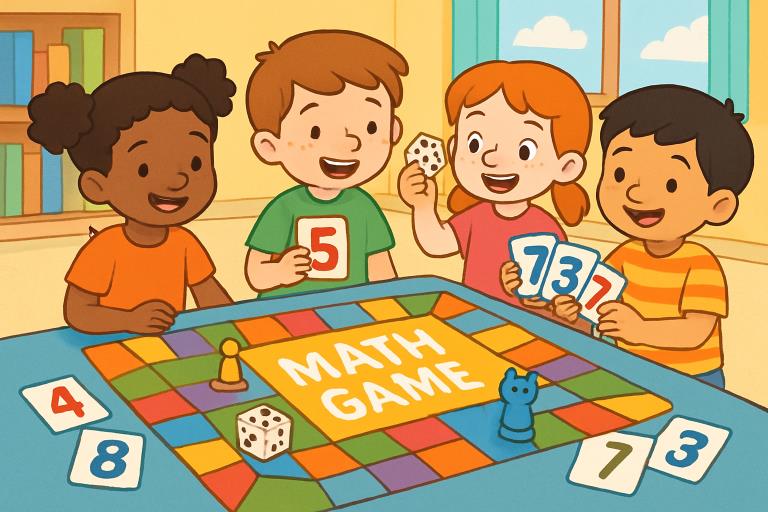
Math games are more than just fun; they are powerful and flexible tools for developing STEM (Science, Technology, Engineering, and Mathematics) skills in children. By blending playful interaction with educational challenges, math games make complex ideas easier to grasp and much more engaging. Using math board games for kids, children experience firsthand how numbers, patterns, and logic are essential in both learning and everyday life. The tactile and visual elements of these games bring abstract mathematical ideas into the physical world, helping kids see how math is connected to their daily experiences and future aspirations.
These interactive methods not only help demystify mathematical concepts but also foster perseverance and curiosity, two qualities crucial to success in STEM disciplines. Instead of simply memorizing formulas or rules, children learn to approach mathematical challenges with a sense of exploration and experimentation. This practical approach to math education transforms conventional lessons into exciting and purposeful activities that motivate students to learn more, often without realizing how much ground they are covering. Math games promote a growth mindset, supporting children as they encounter new problems and develop the resilience to solve them independently or in collaboration with peers. The encouragement and immediate feedback built into these games help reinforce the idea that mastery is achieved through practice and creative thinking.
Enhancing Foundational Math Skills
Structured games with paths, cards, or dice help children internalize math skills by making abstract concepts interactive and tangible. For example, linear board games offer hands-on practice in counting, estimating, and recognizing number patterns, which can boost confidence even after just ten-minute play sessions. Focused gameplay helps kids understand how numbers work and relate, essential for more advanced math. Early mastery of these skills is vital for tackling STEM topics later. Without a solid foundation, children may struggle and lose interest. A study by the American Psychological Association shows early math skills predict future success in math and reading. Games provide repeated exposure, reduce math anxiety, and turn learning into a positive experience.
Fostering Critical Thinking and Problem-Solving
Math games require students to use higher-order thinking, analyzing, weighing choices, and devising solutions, whether in competitive or cooperative play. Children learn to anticipate consequences, adapt strategies, and refine approaches when faced with setbacks. This process of planning, testing, and revising mirrors how STEM professionals approach problems—investigating data, forming hypotheses, and troubleshooting. According to Education Week, puzzles and logic games improve critical reasoning, spatial awareness, and mental flexibility. Many math games encourage shifting perspectives or deductive reasoning, building neural pathways that support learning beyond math, in fields like engineering, computer science, and research. These problem-solving skills are transferable and valuable throughout life.
Increasing Engagement and Motivation
Students participate more and stick with difficult topics when learning is fun and interactive. Studies show that game-based learning greatly boosts engagement, sometimes by 40% over traditional methods. Completing challenges fosters positive math attitudes by demonstrating that hard work leads to success. Well-designed math games motivate reluctant learners and promote lifelong love for the subject.
Games leverage children’s love of play and competition, creating a classroom where effort is rewarded. Their adaptability allows teachers to customize activities to suit each student’s interests and skill levels, keeping everyone challenged yet supported. This can improve classroom culture, attitudes toward math, and participation over time.
Supporting Neurodivergent Learners
Math games support inclusivity by accommodating various learning preferences and needs. For neurodivergent children, especially those with ADHD, autism, or dyslexia, well-designed games offer focused, bite-sized challenges matching their attention span and processing style. This approach provides immediate feedback and self-correction, which is affirming for students who need structure and routine. It allows learners who struggle with standard instruction to find alternative ways to understand and show their abilities. Gamification also provides built-in feedback, enabling self-correction and progress at their own pace, making skill practice less intimidating and more rewarding. Organizations like the National Center for Learning Disabilities endorse inclusive game-based education, highlighting its positive effects on motivation and academic success for learners with special needs. By using games as flexible tools, educators meet students where they are and foster active participation. Collaborative games also promote empathy and teamwork, ensuring all children benefit from a rich, inclusive education.
Implementing Math Games in Education
To effectively use math games, educators and parents should carefully integrate them into instruction. It’s crucial to select games aligned with educational targets and standards to ensure relevance and measurability. Choosing age-appropriate games challenges students without frustration, increasing engagement. Offering choices for individual and group play promotes self-reliance and collaboration, vital in STEM. Games should reinforce specific math skills aligned with class objectives and tailored to developmental stages. Regularly reviewing and rotating games introduces new concepts to maintain interest. Encouraging collaboration and friendly competition builds social skills and numeric competence. Teachers should monitor progress by assessing problem-solving skills and adjusting the game’s difficulty. Involving students in selecting and setting rules increases engagement and gives them agency.
Conclusion
Math games are a valuable resource for teachers, parents, and students alike. They not only bolster essential mathematical skills but also cultivate the problem-solving, critical thinking, and teamwork abilities that will be needed for future careers in STEM. By integrating these engaging tools into the educational experience, we give all children the opportunity to realize their potential and develop lifelong confidence in math. Through play, exploration, and shared challenges, math becomes less of a chore and more of an adventure, ensuring that all children have a chance to see themselves as capable learners and future innovators.