Key Takeaways
- The integration of innovative technology enables personalized climate control and enhanced energy efficiency.
- Eco-friendly refrigerants are becoming standard, reducing environmental impact.
- Advanced zoning capabilities enable customized comfort in different areas of the home.
- Predictive maintenance and AI integration enhance system reliability and performance.
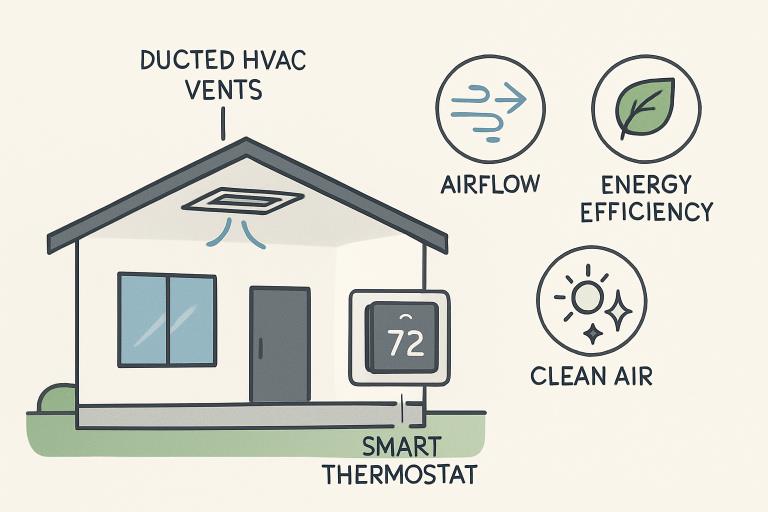
Meeting modern home comfort needs means choosing HVAC solutions that blend energy efficiency, intelligent control, and healthy air. Today’s ducted HVAC systems are leveraging breakthrough technologies to offer homeowners greater flexibility and reliability than ever before. As expectations rise for both sustainability and performance, innovations like the ducted heat pump are transforming how we approach climate control, providing efficient heating and cooling for every season.
Gone are the days when home comfort meant uniform temperature. Now, systems are expected to learn, adapt, and enhance well-being in more innovative, cleaner ways. The evolution of ducted solutions is a response to increasing environmental awareness and personal convenience priorities, offering options that cater to a wide range of architectural designs and lifestyles. From advanced zoning capabilities to predictive maintenance, these innovations are redefining what it means to enjoy year-round comfort.
Smart Integration for Personalized Comfort
The rise of smart home technology has transformed ducted HVAC systems into responsive, data-driven climate controllers. Users can now adjust temperatures, set routines, or even monitor energy usage via smartphone apps or voice assistants. Not only does this make daily operation more convenient, but smart integration enables systems to learn from user behavior — providing tailored comfort at different times of day and maximizing efficiency by automatically adjusting to occupancy or weather forecasts.
With interoperability between connected devices, HVAC units can work in conjunction with lighting or shading systems to optimize energy consumption throughout the entire home. This convergence of smart devices doesn’t just improve comfort; it also helps to reduce household energy expenditures, as highlighted in a recent U.S. Department of Energy report on energy-efficient smart home products.
Eco-Friendly Refrigerants: A Sustainable Shift
As environmental concerns escalate, the HVAC industry is shifting away from traditional refrigerants that contribute to ozone depletion and global warming. Systems now commonly use refrigerants such as R-32 or R-454B, which offer lower global warming potential while maintaining high performance. This transition supports international climate goals, including those outlined in the Kigali Amendment to the Montreal Protocol, and reflects a broader movement toward making residential technologies more environmentally friendly.
The adoption of these refrigerants is also encouraged by national regulations, prompting manufacturers to design systems that not only deliver outstanding comfort but also minimize their ecological impact. Homeowners invested in future-proofing their comfort systems increasingly prioritize this feature in their purchasing decisions.
Advanced Zoning Capabilities
Zoned ducted systems represent a major leap in residential comfort customization. By dividing a home into independent zones, each area can be programmed with distinct temperature, airflow, or timing preferences. This is particularly valuable for multi-story or sprawling homes, where demand for heating or cooling varies by sunlight exposure, room function, or occupancy patterns.
Advanced zoning eliminates energy waste that typically occurs when unoccupied or infrequently used rooms are conditioned alongside occupied or frequently used spaces. Households with variable schedules or diverse preferences, such as home offices or nurseries, gain both convenience and efficiency, as comfort is no longer a one-size-fits-all proposition. The U.S. Department of Energy details how zoning systems can lead to both increased comfort and savings.
Predictive Maintenance and AI Integration
Poorly maintained HVAC systems not only underperform but can also increase energy bills and reduce equipment lifespan. Today, predictive maintenance, enabled by artificial intelligence and IoT sensors, is a game-changer. Constantly monitoring system health, these solutions predict when filters need to be changed, detect abnormal energy consumption, and alert homeowners or technicians to potential issues before they escalate.
This proactive approach not only lowers lifetime repair costs but also prevents the discomfort of unexpected breakdowns. As AI becomes more advanced, expect systems to self-optimize in real time, further aligning performance with usage patterns and environmental conditions.
Enhancing Energy Efficiency with Variable-Speed Compressors
Variable-speed compressors are a hallmark of the new generation of ducted HVAC systems. Unlike legacy models that operate by switching on and off, these advanced compressors allow for continuous and adjustable output. This results in less fluctuation, quieter operation, and most importantly, substantial reductions in overall energy use.
Homeowners benefit from both the comfort of steady indoor temperatures and the long-term financial benefits that come with reduced utility bills. As energy grid demands rise, the importance of having systems that perform efficiently while responding dynamically to climate needs continues to grow.
Improved Air Quality Through Advanced Filtration
Health and comfort go hand in hand, which is why air quality enhancements are crucial to the best ducted HVAC solutions. Features such as UV-C lamps, which neutralize bacteria and viruses, and high-MERV filters designed to trap fine dust, pollen, and allergens are now readily available. Bipolar ionization technology is also becoming mainstream, further purifying indoor air for individuals sensitive to respiratory issues or seasonal allergies.
These air filtration technologies are transitioning from commercial spaces to everyday homes, enabling families to breathe cleaner, healthier air and reducing the risk of airborne illnesses.
Future Trends in Ducted HVAC Systems
The horizon for ducted HVAC technology holds several exciting possibilities. Innovations such as magnetocaloric and electrocaloric cooling systems promise solid-state solutions that can reduce noise, footprint, and reliance on chemical refrigerants, paving the way for the next generation of climate control. Meanwhile, growing investments in AI and data analytics suggest that optimization will become even more accurate, anticipatory, and eco-conscious in the years ahead. As smart cities and sustainable building practices proliferate, the demand for advanced, adaptive, and environmentally friendly HVAC systems is poised to accelerate even further.
Conclusion
The future of ducted HVAC systems is bright — characterized by smarter controls, greater efficiency, and a commitment to clean, sustainable indoor environments. Staying informed and choosing innovative solutions enables homeowners to achieve maximum comfort while minimizing environmental impact and energy costs for years to come.