Summer turns your home into a set piece—blinds glowing, floorboards warm, the low hum of the outdoor unit as the soundtrack. But when that hum slips into a rattle, or the cool fades to tepid, the scene changes fast. Air conditioners rarely fail without leaving breadcrumbs first. Spot the early signs, and you can avoid a meltdown in the third act.
1) Air Feels Weak or Stalled
When your vents groan instead than blow, the house never seems comfortable. Corners stay warmer, bedrooms lag, vents murmur, and the thermostat is slow to move. Slow responses are irritating and consume energy while the system tries to respond.
Common culprits hide in plain sight. A clogged filter chokes airflow, and you can often spot it: the mesh looks matted, gray, and dusty. Furniture or curtains crowding a return vent starve the system’s intake. Ducts can be leaky or partially detached—loose joints, tape peeling, or the faint sound of air escaping are the telltale signs. Inside the air handler, a blower motor with a failing capacitor can cause uneven fan speed and a weak push through the vents.
Then there’s the icy twist: frozen evaporator coils. Ice buildup blocks air like a snowbank, causing little to no flow and sometimes a dripping condensate trail. Coils freeze from low refrigerant, restricted airflow, or control issues, and once they do, everything downstream suffers. In older ducts, dust buildup and even pests can constrict passages, piling onto the pressure loss. Don’t ignore a noisy fan spin or blades that seem off balance—uneven rotation points to a motor or wheel issue that only gets worse the longer it runs.
2) Vents Blow Warm When They Should Be Cold
The AC equivalent of a check engine light is warm vent air when the thermostat asks for cooling. The usual cause: low refrigerant charge from leaking. With less refrigerant transferring heat outdoors, the system loses cooling power and the compressor runs hotter and longer.
Misreading a thermostat might lead to a wild goose hunt. The system may never get the cooling message if the sensor is out of calibration or the display jumps between temperatures. If the outdoor unit is quiet, the compressor may not be functioning due to failed start components, triggered safety, or control board issues. Dust and debris on condenser coil fins trap heat, preventing the system from rejecting it. You may see dead leaves, grass clippings, filth, and a heated metal casing indicating an overheating core.
Electrics matter, too. A faulty contactor or relay can cause the system to flicker on and off, never settling into a steady cycle. Fan direction errors—rare, but real—send blades spinning the wrong way after a motor replacement or wiring mishap, weakening airflow. And though uncommon, miswired refrigerant lines after a repair can reverse flow, making the whole cycle run backward and blow warm air inside.
Finally, look around the outdoor cabinet: bushes hugging the unit, stacked storage, or fencing too close all choke ventilation. The condenser needs breathing room to shed heat; without it, you feel the difference at the vent.
3) Unfamiliar Sounds Join the Soundtrack
A soothing whoosh, steady hum, and gentle thunk of a cycle starting are air conditioners’ typical lexicon. Anything more is a hint. Grinding might cause a sloppy fan spin due to old bearings or a borrowed motor. Cabinets or duct joints rattling as the fan turns up is a loose-panel classic.
Hisses, especially continuous ones, can indicate a refrigerant leak; they sound like air escaping a tiny puncture. Relays chattering, a contactor jammed, or a capacitor failing to start a motor are electrical. Recurring clicks indicate a startup issue; you’ll often notice a wait before anything runs. A thump or gentle drumming inside is frequently caused by an uneven blower wheel or housing obstruction.
Squeals and squeaks, high pitch? Older systems had belt slippage. Sheet metal expands and contracts under pressure and temperature, causing duct pops. Drastic compressor banging indicates a loose internal element or mechanical damage that needs quick treatment. Any of these sounds, a burning smell, or breaker tripping indicate a red alert.
4) Rapid Starts and Stops
Short cycling—the unit flipping on, running briefly, then shutting off—doesn’t just fail to cool; it chews through components and spikes your bill. The space stays sticky, the temperature never quite lands, and the compressor takes a beating from the repeated starts.
It could be a miscalibrated thermostat or sensor placement (too close to a sunny window or a draft). Overheating and premature failure result from dirty condenser coils. Iced coils and safety shutdowns result from low refrigerant charge. Size matters also: a large system blasts the home with chilly air and then leaves dampness and cycles too much.
Inside the air handler, a clogged filter or struggling blower motor reduces airflow, causing the evaporator coil to freeze and the unit to short-cycle as it hits limits. Electrical gremlins matter here, too—relays that chatter, contactors that stick, or capacitors that can’t hold a charge will all create inconsistent cycling you can hear and feel.
What a Technician Will Check First
A skilled tech navigates a system like a detective. Filters, return grilles and supply vents are checked for airflow, followed by a torch examination for duct leaks, loose joints and obstructions. They’ll check for airflow restrictions, defrost frozen coils safely, and clean evaporator fins if frost or condensation trails indicate trouble.
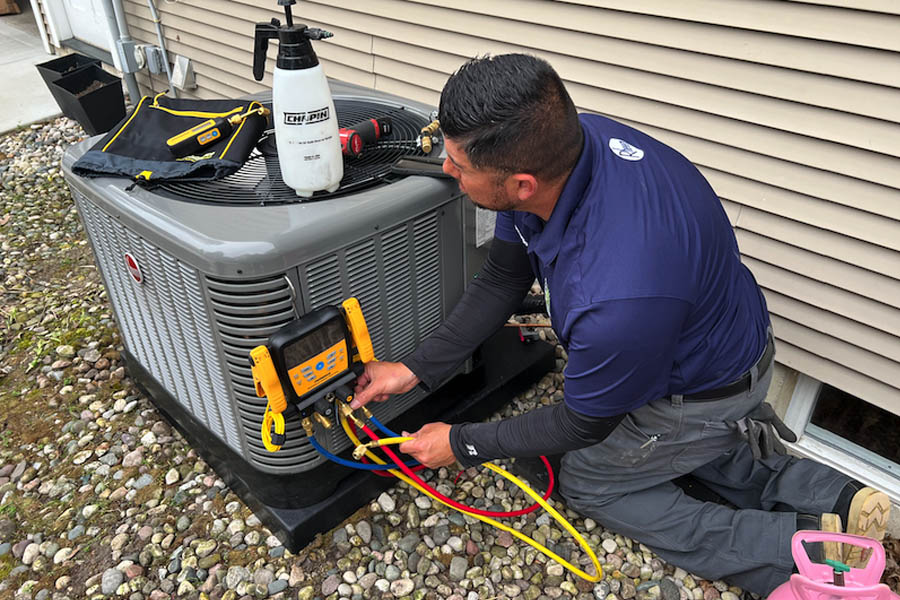
Refrigerant diagnostics come next. Pros measure superheat and subcooling to check charge, inspect for leaks, and rectify them before recharging—because merely topping off a leaking system is a temporary bandage. Electrically, they’ll meter capacitors, check contactors and relays, and make sure compressor and fan motors start without chatter or buzz. Checking sensor accuracy, replacing batteries, and validating setpoint and room data is rapid thermostat calibration.
Outdoor coils and fins are deep cleaned, and the unit’s clearance is checked for breathing. Techs check fan rotation and blade condition, tighten cabinet panels to stop rattles and check breakers, fuses and wiring. If the system short cycles, look into sizing, control logic, and safety switches to find the problem.
FAQ
Why is my AC blowing warm air?
Low refrigerant, dirty condenser coils, or a non-running compressor are common causes, as are thermostat sensor faults. A tech can pinpoint which one applies with a quick diagnostic.
What causes evaporator coils to freeze?
Restricted airflow or low refrigerant lets the coil temperature drop below freezing, building ice that blocks air. Fixing the restriction and correcting the charge resolves the cycle.
Is short cycling dangerous for my AC?
Yes—frequent starts stress the compressor, hike energy use, and leave humidity high. It’s a symptom worth addressing quickly to prevent bigger failures.
Are hissing sounds always a refrigerant leak?
Often, but not always; some expansion noises can hiss briefly. A continuous hiss near lines or the indoor unit deserves a professional leak check.
How often should I change my air filter?
Most homes do well with every 1–3 months, but pets, smoke, renovations, or allergies may require monthly changes. If the mesh looks gray and matted, it’s overdue.
Can a thermostat cause frequent cycling?
Absolutely; miscalibration, bad placement, or failing relays can trigger rapid on-off behavior. Recalibration or replacement often restores stable operation.
What does a buzzing outdoor unit mean?
Buzzing usually hints at electrical issues like a weak capacitor or chattering contactor, especially if the fan or compressor won’t start. Powering down and calling a pro is the safe move.
Why is my ductwork making popping sounds?
Metal ducts expand and contract with temperature changes, causing pops known as oil-canning. It’s often harmless but can be reduced by adjusting airflow or reinforcing sections.
Do dirty condenser coils really affect cooling?
Yes—they trap heat, forcing longer run times and warmer supply air. A proper coil cleaning restores heat rejection and efficiency.
Should I worry if the outdoor unit feels very hot?
An excessively hot cabinet suggests poor airflow, dirty coils, or a struggling compressor. It’s a sign the system needs inspection to prevent overheating.