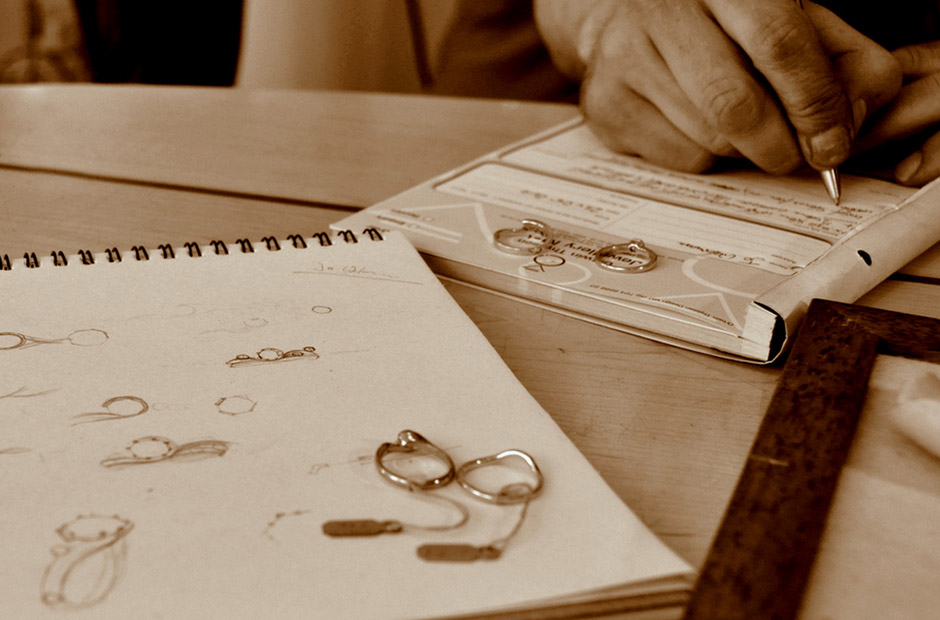
Jewelers offer custom designs to transform a client’s vision into a tangible piece of fine jewelry. The process begins with concept sketching, followed by collaboration between the client and the jeweler to capture every detail. Here are some tips for creating a custom piece with a local jeweler:
Provide a Concept Image
A concept image, such as a photograph of an inspiration piece, allows jewelers to sketch designs on paper before any manufacturing occurs. This visual representation serves as the foundation for the project and helps generate a computer-aided design (CAD) model. The CAD model facilitates refinement through adjustments before a piece is cast and set. To align the final product with your expectations, approve the digital rendering during the CAD phase of the design process. You can request modifications to the proportions or the ring style while the design is still in a digital format.
Select a Specific Metal
Your material choice may define the aesthetic character and structural integrity of the final custom piece. Jewelers typically offer the following metals for selection:
- Gold
- Platinum
- Palladium
- Sterling Silver
- Stainless steel
Identifying your preferred metal dictates the technical requirements for the casting and setting phase. Metals like white gold require rhodium plating to achieve a bright, mirror-like finish, which the designer must account for when planning the piece. When you choose the metal, the designer can optimize the structural integrity of the piece for gemstone incorporation.
Choose a Stone Shape
To optimize the visual impact of your custom design, select a stone shape that complements the geometry of your piece. The stone’s dimensions influence the technical structure of the CAD model. Choosing among round, emerald, and oval shapes lets you create a modern or classic look. Modern shapes, such as the trillion or baguette, require specific prong configurations during casting and setting to secure the gemstone.
Choosing the stone’s shape early allows the designer to balance the proportions of the metal and any accent stones. When selecting a shape, assess how the stone’s silhouette integrates with your preferred mounting style. Match the shape to the ring style, and use accent silhouettes to complement the primary center stone.
Identify a Ring Style
Identifying a specific ring style helps align the structural foundation of your jewelry with your aesthetic vision. The style provides the CAD model’s framework, and it guides component placement. Style also impacts the complexity of the casting process and determines how the metal interacts with the diamonds. If you prefer classic designs, opt for the solitaire style, featuring a single, prominent stone. A double-halo style features two rows of smaller diamonds surrounding the center stone. For a modern silhouette, the bypass style features a band whose ends do not meet.
Utilize Rhodium Plating
Professional rhodium plating adds a final enhancement, achieving a mirror-like finish. A jeweler can electroplate rhodium onto jewelry to provide a hard, protective layer that enhances its durability and scratch resistance. The rhodium plating process also masks gold’s yellow tint. Jewelers may use rhodium plating to further improve the luster of a piece’s diamonds or gemstones.
Visit Jewelers for Custom Pieces
The casting and setting process turns a piece’s digital design into a wearable custom piece, whether it’s a ring, bracelet, or necklace. Custom pieces allow you to enhance your collection with items that tell a story or capture a special moment. Contact a reputable jeweler to learn more about the design process.