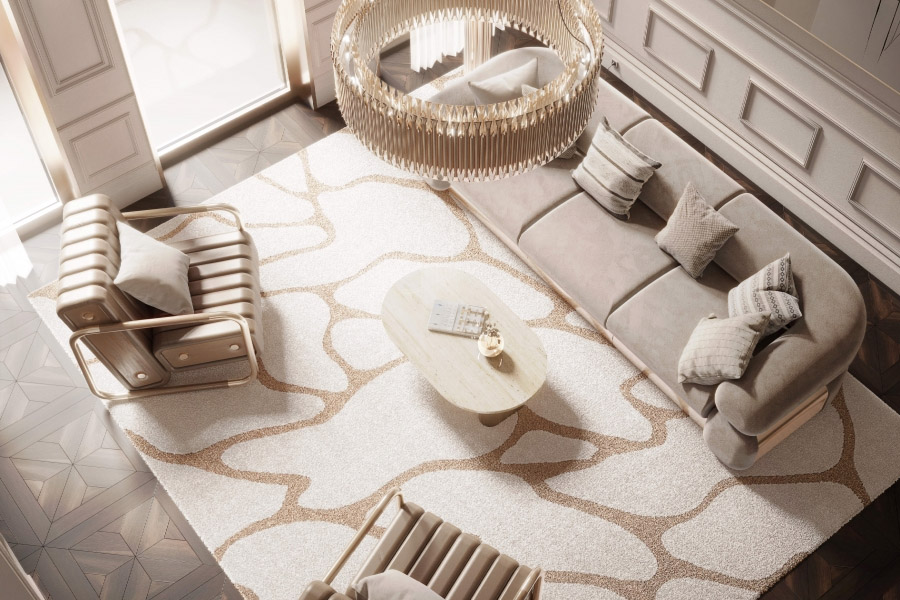
Why a Fine Rug Is the Room’s Quiet Power
A premium carpeting gracefully anchors a huge room. An invisible fulcrum helps your eye settle, inspires furniture to talk, and brings warmth to daily architecture. A good rug frames moments, proposes pathways, and sets intention. Natural fibres and handmade weaves provide weight, personality, and complexity to pattern, whereas synthetic lookalikes rarely do.
Think of a high-end rug as both a foundation and a mood board. Its field and border are like stage directions—soft cues about where to linger, where to flow, how to gather. That quiet power is why designers often start from the ground up. Get the rug right, and the rest of the room understands its assignment.
Material Matters: Wool, Silk, and the Poetry of Texture
Luxury rugs are as much about feeling as seeing. Wool is the ultimate everyday favourite because to its springiness, stain resistance, and softness that improves with age. Silk reflects light like a whisper across threads, adding glamour. Mohair and goat hair lend a soft, lasting gloss, while cotton delivers breathable structure in flatweaves and varied compositions.
Natural fibres age with character and seem richer. They age in, telling your home’s story. Like a favourite novel reread in warm sunlight, high-end natural materials have a lived-in, layered brilliance. Synthetic fibres are often surface-deep.
Pile, Pattern, and Light: Composing Atmosphere
Pile height is cinematic. Low pile reads as sleek and urbane, ideal for quiet luxury and crisp silhouettes. Medium pile balances comfort with clarity, a versatile baseline for most rooms. High pile or shag offers plush drama—perfect for spaces that invite lingering and barefoot rituals.
The soundtrack is pattern. Geometrics energise modern spaces, micro-motifs provide intimacy, and painterly florals are classic. As the light changes, hand-knotted rugs reveal a sophisticated micro-geometry up close and a soft field of tone from afar. Under evening lamps, silk accents or high-twist yarns flicker, while matte wool absorbs light softly, providing peace.
Scale and Placement: The Invisible Architecture
Choosing the right size is half the magic. In a living room, aim to float at least the front legs of your seating on the rug; more coverage reads more luxurious and resolves visual tension. In dining rooms, add roughly 24 inches beyond the table on all sides so chairs slide smoothly without catching edges. Bedrooms love a rug that extends past the nightstands or a pair of runners flanking the bed—either way, the gesture should feel intentional and enveloping.
Placement is like choreography. Align the rug with architectural lines and stabilize it with a quality rug pad. Keep thoroughfares clear, give door swings breathing room, and let negative space exist on purpose. When scale and placement are right, the whole room feels more grounded, even if the palette is light and airy.
Zoning and Layering: How Rugs Shape Space
Open plans are attractive and hard. Rugs whisper, “This is the lounge,” “That’s the reading nook,” and “Here’s where dinner happens.” Use variation to distinguish: a refined hand-knotted heirloom for the sitting area, a strong flatweave for the eating room, and a soft pile for the media corner.
Layering goes beyond fashion. Use a wool flatweave or natural-fiber neutral as a base and a smaller, expressive rug on top. In rooms that want character without clutter, this offers depth, temperature, and refined sensitivity. Layers should talk: complimentary tones, different textures, and rhyme or respectfully contrast patterns.
Craft and Care: Living with a Rug That Lives with You
The finest rugs are meant to be lived with, not tiptoed around. Hand-knotted pieces carry thousands of individual decisions—each knot a small signature of the maker’s skill. Hand-tufted rugs deliver lush, tailored pile with a more accessible timeline. Flatweaves, kilims, and dhurries bring lightness and agility, rolling out a clean plane that’s easy to shift and refresh.
Care is simple but consistent. Rotate periodically to even sunlight and traffic. Vacuum with the beater bar off for delicate piles and fringe. Address spills quickly, blotting instead of scrubbing. A good rug pad is non-negotiable—it protects the rug, prevents slipping, smooths minor floor variations, and makes every step feel just a bit more cloud-like.
Color Stories: Bold Moves and Whispered Neutrals
Color sets the mood; texture tells the tale. Neutrals—ivory, sand, heathered gray, ash—are the masters of quiet luxury, layering a sense of calm and light. That doesn’t mean “boring.” Tonal variation, marled yarns, and sculpted pile give neutrals depth you can’t get from a flat swatch.
Bold rugs reverse it. Jewel tones give a room a pulse. Indigo deepens, rust warms, green stabilises. One roll-out of a lively design may transform a small room. Balance the rug’s melody with restrained upholstery, art, and lighting that lets it sing.
Sustainability and Longevity: Beauty That Endures
Luxury isn’t just a look; it’s a life cycle. Natural fibers are renewable, and many artisanal practices support small workshops and heritage craftsmanship. High-quality rugs are repairable, cleanable, and designed to be part of your home’s future, not landfill statistics. Longevity is the most elegant sustainability move of all: buy once, love forever, and let the rug gather a history worth keeping.
A well-made rug also shifts how you experience a room—quieter footsteps, softer acoustics, warmer underfoot in winter, a tactile invitation to stay awhile. Beauty is the headline, yes. But comfort, stewardship, and craft are the fine print that make the story worth reading.
FAQ
How big should my rug be for a living room?
Choose a size that fits at least the front legs of your seating on the rug; larger coverage looks more refined and visually stabilizes the arrangement.
Can I layer rugs without it looking busy?
Yes—ground with a large neutral base and add a smaller, expressive rug on top, keeping palettes complementary and textures varied.
What’s the difference between hand-knotted and hand-tufted?
Hand-knotted rugs are made knot by knot on a loom and often last generations; hand-tufted rugs use a tufting tool for quicker construction and typically have a different backing and feel.
Are natural fibers better than synthetic?
Natural fibers like wool and silk offer richer texture, durability, and a patina that improves with age, while synthetics can mimic looks but often lack depth.
How do I keep a rug from slipping or buckling?
Use a high-quality rug pad sized slightly smaller than the rug and ensure the floor is clean and dry before placement.
Is a light-colored rug a bad idea in high-traffic areas?
Not necessarily—choose performance-minded natural fibers, vacuum regularly, and rotate to manage wear and exposure.
How often should I rotate a rug?
Every six months to a year helps even out sun exposure and traffic patterns, extending the rug’s life and appearance.
Do rugs really improve acoustics?
Absolutely—pile and fibers absorb sound, softening echoes and making rooms feel calmer and more intimate.