Why Less Feels Like More
Minimalism is about intention, not austerity, notes Sun-Pro Realty and Management team. That means peaceful form, balanced proportions, and materials that encourage touch without demanding attention in pool design. Water, light, and line remain when visual noise is removed. Space breathes. View opens. The backyard is a peaceful retreat where the day softens.
Minimalist pools excel at amplifying what’s already beautiful on your property. They frame sunsets instead of competing with them. They mirror the sky, the trees, the architecture. When a design chooses restraint over spectacle, even small footprints start to feel expansive and dignified.
Shape Language: Geometry That Calms
The unsung hero of a minimalist pool is its shape. Rectangles and crisp squares are the go-to because they broadcast order and clarity. A long, narrow lap pool can draw the eye forward and make a tight yard feel intentional; a compact square plunge pool anchors a patio like a sculptural element.
Think of geometry as choreography. A meticulously straight coping line, a consistent tile reveal, and a pool shell that tracks perfectly with the home’s axes—these are the quiet beats that make a space read “high-end.” Even a subtle step detail or a tanning shelf becomes impactful when it’s aligned, repeated, and refined. Minimalism thrives on rhythm and repeatable proportions.
Material Palette: Tactile, Honest, and Unfussy
Minimalist interiors and exteriors share a philosophy: fewer materials, used better. Polished or troweled plaster interiors—especially in soft whites, grays, or pale blues—create water that reads luminous instead of neon. For decks, porcelain pavers, honed limestone, travertine, or smooth concrete offer clean sightlines and honest texture. Wood accents like ipe or teak bring warmth and grain, tempering the stone and water without cluttering the composition.
Curate your palette like a capsule wardrobe. Two to three materials are plenty—mixing too many patterns fractures the visual calm. Focus on edges: mitered corners, consistent grout joints, and tight tolerances turn “simple” into “architectural.” And consider performance under real-world conditions—stone that stays cool underfoot, slip-resistant surface finishes, and coping profiles that drain rather than stain.
Light as a Design Tool
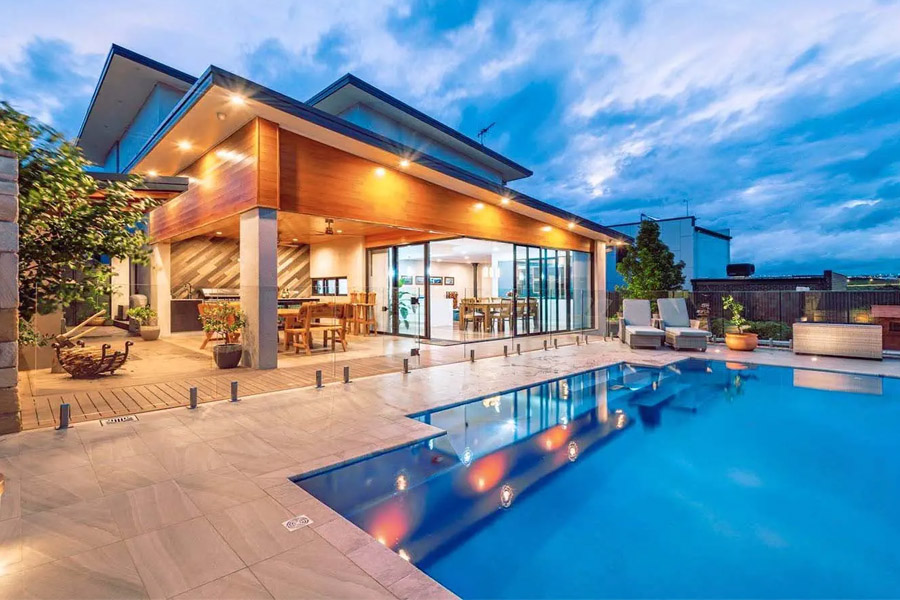
In minimalist pools, light isn’t just illumination—it’s the atmosphere. During the day, a pale interior finish bounces sunshine into a soft glow; in the evening, discreet fixtures do the heavy lifting. Swap rainbow LEDs for warm, low-intensity lighting that traces form rather than stealing the scene. In-pool lights positioned to avoid glare, trimless step markers, and hidden linear LEDs under coping can make water read like glass after dark.
Landscape lighting should whisper. Low bollards that graze ornamental grasses, shielded path lights, and subtle wall washes give depth without turning the yard into a stage. The goal: an elegant gradient from interior to deck to water, so the night feels cohesive and easy on the eye.
Features with Restraint
Minimalist doesn’t mean bare—it means edited. Choose one feature and let it sing. A single sheer descent waterfall can introduce motion and sound without overwhelming the linework. A narrow infinity edge creates a meditative horizon and tightens the geometry. A shallow tanning shelf, paired with two sculptural loungers, reads resort without adding visual chaos.
Furniture should follow suit: slim teak loungers, low-profile umbrellas, and cushions in a restrained palette. Prioritize silhouettes that sit low and parallel to major sightlines, so the furniture supports the architecture rather than fighting it.
Seamless Indoor–Outdoor Flow
Our favourite minimalist pools feel like extensions of the home. Mirror the interior and deck with porcelain pavers that match the kitchen floor, microcement from living spaces, or large-format tiles that cross the threshold. Place the pool near doorways, windows, and important architectural axes for visual coherence. Sliders open to make the house and yard one large living space under the sky.
Plan circulation with intention. Keep pathways clear, steps generous, and transitions intuitive. A well-placed bench wall or planted edge can guide movement without fences or signposts, making the space feel both open and organized.
Maintenance That Doesn’t Own Your Weekend
A minimalist pool is as practical as it is beautiful. Fewer ornamental elements mean fewer places for debris to collect. Smooth surfaces are easier to brush; larger-format materials reduce grout cleaning; simplified water features minimize mechanical upkeep. Automation—variable-speed pumps, smart chlorination or salt systems, and robotic cleaners—keeps the water balanced and sparkling with minimal effort.
Design for durability and serviceability from the start. Choose finishes suited to your climate, specify hardware and fixtures that resist corrosion, and make equipment access tidy. The result is an elegant pool that stays elegant without a constant maintenance performance.
Designing with Intention and Context
Minimalism shines when it’s tailored. Let your site tell you what to do—orient the pool to capture morning light, align the waterline with a favorite tree’s reflection, or use an infinity edge to borrow the view beyond your fence. If you’re in a warm, humid climate like Birmingham, AL, consider materials that stay cool underfoot, coping that manages heavy rains, and equipment choices that keep energy use in check; local builders can calibrate details to your weather and codes.
Color matters as much as form. Pale interiors skew toward a soft turquoise; deeper grays read moodier and mirror-like. Pick a tone that complements your home’s exterior rather than fighting it. And remember: restraint is the through-line. Every decision should support calm, clarity, and use.
Sustainability, Quietly Embedded
Minimalist doesn’t shout “green,” but it often is. A right-sized pool with efficient hydraulics reduces energy demand. Native planting around the deck cuts irrigation. Porcelain pavers and high-quality plasters last longer, meaning fewer replacements. Solar covers and well-placed shade can hold heat and reduce evaporation without visual clutter. When you do less, thoughtfully, you often save more—resources, time, and noise.
FAQ
What shapes work best for minimalist pools?
Rectangles and squares lead the pack because they’re visually calm and easy to align with architecture.
Can minimalist pools fit small yards?
Absolutely—narrow lap pools and compact plunge pools can make tight spaces feel deliberate and expansive.
Which materials create a clean, modern look?
Think honed stone, porcelain pavers, smooth concrete, and warm hardwood accents used in a restrained palette.
How should I light a minimalist pool?
Use low-intensity, warm lighting that traces edges and steps, avoiding colorful, high-output fixtures.
Are water features still okay in minimalist design?
Yes—limit it to one understated element, like a single sheer descent or a slim infinity edge.
Do minimalist pools cost less to build?
They can be cost-efficient by focusing on essentials, though high-quality finishes and precise detailing still matter.
Are they easier to maintain?
Generally yes; fewer decorative components and smooth surfaces mean simpler cleaning and less debris.
Will a minimalist pool suit a traditional home?
With the right materials and proportions, a minimalist pool can quietly complement classic architecture.
What interior color should I choose?
Pale tones produce luminous turquoise water; deeper grays create a reflective, mirror-like effect.
Can this design approach be sustainable?
Yes—efficient equipment, durable materials, native plants, and thoughtful sizing reduce environmental impact.