Key Takeaways
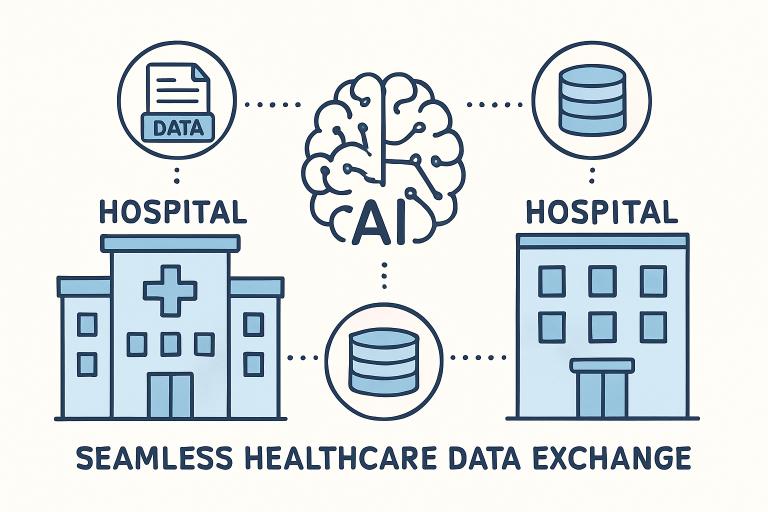
- AI significantly enhances the exchange and integration of healthcare data, contributing to better patient outcomes and efficient care coordination.
- Despite its benefits, AI-driven interoperability faces challenges such as data privacy, a lack of standardization, and resource constraints.
- Future progress depends on standardized protocols, targeted education, and collaboration among stakeholders.
Understanding Healthcare Data Interoperability
Healthcare data interoperability is the ability of various information systems, applications, and devices within the healthcare sector to seamlessly access, exchange, and use patient data in a coordinated fashion. In today’s complex healthcare environment, this capability forms the backbone of efficient and personalized care delivery, supporting care coordination, reducing medical errors, and enhancing treatment outcomes.
The significance of interoperability continues to grow as health information systems diversify and patients receive care across different providers and platforms. With the advent of advanced technologies and complex healthcare infrastructure, ensuring that data flows freely and securely between disparate sources has become more vital than ever. Best AI call center software for healthcare is rapidly transforming this process, making healthcare communication more efficient and reliable.
Seamless data interoperability enables all stakeholders, from clinicians to administrators, to make more informed decisions based on a complete, up-to-date view of patient data. This integrated approach results in more accurate diagnoses, reduces duplicative testing, and ultimately supports improved outcomes for individuals and populations alike.
Achieving optimal interoperability not only improves clinical outcomes but also supports organizational efficiency. Healthcare providers can allocate resources more effectively and tailor care interventions more precisely when data from lab tests, imaging, pharmacy records, and clinical notes are fully integrated into their workflows. According to HealthIT.gov, interoperability is now regarded as an essential foundation for modern healthcare innovation.
AI has emerged as a powerful catalyst for overcoming the longstanding challenge of integrating and harmonizing healthcare data. Machine learning and natural language processing (NLP) techniques are particularly valuable for analyzing massive volumes of structured and unstructured health data. These technologies can identify hidden trends, automate data extraction, and facilitate the translation of information between various standards and formats.
Machine learning models are adept at resolving inconsistencies, uncovering missing links, and flagging potential errors across datasets. NLP further empowers providers to digitize and interpret free-text clinical notes, discharge summaries, and physician instructions. As a result, information once locked in silos becomes available for real-time sharing, fostering a more dynamic and holistic patient care experience.
Real-World Applications of AI in Healthcare Interoperability
Automated Data Reconciliation
Duplicate or fragmented records are a persistent problem for healthcare organizations. AI-driven reconciliation tools automatically identify and merge these records, ensuring accuracy and avoiding dangerous treatment errors. By matching data points from disparate EHRs, these tools create a unified patient view to support clinicians and administrative teams.
Predictive Analytics
Once integrated, large amounts of healthcare data fuel predictive analytics engines. These systems model patient trajectories, estimate readmission risks, and identify high-risk populations for proactive interventions. Providers can then tailor care strategies based on data-driven insights, leading to reduced hospitalizations and lower healthcare costs.
Natural Language Processing (NLP)
NLP applications help standardize information from various sources by interpreting clinical language and mapping notes to standardized terminologies. These tools break down the language barriers that often hamper communication among different healthcare systems and providers, resulting in a seamless experience for both clinicians and patients.
Challenges in Implementing AI for Data Interoperability
AI-driven interoperability initiatives in healthcare face significant barriers, including data privacy and security issues that require strict access controls, encryption, and adherence to regulatory requirements when sharing sensitive patient information. Additionally, the healthcare industry’s reliance on proprietary standards complicates data exchange, underscoring the need for universal data standards to advance progress. Furthermore, the substantial investment required in technology, training, and support underscores the need for proper resource allocation to build and maintain AI-powered infrastructure.
Case Study: AI-Driven Interoperability Initiatives
One example of successful data interoperability is the development of eHealth Exchange, a vast network that connects health information exchanges, hospitals, pharmacies, federal agencies, and payors. By using standardized data protocols and robust AI-enabled integration tools, eHealth Exchange promotes secure, nationwide healthcare data sharing. This initiative paves the way for broader collaborations and illustrates the importance of multi-stakeholder involvement in achieving interoperability goals.
Future Directions and Recommendations
Adopting standardized data protocols like HL7 FHIR is essential for bridging communication gaps and expediting system integration in healthcare. Additionally, investing in ongoing AI training for the healthcare workforce is crucial to ensure that employees are proficient in utilizing and interpreting advanced technologies. Furthermore, enhancing collaboration between technology experts and healthcare organizations fosters the development of customized solutions that effectively address industry challenges.
Conclusion
The promise of AI in optimizing healthcare data interoperability is matched only by the urgency of these solutions. By breaking down technical and institutional barriers, AI empowers providers, administrators, and patients to participate in more connected, effective, and personalized care experiences. Continued investment in technology, people, and standards will be vital to building a future in which healthcare data can be shared securely and used wisely for the benefit of all.