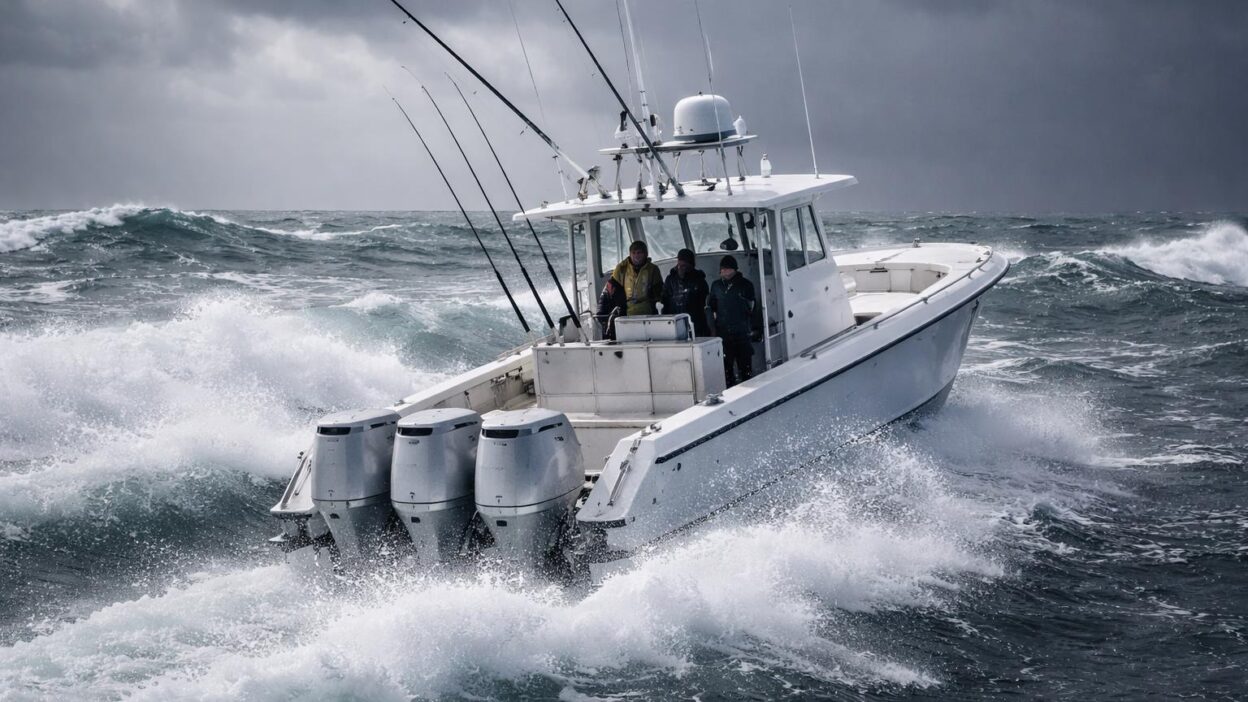
Anyone who runs offshore along the Australian coast knows how quickly conditions can change. A glass-out morning can shift into a short, steep chop long before the run home, and the difference between an enjoyable trip and a punishing one often comes down to the hull beneath you. Choosing from the wide range of fishing boats available today means understanding which design decisions translate into real-world control, comfort, and confidence when the sea turns unpredictable.
Here’s what to look for when selecting a fishing platform built to handle rough water without compromise.
Hull Design: The Most Important Factor
Hull geometry defines how a boat meets the water. A deeper-V entry helps soften impact when running into chop, while consistent tracking reduces the need for constant correction at the helm. Look closely at deadrise angles and how the hull transitions from bow to stern. Designs that balance a sharp entry with stable rear sections tend to maintain control without sacrificing efficiency.
In rough seas, hull behaviour cannot be fixed later with trim tabs or engine adjustments. It begins with the design.
Boat Size and Weight
Length alone does not determine offshore capability. Weight distribution and overall displacement play a significant role in how a boat rides through swell and cross chop. Heavier builds often carry momentum through waves, reducing the harsh stop-start motion experienced by lighter hulls.
That said, weight needs to be balanced with performance expectations. A well-proportioned hull with properly distributed mass will feel planted without becoming sluggish when conditions demand responsive handling.
Stability and Safety Features
Stability is just as important at rest as it is underway. Whether drifting over a reef edge or setting lines on a snapper ground, a stable platform improves safety and reduces fatigue over a full day offshore. Features such as wide chines, reverse chines, or carefully engineered hull geometry can help minimise roll.
Equally important are safety considerations like effective drainage, reliable bilge capacity, and predictable handling when the weather turns unexpectedly. Offshore reliability starts with stability built into the design.
Build Quality and Materials
Construction methods determine how well a boat withstands repeated exposure to demanding conditions. Plate aluminium builds with strong internal framing and proper weld integrity tend to handle the stresses of offshore running better than lighter recreational constructions.
Pay attention to structural details that are easy to overlook during purchase: sub-floor strength, corrosion protection, and how components are integrated rather than added later. These factors shape long-term durability and the confidence to push further when conditions allow.
Engine Power and Performance
Power selection should match the hull’s design and intended use. Underpowered setups struggle to maintain control when running into head seas, while balanced engine pairings allow the skipper to hold speed without overworking the boat.
Smooth throttle response and predictable acceleration matter more offshore than outright top speed. The goal is consistent performance that lets you adjust to changing conditions rather than fight against them.
Layout and Practical Offshore Features
A serious fishing platform needs a layout that works when conditions are less than perfect. Clear walkways, secure handholds, and intelligently positioned storage help maintain safety when moving around the deck. Think about how you manage rods, bait preparation, and landing fish when the boat is moving unpredictably.
The most capable fishing weapon is one where every feature supports real fishing workflow rather than simply looking good at the dock.
Test Before You Decide
Whenever possible, experience the boat on the water before committing. Calm conditions reveal little about how a hull behaves when pushed. Pay attention to how the boat lands after crossing the wake, how it tracks through quartering seas, and how confident you feel at the helm.
Real-world testing provides insight that specifications alone cannot.
Conclusion
Choosing a fishing boat for rough seas is ultimately about prioritising design decisions that deliver control, stability, and durability when conditions are at their toughest. Hull shape, balanced weight, strong construction, and practical layout all contribute to a platform capable of handling the realities of offshore Australia.
Serious anglers understand that the right boat does more than get you there. It builds confidence to keep fishing when the weather shifts, turning challenging conditions into just another part of the run, exactly what a purpose-built offshore fishing weapon is meant to do.