Key Takeaways
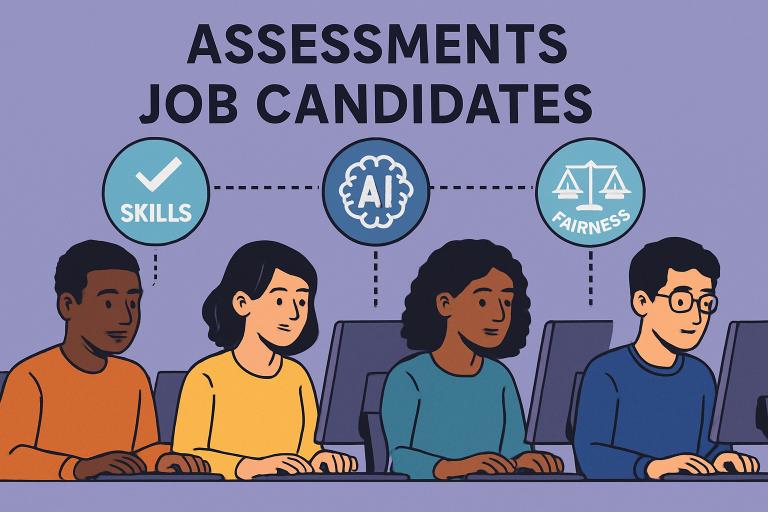
- Pre-employment assessments enhance hiring accuracy by evaluating candidates’ skills and cultural fit, ensuring a better match between candidates and the organization.
- Technological advancements, including AI and machine learning, are transforming assessment methods.
- Customized assessments tailored to specific job roles improve candidate evaluation.
- Remote proctoring ensures the integrity of online assessments.
- Emphasis on diversity, equity, and inclusion (DEI) is shaping assessment practices.
The hiring landscape is undergoing a fundamental transformation as organizations seek more accurate and inclusive means of evaluating candidates. Traditional interviews and resume reviews, while still useful, often fall short in accurately predicting job performance or identifying the ideal fit for a company’s culture. Today’s most forward-thinking employers are leveraging Pre-Employment Testing to gain a competitive edge. These data-driven assessments are designed to provide objective insights into candidates’ capabilities, ensuring better hiring decisions and supporting overall organizational goals.
As companies face a surge in applicants and a rapidly changing job market, pre-employment assessments help streamline recruiting and reduce bias. By integrating advanced technology, including artificial intelligence (AI) and remote proctoring, these tools address modern hiring challenges, from skill verification to diversity and inclusion. This article explores how the evolution of assessments is impacting recruitment and why investing in these methods ensures resilience and adaptability for businesses.
The evolution of pre-employment assessments is not just about efficiency—it’s about accuracy, accountability, and fairness. As the workforce becomes more diverse and dispersed, reliable evaluation methods are proving critical for building strong, innovative teams, creating opportunities for candidates from all backgrounds to thrive.
Alongside improved accuracy, these assessments offer customization for various job roles, enabling organizations to reduce turnover and enhance long-term employee retention. By embracing technology and modern assessment strategies, companies are well-positioned to address the priorities of today’s workforce and stay competitive in a rapidly shifting landscape.
Introduction
In an age defined by technological innovation and increasing workforce mobility, hiring the right talent is more complex than ever. Employers can no longer rely solely on gut instinct or a well-written resume. Instead, they require standardized, defensible measures that minimize subjectivity. Pre-employment assessments fill this gap by providing a rigorous, scientifically validated approach to candidate selection. Studies have consistently shown that these assessments can significantly enhance the accuracy of hiring decisions, resulting in higher productivity and a more engaged workforce.
Technological Advancements in Assessments
Advances in AI and machine learning have significantly enhanced the design and evaluation of pre-employment assessments. These technologies not only analyze vast datasets to provide predictive insights but also adapt in real-time to the unique interactions of individual candidates. AI-powered tools can measure attributes ranging from problem-solving abilities to emotional intelligence, providing employers with a multidimensional view of each applicant. Machine learning, for instance, enables continuous improvement of assessment tools by learning from hiring outcomes and optimizing evaluations accordingly.
The adoption of these tools has also contributed to greater transparency and scalability in the hiring process. Automated scoring reduces human error and subjective judgment, while real-time feedback enables hiring managers to make faster and more reliable decisions. For companies with high-volume hiring needs, AI-driven assessments are invaluable for identifying top talent without compromising on quality. According to SHRM, organizations that leverage technology-driven assessments have seen significant improvements in employee retention and job performance.
Customized Assessments for Better Fit
The era of generic testing is fading as employers recognize the importance of tailoring assessments to specific roles and organizational cultures. Custom pre-employment tests ensure candidates are evaluated on competencies truly relevant for success, such as technical skills, leadership potential, or customer service aptitude. By mapping assessment content directly to job descriptions and core values, businesses can identify candidates who not only possess the requisite experience but also align with the company’s long-term objectives.
This customization directly translates into improved candidate satisfaction and lower turnover rates. Applicants are more likely to feel fairly assessed when tests are meaningful and relevant to the role they are applying for. For organizations, this means a higher chance of securing employees who are committed, productive, and less likely to leave prematurely.
Remote Proctoring and Its Benefits
As remote and hybrid work models become the norm, companies need reliable ways to assess job seekers regardless of their geographical location. Remote proctoring addresses this challenge by leveraging sophisticated tools—including live webcam monitoring, browser lockdowns, and AI-driven behavior analysis—to ensure integrity and prevent cheating. These systems create a controlled and trustworthy testing environment, giving employers confidence in the results while offering candidates flexibility and convenience.
For global organizations or those seeking a wider talent pool, remote proctoring eliminates logistical barriers and expands access to talented professionals who might otherwise be overlooked due to their location.
Focus on Diversity, Equity, and Inclusion
Diversity, equity, and inclusion (DEI) are more than just buzzwords—they are central to effective, future-ready workplaces. Modern pre-employment assessments are increasingly designed to eliminate traditional biases, such as those associated with educational background or subjective interviewer impressions. Instead, the focus shifts to core skills and competencies, providing candidates from all backgrounds with an equal opportunity to compete based on merit. Thoughtfully designed assessments also help organizations comply with anti-discrimination laws and foster equitable hiring practices.
When delivered with sensitivity to cultural differences, these assessments enable companies to create a workforce that more accurately reflects the diverse world in which they operate, thereby enhancing both innovation and employee engagement.
Challenges and Ethical Considerations
Despite their many advantages, pre-employment assessments are not without challenges. Data privacy and security are ongoing concerns, particularly given the sensitive nature of the information collected during testing. In addition, biases can persist in algorithmic form if assessment tools are not continually audited and improved, potentially leading to systemic inequities in hiring outcomes.
Organizations must prioritize transparency by clearly communicating their assessment processes and by providing candidates with the option to request feedback or appeal decisions. Regular review and third-party validation of assessment tools can also help mitigate the risk of bias and ensure the ethical use of these tools across all hiring practices.
Conclusion
Pre-employment assessments are shaping the future of hiring by delivering objective, consistent, and fair evaluation methods. As technology continues to evolve and new best practices emerge, these tools will play a crucial role in building more dynamic, diverse, and high-performing teams for organizations worldwide.