Key Takeaways
- Scalable tower servers provide small businesses with a cost-effective and flexible solution to meet their evolving IT demands.
- Investing in scalable infrastructure enhances operational efficiency and supports business growth.
- Understanding the benefits and implementation strategies of tower servers is crucial for future-proofing IT systems.
Small businesses today are navigating an era of digital transformation, where agility and adaptability are pivotal for ongoing success. Investment decisions regarding IT infrastructure are now fundamental—not only to daily business operations, but also to long-term viability and scalability. For organizations seeking robust yet adaptable technology, scalable tower servers are emerging as a reliable option. These servers deliver the infrastructure backbone needed to support business growth and innovation, while remaining manageable within the confines of a smaller office environment.
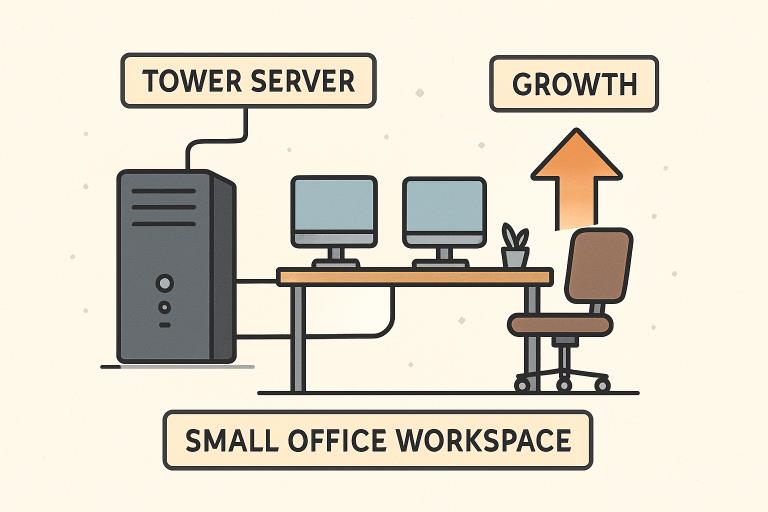
Scalable tower servers operate as powerful, standalone solutions that can be upgraded to satisfy shifting business demands. Their modular design makes them particularly attractive to organizations that face unpredictable workloads or data requirements. To learn more about their tower platforms, many small businesses are turning to trusted providers that specialize in server technology tailored to their evolving needs.
In this guide, we’ll break down how scalable tower servers help organizations adapt to change, what features set them apart, and the best practices for seamless implementation. As your business evolves—whether through expansion, digitization, or increased customer demands—having a future-ready infrastructure provides a significant operational edge.
The flexible nature of tower servers allows them to be upgraded as your business grows, ensuring you’re equipped to meet future technological demands without replacing your entire IT setup. This makes tower servers a strategic investment for both efficiency and cost control.
Understanding Scalable Tower Servers
Scalable tower servers are versatile computing devices designed for ease of deployment and progressive expansion. Unlike rack-mounted alternatives found in large data centers, tower servers occupy minimal space and can operate without requiring a dedicated server closet. Their primary advantage lies in flexibility—businesses can install more processors, expand memory, and add additional drives via accessible panels and slots as needed.
This hardware adaptability means businesses can plan for today’s needs while keeping an eye on tomorrow’s opportunities. With scalable servers, a small enterprise can start with a simple configuration and progressively enhance it, matching IT spending with actual growth and usage.
According to a recent TechRadar report, flexibility in IT infrastructure ranks as a top priority for small and medium-sized businesses, second only to cybersecurity.
Benefits for Small Businesses
- Cost-Effectiveness:Scalable tower servers present a wallet-friendly alternative to more complex systems, given their typically lower upfront cost and minimal network requirements.
- Flexibility:Modular components and straightforward upgrades reduce the stress and cost of scaling up resources, ensuring technology investments keep pace with growth.
- Space Efficiency:Their compact, stand-alone design fits easily into typical office environments, simplifying management and requiring no special cooling or cabling.
- Business Continuity:With built-in redundancy and enhanced manageability, tower servers help protect against downtime and ensure uninterrupted operations, a feature critical to businesses dependent on digital workflows.
Key Features to Consider
Selecting the right server is critical to establishing a future-ready IT backbone. Key factors for evaluation include:
- Processor Performance:Multi-core processors empower businesses to run applications concurrently and efficiently, making room for future digital initiatives.
- Memory Capacity:Sufficient and upgradeable RAM is crucial for running multiple workloads or advanced applications as the business diversifies its offerings.
- Storage Options:Modern tower servers support SSDs and high-capacity hard drives, providing flexible and speedy storage upgrades to meet evolving needs.
- Expansion Slots:PCIe slots enable teams to quickly and easily add advanced networking, GPU acceleration, or improved data redundancy features.
- Energy Efficiency:Lower power requirements result in direct savings on operational costs and support sustainability goals. The EPA’s ENERGY STAR for servers program highlights products that use less energy, contributing to both cost savings and environmental stewardship.
Implementation Strategies
A structured approach maximizes the investment you’ll make in scalable tower servers:
- Assess Current and Future Needs:Conduct an honest evaluation of your workflow, employees’ requirements, application dependencies, and anticipated growth. Planning for three to five years ahead can yield the best ROI.
- Plan for Scalability:During procurement, focus on systems offering non-disruptive upgrade options for CPU, memory, and storage. This will minimize both future costs and potential downtime during scaling.
- Ensure Compatibility:Cross-check server operating systems, virtualization platforms, and regular software against your server’s specs to guarantee seamless integration.
- Invest in Quality Hardware:Opt for well-supported, enterprise-grade hardware from reputable brands and ensure warranty coverage for repairs or upgrades.
Case Studies
Numerous businesses have modernized their operations by adopting scalable tower servers. For example, a growing retail company implemented a mid-range tower server to power its point-of-sale, cloud inventory, and customer engagement platforms. The company initially deployed a basic setup, then added storage and memory as digital initiatives expanded, streamlining its processing and improving overall transaction speed. In the nonprofit sector, a small educational foundation used a scalable server to centralize data storage, facilitating secure access for remote staff and simplifying data backup.
These stories highlight how scalable server deployment can eliminate operational bottlenecks, enhance security, and align IT capacity with actual business needs.
Challenges and Solutions
- Initial Setup Costs:Although the long-term value is evident, the upfront investment in servers and accessories can deter some businesses. To address this, many hardware providers offer financing terms or staged implementation options to align with available budgets.
- Technical Expertise:Small businesses often lack in-house server specialists. The solution lies in leveraging managed service providers or partnering with local IT consultants to ensure smooth configuration and maintenance.
- Security Concerns:Protecting sensitive data on servers is a non-negotiable requirement. Implementing firewalls, encryption, access control, and regular patches is essential. The Federal Trade Commission offers a comprehensive guide on basic cybersecurity for small businesses, providing organizations with a starting point.
Conclusion
Scalable tower servers offer a flexible and budget-friendly solution for small business IT infrastructure. By prioritizing systems that evolve with you, your organization can respond to opportunities and disruptions alike—without the headache of repeated system replacements. As IT requirements shift in today’s unpredictable environment, investing in scalable servers will help future-proof your business, giving you a strong, flexible foundation for years of growth and innovation.