Key Takeaways
- Modern excavation methods focus on safety, efficiency, and sustainable practices.
- Hydro-excavation and other advanced technologies reduce the risks of utility strikes and environmental harm.
- Adopting these techniques leads to faster, cost-effective project delivery and compliance with industry safety standards.
Modern construction demands methods that not only maximize efficiency but also protect underground utilities and reduce risks to people and property. With development often occurring in sensitive, densely populated, or utility-rich areas, the industry is steadily adopting innovative solutions, such as hydro excavation services, to ensure greater safety and accuracy on-site. By using pressurized water and vacuum systems, these advanced methods enable teams to remove soil without risking damage to hidden infrastructure.
Hydro-excavation, now widely regarded as the safest and most precise excavation approach, is rapidly replacing more invasive traditional digging methods. Companies like Kyle Erwin Construction lead the way in North Texas and the Dallas-Fort Worth region, exemplifying just how effective modern excavation can be for timely project completion with minimized risks.
These advancements in excavation not only benefit commercial contractors or municipalities. Home builders, utility managers, and even renewable energy providers are realizing substantial cost and safety advantages by leveraging non-destructive techniques in their projects. As a result, excavation practices are enhancing overall project reliability and environmental stewardship.
For projects involving energy infrastructure, pinpoint accuracy is even more critical. Specialized solutions, such as hydrovac for pipelines, provide highly controlled soil removal, reducing the risk of pipeline strikes and extending the lifespan of critical assets.
Traditional Excavation Methods and Their Limitations
For much of the twentieth century, excavation crews relied on backhoes, manual labor, and bulldozers to dig soil for construction or repairs. While effective for moving earth quickly, these techniques often lacked the finesse required in modern urban or utility-rich environments. A single miscalculation could lead to costly utility strikes, dangerous work conditions, and significant delays. According to The New York Times, accidental utility strikes continue to cause service outages, hazardous leaks, and increased project costs. Traditional methods also create greater soil disturbance and environmental impact, making them less appealing as construction priorities shift toward sustainability.
Modern Excavation Techniques
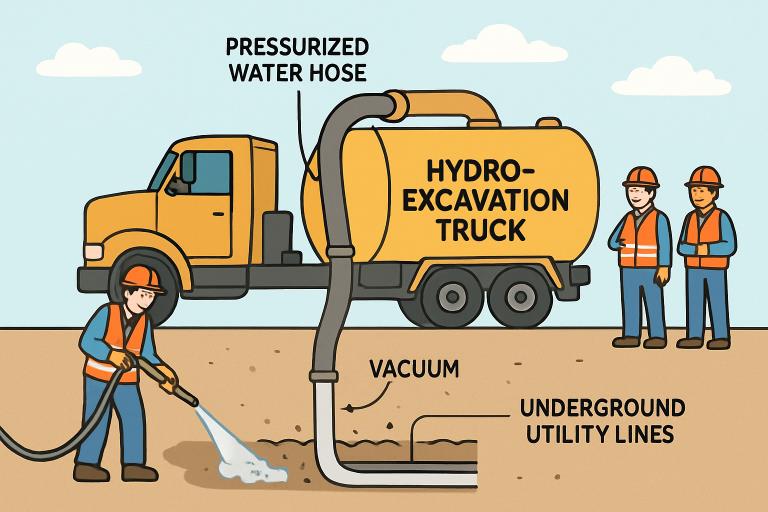
Today’s preferred excavation approaches reflect a heightened focus on control, accuracy, and risk mitigation. Hydro-excavation, for example, directs high-pressure water to break up soil, then immediately vacuums the loose material into holding tanks for easy disposal. This allows for surgical precision around sensitive cables, pipelines, or infrastructure, greatly reducing the risk of accidental damage.
- Hydro-Excavation:Especially valuable in urban settings, hydro-excavation provides a safer means to expose utilities while keeping workers and property out of harm’s way.
- Vacuum Excavation:Operating with air rather than water, this technique excels in dry conditions or where water runoff might be undesirable. Both methods stand out for their minimal footprint and reduced need for backfill or site restoration.
Technological Advancements in Excavation
Integrating technology with mechanical ingenuity has transformed excavation. GPS-guided machinery enables operators to follow digital plans with pinpoint accuracy, reducing human error and speeding up the process. Drones have also become central to modern construction, regularly surveying sites to create up-to-date, data-rich maps for planning and monitoring progress. These technological enhancements not only streamline projects but also reinforce on-site safety protocols.
Programming and controls embedded in today’s excavation equipment enable real-time adjustments, further promoting safer, more efficient operations.
Environmental and Safety Considerations
With environmental stewardship increasingly at the forefront of construction planning, non-destructive excavation methods offer a compelling solution. Hydro and vacuum excavation disturb less soil, preserve native ecosystems, and generate less fill waste overall. In addition, safer digging practices mean fewer emergency repairs and a lower likelihood of harmful leaks or accidents. This helps ensure team safety while protecting nearby communities from service interruptions or hazardous incidents.
These techniques are widely acknowledged for their ability to reduce harmful impacts compared to legacy excavation. For example, National Geographic notes that efficient excavation plays a critical role in maintaining water system integrity and preventing large-scale leaks.
Case Studies of Successful Implementations
- Urban Utility Upgrades:In Dallas-Fort Worth, multi-phase infrastructure improvements have been completed faster and with fewer incidents thanks to hydro-excavation. These projects benefited from minimized road closures, less disturbed soil, and negligible damage to surrounding utilities.
- Renewable Energy Expansion:Major solar and wind facilities across Texas have used hydro-vac methods to install supports and run cabling without harming local habitats. These approaches have helped streamline grid connection projects, bolstering Texas’s position as a renewable energy leader.
Conclusion
Safe and efficient soil excavation is key to successful construction in fast-growing regions. Techniques like hydro-excavation have proven to be the gold standard for projects where avoiding damage and staying on schedule are non-negotiable priorities. By adopting advanced, precise excavation tools, stakeholders, from general contractors to energy providers, are reaping benefits such as greater safety, faster completions, and enhanced environmental responsibility.