What “RFID” Really Means
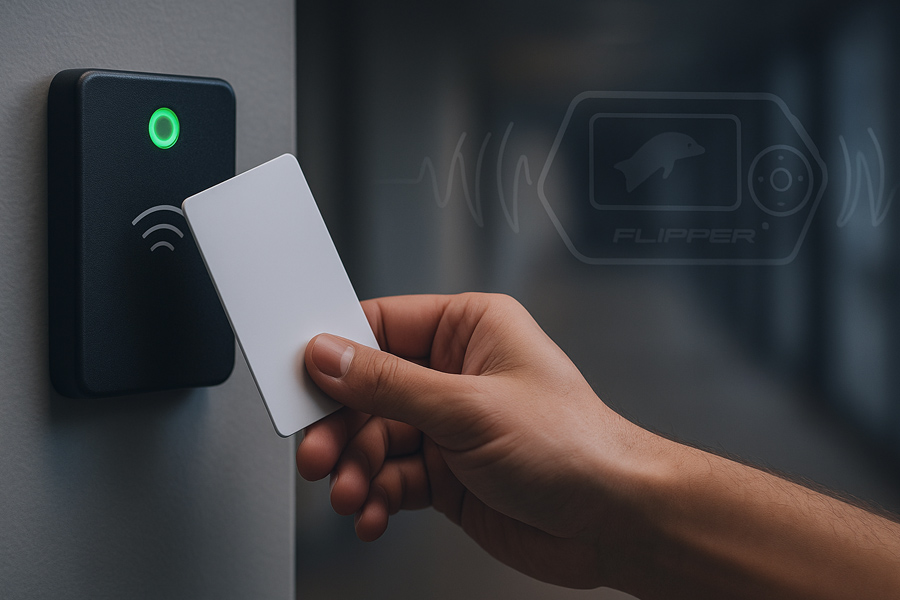
RFID—short for Radio Frequency Identification—is beautifully simple. A tiny chip and a hair-thin antenna sit inside a plastic card; wave it near a reader, and the two exchange a brief radio conversation that verifies who you are and what you’re allowed to do.
There’s no battery in the card, no pairing ritual, no app store detours. The reader energizes the card, the card replies with a secure credential, the system makes a decision, and the door clicks open. That’s the whole show, and it’s why this tech keeps earning trust.
The Contactless Shift That Never Looked Back
Before 2020, touch-free was nice-to-have. After 2020, contactless became how we expect to move through the world. RFID nailed that moment—not with flash, but with consistency. Offices, campuses, hospitals, and transit hubs needed flow without shared touchpoints, and proximity cards delivered a rhythm you could count on.
The magic is the lack of drama. Cards work with gloves on in winter, in a rush, at odd hours, with a coffee in your other hand. That predictability is half the product.
Why This “Old” Tech Still Feels New
Tech longevity is earned, not handed. Proximity cards have outlasted trends because they don’t need batteries, Bluetooth, or OS updates. In the physical world of slamming doors and dirty lobbies, they work fast at one task.
Meanwhile, the guts have evolved. Today’s high-frequency, encrypted platforms—think modern secure chipsets—bring serious cryptography, mutual authentication, and diversified keys. The form factor stayed humble; the security got heavyweight.
Small Card, Big Intelligence
Every successful tap quietly writes to a story: who entered, where, and when. Add analytics and you get a living sketch of how buildings breathe. Are there bottlenecks at 9 a.m.? Are certain wings underused? Do service corridors see suspicious spikes after hours?
Access data, handled responsibly, improves staffing, elevates safety, and makes space planning smarter. One gesture, many insights.
Security Without Friction
Good security should feel invisible—present, but never in the way. Prox cards hit that sweet spot. They reduce queues, human error, and lost-time chaos. If a card goes missing, you revoke it in seconds. If someone changes departments, you update permissions without reissuing a brass key to chase down later.
For employees, it’s confidence and momentum. For administrators, it’s control without constant firefighting.
When Simple Is the Smartest Choice
Don’t believe the plastic. Your door key can track your time, turn building systems to “occupied” mode, alter lights for energy savings, or start a personalised desktop session. The card connects physical and digital contexts, triggering larger workflows.
As systems get denser and more cloud-connected, the elegant little card remains the easiest way to tie it all together.
A Canadian Case Study in Reliability
Canada is a stress test for hardware: icy winters, humid summers, glove weather half the year in some provinces, and long commutes across sprawling campuses. RFID thrives there because it’s agnostic to climate and user habits. No flaky phone battery, no app permissions nightmare—just a tap that works.
Sustainability is catching up, too. Rewritable, reprogrammable cards extend lifecycle; on-site printing keeps reissues lean; durable composite materials reduce churn. Reliability isn’t just operational—it’s environmental.
The Psychology of Effortless Entry
Security is partly about how a space makes you feel. When entry is smooth, intuitive, and consistent, people trust the environment—and each other—more. That shows up as punctuality, fewer hallway clogs, calmer mornings, and a culture that feels thoughtfully designed.
Design and security meet where protection fades into the background and flow takes center stage.
Cost Versus Value, Told Over Time
On day one, a prox system may not look like the cheapest route. Then time starts talking. Cards last for years. Readers rarely need coddling. Lost credentials get solved in software, not with locksmith calls. Breach risks fall. Admin time shrinks. Systems scale without drama.
Total cost of ownership is where RFID shines. It’s the quiet savings that accumulate tick by tick, door by door.
Design Is Part of the Story
Lanyards, badge clips, phone wallets, and jacket pockets hold these cards. They serve as a portable canvas because they’re carried, seen, and touched daily. A credential with clean visuals, department colour-coding, embedded art, and tactile components for accessibility creates a brand artefact people use.
In a screen-first world, that little piece of physical identity matters.
Myths, Debunked (With Nuance)
“RFID is easy to clone.” That’s true for some older, low-frequency cards still in the wild, which is why many organizations are migrating. Modern, encrypted platforms raise the bar dramatically with strong keys and mutual authentication.
“RFID is outdated.” The format is familiar; the tech is not. Today’s readers speak multiple credential dialects, support encrypted channels to controllers, and integrate with cloud-based access platforms without losing speed.
“RFID is only for big enterprises.” The opposite is increasingly true. Starter systems are affordable, cloud-managed options reduce on-site complexity, and small teams can administer them from a browser.
RFID in a World of “Smart Everything”
Smart locks, smart elevators, smart lighting—RFID is often the first handshake that lets the rest of the building react. Tap a door, and the elevator banks wake up; HVAC nudges into comfort mode; a workstation unlocks with contextual policy applied.
Even as biometrics and mobile credentials grow, a physical token is still the most reliable backup and a frictionless default. Many organizations mix all three—for convenience at the front door, biometrics for high-security zones, and mobile passes for guests or contractors.
Under the Hood: What Makes It Secure Today
Modern cards lean on secure chipsets with diversified keys; readers talk to controllers over encrypted channels; controllers enforce fine-grained roles and time zones. Add anti-passback to curb piggybacking, watchlists for real-time alerts, and video integration for forensic clarity.
Policy matters too: rapid deprovisioning for offboarding, periodic audits, and a migration plan away from legacy, easily cloned tech. The technology is ready; the playbook completes it.
Where RFID Goes Next
Expect deeper cloud orchestration, richer APIs, and subtle personalization. A single tap could unlock the door, set a meeting room to your preferred lighting scene, and start a secure session on a shared device—while analytics quietly watch for anomalies and save energy in the background.
Readers will stay multi-tech, bridging cards, phones, and wearables. The card won’t disappear; it will coexist—reliable, simple, and always ready when the phone dies at 5 p.m. on a Tuesday.
FAQ
Are RFID proximity cards safe to use?
Yes—modern encrypted cards and readers provide strong security when paired with good policies and timely revocation of lost cards.
Can older RFID cards be cloned?
Some legacy low-frequency cards can be cloned, which is why many organizations are upgrading to secure high-frequency, encrypted options.
What’s the typical read range of a proximity card?
Most access cards read within a few centimeters to a few inches, by design, to reduce accidental reads and increase control.
Do smartphones replace cards?
Phones can complement or replace cards in many systems, but organizations often keep cards as a reliable, battery-free fallback.
What happens if I lose my card?
Admins can deactivate it instantly in the system and issue a new one without changing any locks.
How long do prox cards last?
With normal use, cards can last years; ruggedized composites and proper storage extend lifespan even further.
Do weather and gloves affect performance?
Not significantly—proximity reads work through gloves and sleeves, and readers are built for varied indoor/outdoor climates.
Can RFID be used beyond doors?
Absolutely; the same credentials can tie into time tracking, print release, parking gates, turnstiles, and workstation logins.