
Immediate Steps for Physical and Legal Protection
The moments after a car accident can feel like a blur. Your hands might still be shaking, your heart racing. The immediate shock and adrenaline often mask pain, making you feel “fine” even when significant injuries have occurred. We understand that beyond the initial chaos, you’re faced with a daunting path: physical recovery, medical bills, insurance paperwork, and legal complexities.
More than 16,000 car accidents happen every single day in the United States. While some injuries are immediately obvious, many are hidden or delayed, emerging days or even weeks later. This is why taking the right, proactive steps immediately after a crash is crucial for both your health and your legal rights.
In this extensive guide, we will provide you with a clear roadmap for car accident recovery. We’ll explore immediate actions to protect your well-being and legal standing, the importance of prompt medical attention, and how to manage the physical and emotional toll. We will also delve into navigating the often-confusing world of insurance claims and legal considerations. Understanding your rights and options from the start is invaluable, and board-certified personal injury attorneys can be your best resource for guidance. We aim to equip you with the knowledge needed to confidently navigate the aftermath of a car accident and work towards a full recovery.
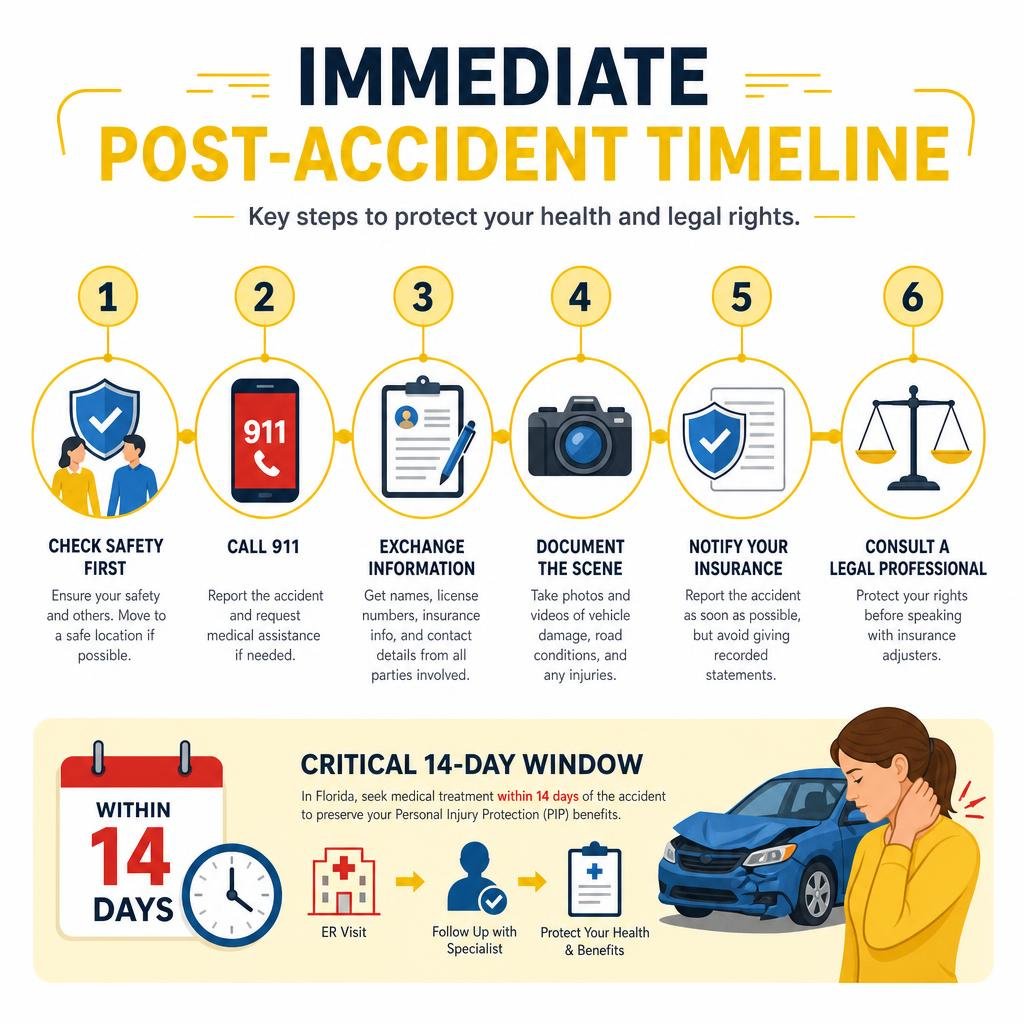
The scene of a car accident is often chaotic, but taking a few critical steps immediately can significantly impact your physical recovery and legal standing. Our priority should always be safety, followed by meticulous documentation.
First, ensure your safety and the safety of any passengers. If the accident is minor and it’s safe to do so, move your vehicle to the shoulder to prevent further collisions. Call 911 immediately if there are injuries, or to report the accident to the police. An official police report can be vital evidence later on.
Next, focus on collecting information and documenting the scene. Never admit fault or apologize, as these statements can be used against you by insurance companies. Instead, gather essential details from all parties involved: names, phone numbers, driver’s license numbers, license plate numbers, and vehicle identification numbers (VINs). This information is crucial for insurance claims and legal proceedings.

Take photographs of everything: vehicle damage from multiple angles, wide shots of the accident scene, road conditions, traffic signs, and any visible injuries you or your passengers have sustained. A short video narration can also provide valuable context. This comprehensive evidence collection creates a clear record of the incident. Many experts recommend keeping a small emergency kit in your glove compartment with a phone charger, notepad, and pen specifically for these situations.
Finally, notify your insurance company as soon as possible after the accident. While you should report the incident, avoid giving recorded statements to insurance adjusters before consulting with a legal professional. They are often looking for information to minimize payouts, and an experienced legal team can help you navigate these communications effectively.
The Critical 14-Day Window for Florida Car Accident Recovery
In Florida, specific legal requirements dictate the timeline for seeking medical attention after a car accident. To preserve your Personal Injury Protection (PIP) benefits, which are crucial for covering initial medical expenses, Florida law mandates that you seek medical treatment within 14 days of the accident. Failure to do so can result in the loss of these vital benefits, leaving you responsible for medical bills.
An emergency room visit, while essential for ruling out life-threatening trauma, often doesn’t detect soft tissue damage, ligament instability, or mild traumatic brain injuries (mTBI). These latent injuries, such as whiplash, can take 24 to 72 hours, or even up to two weeks, to manifest. Therefore, even if an ER doctor says you’re “fine,” it’s critical to follow up with a specialized medical evaluation within that 14-day window.
Furthermore, maintaining consistent medical treatment is paramount. Insurance adjusters actively look for gaps in medical appointments to argue that your injuries were not serious or that they are unrelated to the accident. Stopping treatment prematurely, even if you feel some pain relief, can be a major mistake. Joint capacity and full healing often take longer than the disappearance of initial pain, and discontinuing care too soon risks chronic post-traumatic arthritis and jeopardizes your legal claim. Therefore, adhere to all prescribed treatments and attend every scheduled appointment to build a strong, continuous medical record.
The Multidisciplinary Approach to Car Accident Recovery
Car accidents exert immense force on the body, particularly the musculoskeletal system. Even seemingly minor collisions can cause significant internal soft tissue injuries to the neck, back, and other areas, even if no external signs are visible. When a vehicle stops suddenly, the physical force continues through the occupant’s body, straining muscles, joints, nerves, and connective tissues. Recognizing this, a comprehensive, multidisciplinary approach to car accident recovery is essential for optimal healing and preventing long-term complications.

This approach often involves a combination of chiropractic care, physical therapy, and, when necessary, interventional pain management to address the full spectrum of injuries. Chiropractors specialize in the musculoskeletal system, assessing and treating damage to the spine, bones, muscles, and connective tissues through targeted treatments like spinal manipulations, massage, and decompression therapy. These interventions support the body’s natural healing processes and restore proper alignment.
Modern medicine has shifted away from the outdated “rest in a dark room” philosophy, favoring active rehabilitation. It’s crucial to continue treatment until you reach a formal discharge of Maximum Medical Improvement (MMI), rather than stopping as soon as pain temporarily decreases. This comprehensive strategy helps prevent the formation of defensive muscle tightening and scar tissue, which can lead to chronic pain if left unaddressed.
Physical Therapy and Phased Rehabilitation
Physical therapy plays a pivotal role in restoring function, strength, and mobility after a car accident. The recovery process is typically phased, adapting to your body’s healing journey:
- Weeks 1 to 2:The initial focus is on reducing pain and calming tissue inflammation. Gentle movements and modalities are used to manage acute symptoms.
- Weeks 3 to 6:As initial pain subsides, the focus shifts to restoring mobility and slowly introducing active strength training. This phase is critical for preventing stiffness and improving range of motion.
- Week 6 and Beyond:The long-term goal is to build strength, stability, and endurance, while also implementing strategies to prevent reinjury.
Consistency in attending physical therapy sessions and diligently performing home exercises makes a significant difference in recovery speed and completeness. Delaying rehabilitation allows defensive muscle tightening and scar tissue to form, which can significantly increase the risk of chronic, long-term pain.
One effective strategy in rehabilitation is the “3:1 loading microcycle.” This involves three weeks of progressively building load and intensity in exercises, followed by one week of reduced intensity. This approach helps prevent symptom flare-ups and allows the body to adapt and recover more effectively, leading to more sustainable progress.
At-Home Support Protocols During Car Accident Recovery
While professional medical care forms the backbone of recovery, consistent at-home support protocols are equally vital for accelerating healing and managing discomfort. We encourage our patients to view nutrition, hydration, and adequate sleep not merely as lifestyle choices, but as direct medical interventions.
- Heat Therapy and Epsom Salt Baths:Applying a heating pad, hot water bottle, or thermal wrap to injured areas can soothe tissues, block pain receptors, relax muscles, and boost circulation. Soaking in a hot bath, especially with Epsom salts, can help draw out toxins from the body, reducing inflammation and associated discomfort.
- Hydration:Drinking plenty of water daily is crucial. Damaged tissues require increased circulation to heal properly, and sufficient hydration boosts blood flow. Moreover, the physical formation of new cells, which replace those damaged in a car crash, requires ample fluid. Aim for 0.5 to 1 ounce of water per pound of body weight daily to flush out inflammatory byproducts.
- Gentle Exercise:While intense activity should be avoided, engaging in gentle, low-impact exercises like walking or swimming is highly beneficial. These movements work muscles gently to strengthen them and, importantly, release endorphins. Endorphins are natural hormones that block pain signals and can alleviate accident-related anxiety and stress.
- Rest and Nutrition:Prioritizing sleep and rest allows the body to dedicate its resources to regenerating damaged cells and repairing tissues. Alongside rest, a diet rich in high protein, Vitamin C, Calcium, and Vitamin D can significantly support tissue and bone healing.
Combining these at-home strategies with your professional treatment plan creates a powerful synergy for a faster, smoother, and more complete recovery.
Navigating Florida Insurance Claims and Legal Rights
Beyond physical healing, navigating the complexities of insurance claims and understanding your legal rights is a critical part of car accident recovery. The process can be overwhelming, but being informed empowers you to protect your interests.
One key aspect to understand is how fault is assigned and how it affects your settlement. While Florida is a no-fault state for initial medical benefits (PIP), it operates under a modified comparative negligence system for personal injury claims. This means that if you are found partially at fault for an accident, your potential settlement will be reduced by your percentage of fault. For example, if you are deemed 20% at fault for an accident with $100,000 in damages, your recovery would be reduced to $80,000. It is crucial to have skilled legal representation to argue against unfair fault assignments.
Another important consideration is “diminished value” for your vehicle. Even after perfect repairs, a car that has been in a significant accident is often worth less than an identical vehicle with a clean history. This inherent loss in market value is known as diminished value. You have the right to claim this loss. We recommend requesting an independent appraisal to accurately assess your vehicle’s diminished value and support your claim.
Many crash victims, not just in California but across the country, often leave substantial compensation on the table by settling too quickly without fully understanding their actual damages—both physical and financial. This is where seeking compassionate personal injury services becomes invaluable. A knowledgeable legal team can help you calculate all your losses, including medical bills, lost wages, pain and suffering, and property damage, ensuring you negotiate from a position of strength. Do not give recorded statements to insurance adjusters without first consulting an attorney, as these statements can be used to minimize your claim.
Understanding PIP vs. MedPay Coverage
When it comes to covering medical bills after a car accident, two common types of coverage often come into play: Personal Injury Protection (PIP) and MedPay. While both cover medical expenses, they operate differently and have distinct implications, especially in Florida’s no-fault system.
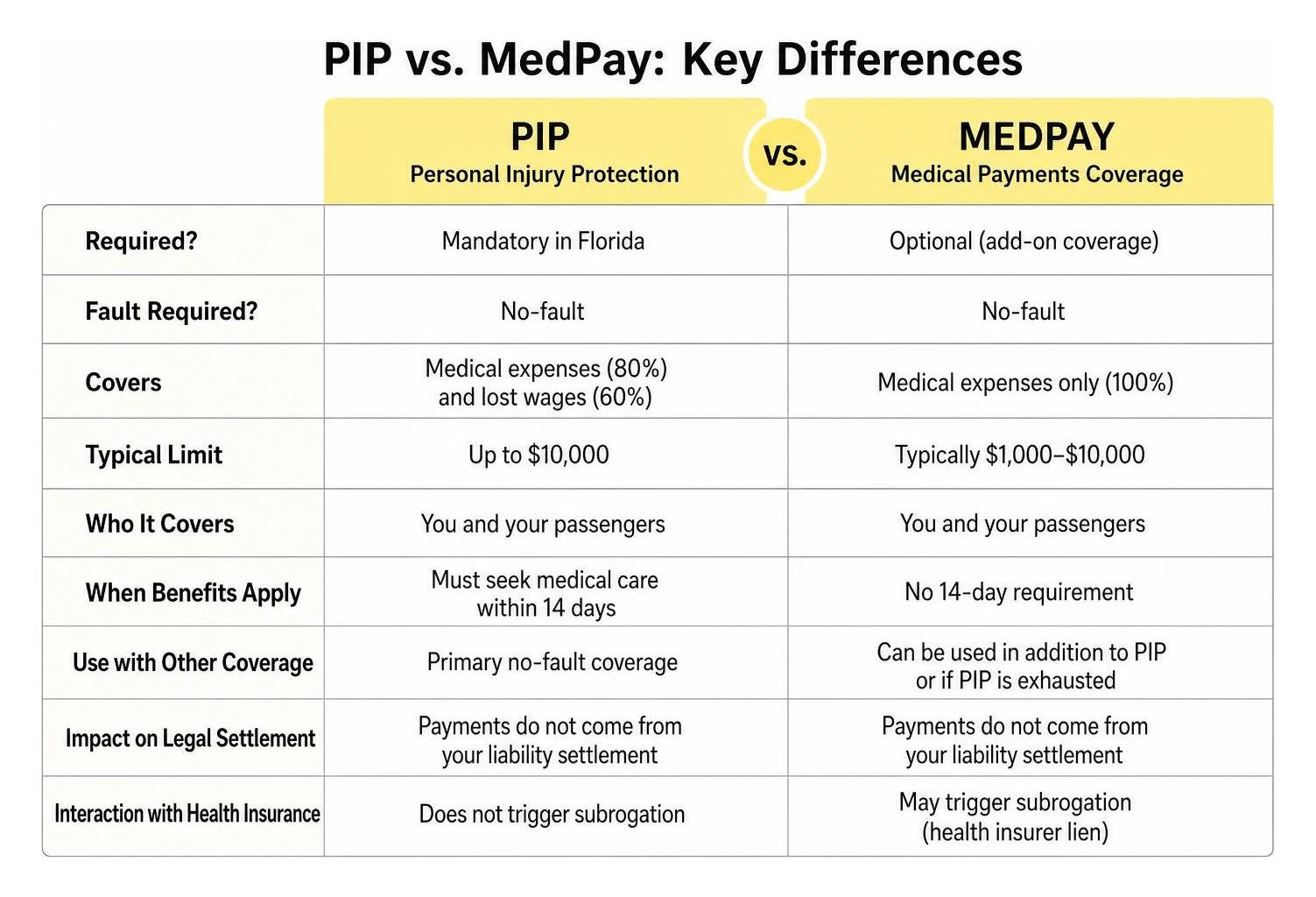
- Personal Injury Protection (PIP):In Florida, PIP is mandatory for all drivers. It is a “no-fault” coverage, meaning it pays for your medical expenses and a portion of your lost wages regardless of who was at fault for the accident. PIP typically covers 80% of reasonable and necessary medical expenses and 60% of lost wages, up to a limit (often $10,000). As discussed, you must seek medical attention within 14 days of the accident to qualify for these benefits.
- Medical Payments (MedPay):MedPay is an optional coverage that you can add to your auto insurance policy. Unlike PIP, MedPay generally covers 100% of medical expenses up to its specified limit (often ranging from $1,000 to $10,000). It can be used in addition to PIP, or as primary coverage if PIP is exhausted or not applicable. MedPay is also a no-fault coverage.
A critical difference lies in how these coverages interact with health insurance and legal settlements. Using your standard health insurance for auto accident injuries can trigger subrogation clauses. Subrogation is your health insurer’s right to recover the amount they paid for your treatment from any settlement you receive from the at-fault party. This means your health insurer could place a lien on your legal settlement, potentially consuming a significant portion of your financial recovery.
If your PIP or MedPay coverage is exhausted, or if you prefer to avoid the complexities of subrogation with your health insurance, you might consider treating on a lien basis using a Letter of Protection (LOP). Medical lien services allow healthcare facilities to provide you with treatment immediately, with the understanding that they will be paid directly from your future settlement, removing the upfront financial burden from you. This strategy ensures you receive necessary care without delay while your personal injury case is pending.
Frequently Asked Questions about Post-Crash Claims
Why does the ER saying “you’re fine” not mean you are uninjured?
It’s a common and dangerous misconception that if the emergency room clears you, you are completely uninjured. Emergency rooms are designed to rule out life-threatening emergencies such as severe fractures, internal bleeding, or major organ damage, often using X-rays and CT scans. Their primary focus is stabilization and preventing immediate danger.
However, ERs are not typically equipped to detect subtle soft tissue damage, ligament micro-tears, or mild traumatic brain injuries (mTBI). These latent injuries often don’t show up on standard ER diagnostics and can take anywhere from 24 to 72 hours, or even up to 7 to 14 days, to manifest symptoms. The “adrenaline mask” effect, where the body’s natural stress response chemically hides pain and internal damage immediately after a crash, further contributes to this delayed symptom onset. Therefore, an ER’s “all clear” simply means you are not in immediate life-threatening danger, not that you are free from all accident-related injuries. A follow-up with a specialized auto injury clinic is always recommended.
What is the Florida statute of limitations for a car accident lawsuit?
Understanding legal deadlines is crucial for preserving your right to pursue compensation. As of March 2023, Florida’s statute of limitations for personal injury claims arising from a motor vehicle accident is two years. This means you generally have two years from the date of the accident to file a lawsuit for negligence. If you miss this deadline, you could lose your right to seek compensation for your injuries, regardless of their severity or the extent of the at-fault party’s negligence.
This two-year limit, established by Florida HB 837, is a significant reduction from the previous four-year period. It underscores the importance of acting promptly after an accident. While two years might seem like a long time, the process of medical treatment, gathering evidence, and negotiating with insurance companies can be lengthy. Consulting with a qualified legal professional soon after your accident is essential to ensure all deadlines are met and your claim is properly preserved.
How do I manage the psychological impact of a car crash?
A car accident can leave deep emotional and psychological scars, even after physical injuries have healed. Statistics show that one in three car accident victims develops moderate to severe mental health problems, such as Post-Traumatic Stress Disorder (PTSD), anxiety, or depression. In fact, 45% of people in recovery begin taking antidepressants. We recognize that treating physical injuries without addressing emotional health leaves the recovery incomplete.
Managing the psychological impact requires proactive steps:
- Acknowledge and Validate:Understand that your feelings are normal responses to a traumatic event. It’s okay to feel fear, anger, sadness, or anxiety.
- Seek Professional Support:Cognitive Behavioral Therapy (CBT) has proven highly effective, reducing PTSD symptom severity in 60 to 80 percent of patients. Therapists can provide coping mechanisms and strategies to process the trauma.
- Build a Support System:Lean on friends, family, or support groups. Sharing your experiences can be incredibly therapeutic.
- Rebuild Confidence Behind the Wheel:Driving anxiety is common. Start with short drives in familiar, low-traffic areas. Gradually increase duration and complexity as you feel more comfortable. This exposure therapy can be very effective in desensitizing fear responses.
- Maintain Routines:Establishing consistent daily routines, prioritizing sleep, and engaging in activities you enjoy can help restore a sense of normalcy and control.
Addressing your mental and emotional well-being is as important as healing your physical injuries. Integrating psychological support into your overall recovery plan ensures a more holistic and complete return to your pre-accident life.
Conclusion
The journey of car accident recovery is multifaceted, encompassing immediate actions, diligent medical care, and strategic legal navigation. From the disorienting moments after a crash to the long-term process of healing, proactive steps are your most powerful tools.
We’ve emphasized the critical importance of seeking prompt medical attention, especially within Florida’s 14-day PIP window, to address both visible and hidden injuries. We’ve explored the benefits of a multidisciplinary approach, combining professional treatments like physical therapy and chiropractic care with essential at-home protocols. Furthermore, understanding your legal rights, from navigating insurance claims and diminished value to the intricacies of Florida’s comparative negligence laws and the statute of limitations, is vital for protecting your future.
By taking these steps—documenting thoroughly, adhering to medical advice, maintaining consistent treatment, and seeking expert legal guidance—you empower yourself to navigate this challenging period effectively. Our goal is to ensure you not only achieve physical healing but also secure the comprehensive rehabilitation and legal protection you deserve.