Venice is unlike any other city in the world, and that uniqueness comes with a logistical reality that catches most visitors off guard. There are no cars, no taxis, no flat pavements stretching from A to B. Instead, there are 400 bridges, dozens of canals, and a labyrinth of narrow calli that twist and double back on themselves in ways that no map fully prepares you for. Getting around Venice requires a different mindset and a different approach to what you carry with you.
The good news is that once you understand how the city works, navigating it becomes one of the most enjoyable parts of the trip. The key is arriving prepared, and that starts with one simple decision: travel light, or at least make sure your luggage is not travelling with you thanks to secure luggage storage.
The Venice logistics problem
Most visitors arrive at Santa Lucia station or Piazzale Roma and immediately face the same challenge: they need to get to their accommodation, drop their bags, and then find their way around a city with no wheeled transport and more than 400 sets of steps. If your hotel is in Dorsoduro or Cannaregio, that journey alone can take 30 to 40 minutes on foot, bridge after bridge, suitcase in tow.
The problem compounds when you factor in check-out times. Most hotels in Venice release rooms by 10 or 11 AM, but flights and trains out of the city are often in the late afternoon or evening. That leaves visitors with several hours to fill and nowhere to put their luggage, which means either paying to extend the room, sitting in a café with their bags, or dragging everything across the city.
Venice’s cobblestone fondamenta and steep bridge steps make rolling luggage genuinely difficult. Unlike Rome’s sampietrini, which are at least flat, Venice’s bridges require lifting bags entirely at each crossing. With a full-sized suitcase, every bridge becomes a minor ordeal.
Why Rialto is the strategic centre of Venice
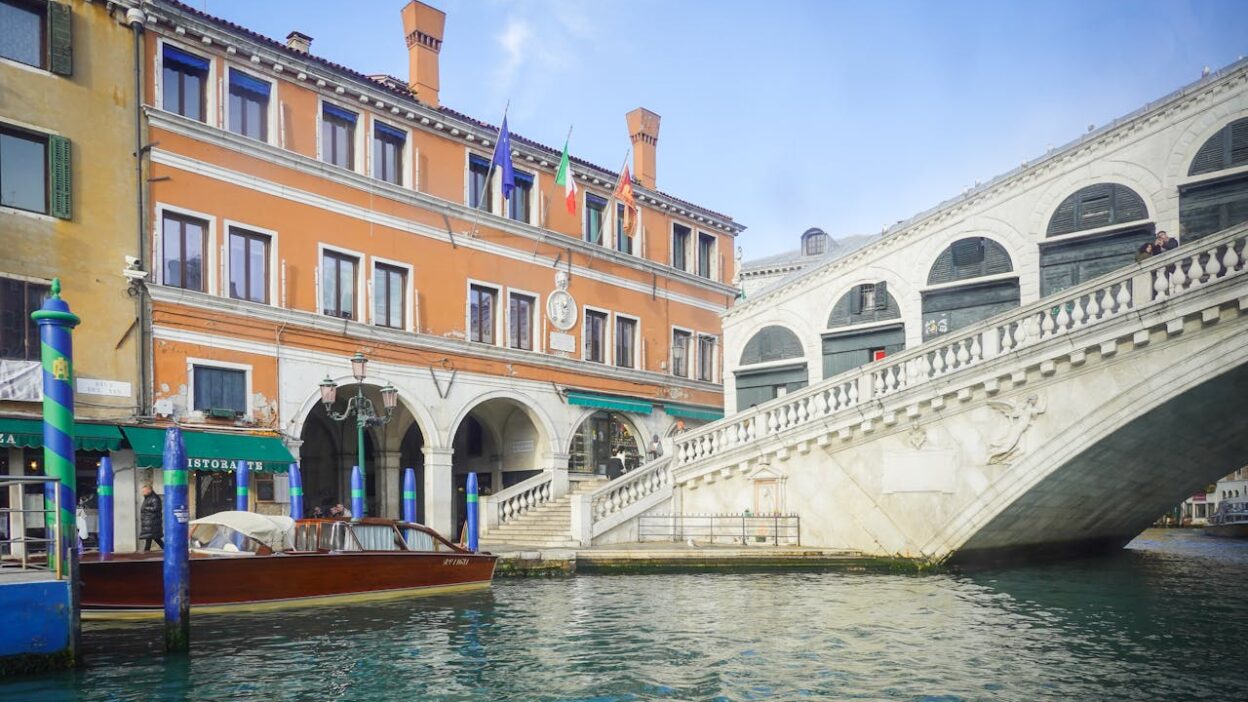
If you are trying to understand Venice’s geography, Rialto is the best place to start. The Rialto Bridge is not just the most famous crossing in the city, it is the point around which the historic centre organises itself. The main vaporetto lines converge nearby, the market runs along the Grand Canal just to the north, and the routes toward San Marco, the Accademia, and the train station all radiate outward from this point.
This makes the Rialto area the most practical base for a day of exploration. Whether you are heading toward the Doge’s Palace, wandering through the market stalls in the early morning, or catching a vaporetto toward Murano, the Rialto puts you within reach of all of it. It is also, for this reason, the ideal place to use a centrally located luggage storage service before you start exploring Venice.
Using convenient luggage storage near Rialto means you can drop your bags at a central, easily accessible point and spend the rest of your time in Venice exactly as it deserves to be spent — walking at your own pace, crossing bridges without stopping to lift a suitcase, and ducking into the narrow side streets that most tourists miss entirely because they are too busy navigating their luggage.
For travellers arriving early in the morning or leaving late in the evening, automated luggage lockers provide additional flexibility. Available 24/7 and often spacious enough to hold more than one suitcase, they offer a convenient way to explore the city hands-free while keeping costs down.
How to move around Venice efficiently
Once you are bag-free, Venice becomes a different city. A few practical principles help.
Walk first, vaporetto second. The water buses are essential for longer crossings and for reaching the outer islands, but for most journeys within the historic centre, walking is faster and far more rewarding. The vaporetto stops at every landing stage, which means a short trip can take longer than expected. Walking also means you see the city rather than floating past it.
Learn the six sestieri. Venice is divided into six neighbourhoods: San Marco, Castello, Cannaregio, Santa Croce, San Polo, and Dorsoduro. Each has its own character, and understanding which one you are in helps enormously with orientation. Yellow signs mounted on walls throughout the city point toward the main landmarks as San Marco, Rialto, Ferrovia (the station), and Piazzale Roma. Follow them when you are lost, ignore them when you are not.
Cross the Grand Canal at the traghetto points. There are only four bridges spanning the Grand Canal, but there are also traditional gondola ferry crossings called traghetti at several points along it. They cost around €2, take 90 seconds, and are used daily by Venetians. They are also one of the most quietly authentic experiences the city offers.
Go early or go late. The area around San Marco and the Rialto Bridge is genuinely congested between 10 AM and 5 PM in the high season. The same streets at 8 AM or after 7 PM feel like a different city. Venice rewards early risers and people willing to linger into the evening.
Making the most of your time
The visitors who enjoy Venice most are almost always the ones who slow down and stop trying to cover everything in a single day. The city is small enough to cross on foot in under an hour, but rich enough to absorb days of attention. A morning at the Rialto market, an afternoon in the quieter streets of Castello, a cicchetto at a local bar before dinner… These are the rhythms Venice is built for, not the sprint from monument to monument that the crowds encourage.
Getting your logistics right at the start, knowing where to leave your bags, how to read the city’s geography, and when to walk versus when to take the water frees you to be present in a place that genuinely rewards presence. Venice is not a city you tick off a list. It is one you return to, and usually sooner than you planned.