Key Takeaways
- Business Information Systems equip organizations with real-time data that enables them to make informed, quick, and accurate decisions.
- They bridge departmental divides, improving communication and collaboration throughout a company.
- Operational efficiency increases as BIS automates repetitive tasks and streamlines business processes.
- Adopting BIS can significantly enhance customer service by providing deeper insights into client behavior and preferences.
- Challenges remain around data quality and integration, which organizations must resolve for BIS to reach its full potential.
In today’s rapidly evolving business environment, organizations face an ever-increasing volume of data and complex operational challenges. Making informed decisions requires more than intuition; it demands accurate, timely, and relevant information. Business information systems play a critical role in this process by collecting, processing, and analyzing data, enabling managers and executives to make decisions with greater confidence. These systems can track performance metrics, identify trends, and provide actionable insights, supporting both strategic planning and day-to-day operations.
For professionals looking to deepen their understanding of how technology supports organizational decision-making, an online MIS degree provides a structured pathway to develop expertise in information management, analytics, and system integration. By combining practical skills with theoretical knowledge, such a program equips learners to evaluate business problems critically and implement solutions using information systems. Ultimately, integrating technology into decision-making processes strengthens organizational efficiency and enhances the ability to respond to dynamic market conditions.
Real-Time Data Access
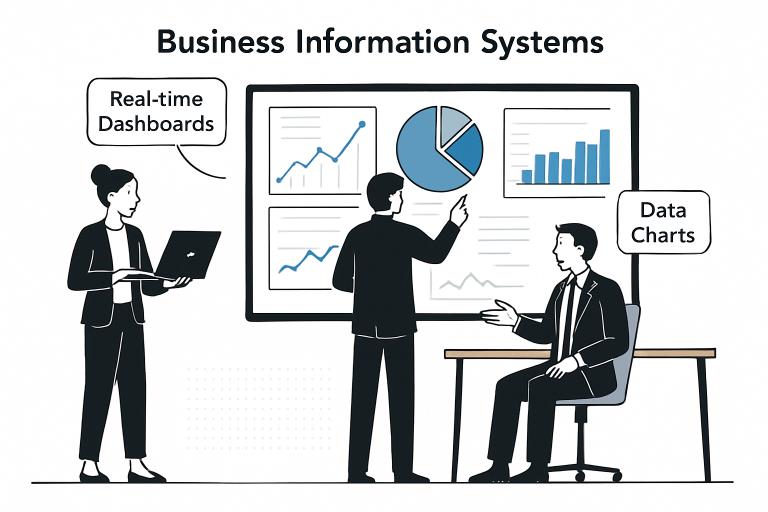
Speed is essential to decision-making, and BIS enables rapid access to accurate data. Real-time dashboards enable leaders to assess current performance, monitor sales, evaluate inventory, and identify emerging trends before they become mainstream. For example, a global retailer can instantly review regional sales figures to tweak marketing strategies or quickly redistribute stock to high-demand locations. With such timely insights, businesses can adjust promotions, display recommendations, and staffing levels based on the most current information available. This immediate data not only enables faster responses but also supports proactive business planning, transforming massive data streams into tangible business intelligence that keeps organizations ahead of the curve. Additionally, surveillance of up-to-the-minute data helps avert costly mistakes and streamlines the implementation of new strategies as soon as new information emerges.
Enhanced Communication and Collaboration
BIS breaks down communication silos by integrating data and workflows across departments. Teams in finance, marketing, and operations can all access a single source of truth, eliminating confusion caused by outdated or inconsistent data. It becomes far easier to align on targets, share progress, and collectively adjust strategies when all teams rely on a unified platform. This shared foundation accelerates collaborative projects and supports informed group decisions, especially for larger organizations or companies operating across multiple geographies. Collaborative systems supported by BIS also facilitate secure information sharing, even when teams are remote or distributed worldwide. It ensures that everyone is working in harmony toward strategic objectives and not duplicating efforts due to a lack of information, thereby reducing waste and preventing misaligned outcomes. Over time, this unified approach strengthens company culture and boosts employee morale, as clarity around roles and shared goals increases.
Improved Customer Service
Customer expectations are higher than ever, and BIS can give businesses an advantage by providing detailed insights into consumer behavior and preferences. By analyzing purchase histories, feedback, and interaction patterns, companies can personalize services, predict customer needs, and quickly resolve issues. This not only leads to more satisfied customers but can also boost sales, as tailored recommendations and faster service drive engagement. Equipping customer service agents with immediate access to information, such as complaint histories and previous interactions, enables quicker, more empathetic responses. Ultimately, businesses that excel at using BIS for customer service can differentiate themselves in competitive markets, often turning first-time buyers into repeat customers and brand advocates.
Operational Efficiency
BIS streamlines internal processes and automates repetitive tasks such as data entry, payroll, and inventory monitoring. Automation reduces the risk of human error and frees staff to focus on more strategic initiatives. Employee productivity increases as they are no longer slowed down by time-consuming manual tasks, allowing them to innovate and engage in creative problem-solving. By making processes more efficient, companies can lower operating costs, reduce delays, and better allocate resources. For example, production systems integrated with BIS can automatically reorder supplies when inventory drops below a certain level, minimizing downtime and improving workflow. Businesses that utilize information systems see measurable improvements in output and profitability. These operational gains give companies the flexibility to invest in growth and enhance the quality of their offerings, helping maintain long-term competitiveness.
Challenges in Implementing BIS
Despite these benefits, implementing and optimizing BIS presents real challenges. High-quality, consistent data is essential. If a company relies on incomplete or inaccurate data, it risks making poor decisions that could negatively impact performance. Data silos, resistance to adopting new technology, and inadequate employee training are among the hurdles organizations face when rolling out new systems. Additionally, integrating new systems with legacy infrastructure is complex and may disrupt business operations if not managed diligently. The cost and time associated with migration, as well as potential downtime, are significant considerations for any company considering a BIS upgrade. To ensure successful adoption, organizations must invest in employee training, robust IT support, and continuous system evaluation. Addressing these potential pitfalls early paves the way for long-term BIS effectiveness. Sustained leadership support and clear communication about the benefits of BIS can foster greater buy-in and ensure stakeholders remain engaged throughout the implementation process.
Conclusion
Business Information Systems have redefined how organizations approach decision-making. By delivering real-time data, fostering transparent communication, increasing efficiency, and elevating customer experience, BIS provides leaders with the resources required to guide their organizations confidently into the future. Overcoming the initial challenges of integration and data quality ensures the full value of these systems is realized. As technology continues to evolve, so too will the impact of BIS, making them a cornerstone of successful enterprise strategy. Forward-thinking organizations that embrace these systems now will be best positioned to navigate the uncertainties of tomorrow’s business world and create sustainable value for years to come.