Key Takeaways
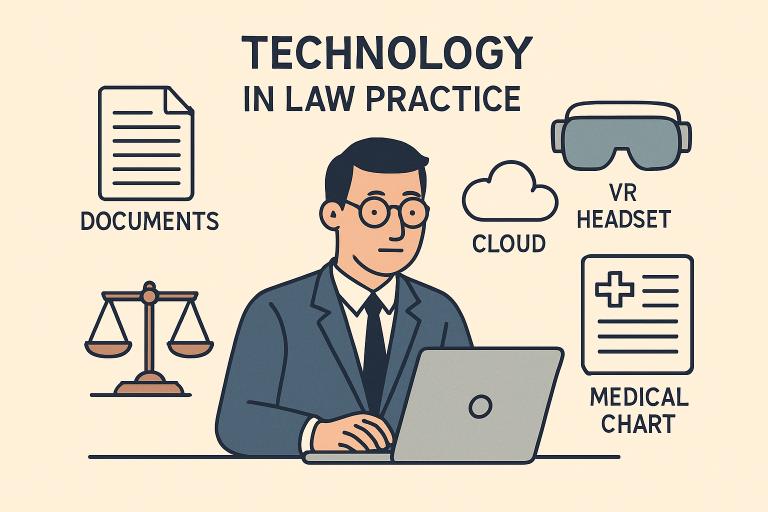
- AI and data analytics are helping lawyers analyze evidence and build case strategies quickly and accurately.
- Virtual reality and 3D reconstructions make accident scene presentations more immersive and understandable.
- Digital health records streamline access to critical medical information for injury assessments.
- Cloud-based case management improves collaboration and client communication.
- Telemedicine ensures prompt medical consultations, regardless of location or client mobility.
Technology is fundamentally reshaping the landscape of personal injury law. New advancements are making it easier for attorneys and clients alike to investigate, prepare, and resolve cases more quickly and precisely. From artificial intelligence to virtual reality, lawyers are leveraging digital tools to drive better outcomes and more efficient processes. With innovative law firms such as Fasig | Brooks Law Offices adopting these technologies, clients can expect a more transparent and supportive legal journey than ever before.
Tech-driven enhancements reach every part of the process, including evidence collection, case management, and medical evaluation. These innovations are particularly crucial as legal matters become increasingly complex and the stakes for claimants rise. Attorneys can now gather and present data in ways that were inconceivable a decade ago. By integrating digital solutions, lawyers can simplify communication, improve evidence integrity, and help clients understand what to expect at every step.
Tech adoption in legal spaces enhances both the process and the client experience. These tools are not replacing legal expertise but are helping attorneys focus their efforts where human judgment is most critical. Clients benefit from faster resolutions, better documentation, and fewer hurdles related to scheduling or evidence gathering.
As leading outlets such as The Washington Post report, these legal tech developments have wide-reaching effects on both law firms and the people they serve. By maximizing efficiency, lawyers can devote more resources to advocacy, strategy, and client communication.
Artificial Intelligence in Evidence Analysis
Artificial intelligence is quickly becoming an indispensable tool in personal injury law. AI can rapidly process and analyze large datasets, such as insurance documents, police reports, and medical records, that would take a legal team days or even weeks to handle. Machine learning algorithms detect patterns, spot relevant precedents, and surface inconsistencies or omissions in the evidence. This helps attorneys develop stronger, more customized case strategies and can uncover key facts that might be missed with manual review. AI’s objectivity can also contribute to fairness in case evaluations.
Virtual Reality and 3D Accident Reconstructions
Virtual reality and 3D modeling tools are transforming how attorneys present complex accident scenarios in courtrooms. With VR, jurors and judges can experience a digital recreation of the scene, walking through it as if they were present. This technology provides powerful visualization that can illuminate the sequence of events and clarify nuanced factors such as positioning, speed, and timing. By presenting the accident from multiple perspectives, immersive technology often makes the facts clearer than simple verbal or photographic evidence.
Digital Health Records and Their Impact
Switching to digital health records (EHRs) means medical histories and treatment notes are securely stored online and easily accessible to authorized parties. Unlike traditional paper files, which can be incomplete or lost, DHRs can be retrieved instantly and shared securely with lawyers and courts. This transparency streamlines case assessment, prevents delays, and allows consistent access to accurate information throughout the claims process. As reported by California Healthline, the digital transformation of health care documentation is essential for reducing errors and enhancing continuity of care, both of which are vital to personal injury cases.
Cloud-Based Case Management Systems
Cloud-based case management platforms have revolutionized legal workflows. Attorneys can now organize documents, evidence, correspondence, and deadlines in a single digital system accessible from anywhere. Secure sharing also makes it easier for legal teams, experts, and clients to collaborate efficiently. Built-in features such as automated reminders, document version control, and secure client portals help attorneys stay on top of every case and reduce administrative paperwork. Cloud case management also protects sensitive documentation with robust backup and cybersecurity protocols.
Telemedicine and Remote Consultations
Telemedicine is transforming how legal professionals conduct medical evaluations for personal injury claims. Clients with mobility challenges or living in remote areas can schedule consultations with medical experts via video or phone. This rapid access to care enables timely diagnoses and recommendations, resulting in a more complete and accurate understanding of injuries. It also allows for ongoing follow-ups that can be essential in long-term recovery or disability cases.
Data Analytics and Predictive Modeling
Data analytics and predictive modeling are changing legal strategy by offering evidence-backed forecasts of case outcomes. These tools crunch historical data to predict likely settlement amounts, trial outcomes, or timelines based on comparable claims. For clients, this means more realistic expectations and well-informed decisions about whether to settle, proceed to trial, or seek further negotiation. For attorneys, it is an opportunity to optimize strategies and minimize risks based on statistical probability rather than solely relying on experience or anecdote.
Conclusion
The rapid adoption of technology in personal injury law is revolutionizing how cases are built, presented, and resolved. From speeding up evidence analysis with artificial intelligence to improving medical access through telemedicine, these digital tools are making the process more efficient, accurate, and client-focused. As legal professionals continue to embrace innovative solutions, claimants can anticipate greater transparency, faster resolutions, and improved outcomes at every step.