Key Takeaways
- Play-based learning supports children’s cognitive, social, and emotional growth in meaningful ways.
- Incorporating play into early education promotes deeper engagement and love for learning.
- Both structured and unstructured play are important for holistic child development.
- Parental involvement in play enhances learning outcomes and fosters stronger parent-child relationships.
Play is more than just an activity—it’s an essential part of early childhood education that shapes the way children think, socialize, and express themselves. Through play, young children build crucial foundational skills while exploring their environment and making sense of the world around them. Educational settings that center on play enable learners to discover joy and foster deeper engagement with classroom material. For families seeking high-quality early learning, exploring programs like private preschools in Fairfax County, VA can provide a robust introduction to play-based education in nurturing environments.
The concept of play-based learning has gained recognition among educators and researchers for its profound impact on cognitive development and school readiness. Whether through imaginative games, collaborative projects, or hands-on exploration, playful activities reinforce critical thinking and problem-solving abilities. Additionally, children who learn in play-rich environments tend to approach challenges with creativity and resilience—traits that benefit them well beyond their early years.
As education systems continue to evolve, integrating purposeful play is increasingly seen as a best practice for creating motivated and capable learners. Structured play offers opportunities for targeted skill development, while unstructured play nurtures initiative, independence, and intrinsic motivation. Together, these approaches lay the groundwork for lifelong learning and curiosity.
Early childhood classrooms that champion play not only meet developmental needs but also foster emotional security and positive relationships. When children can express themselves freely and collaborate with peers, they build empathy, conflict resolution skills, and emotional regulation—cornerstones of holistic development.
The Role of Play in Cognitive Development
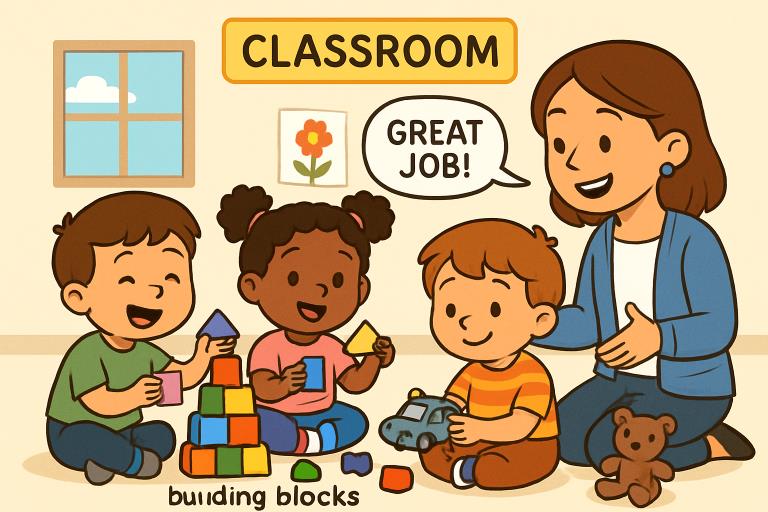
Play is a dynamic avenue for children to test hypotheses, investigate outcomes, and make critical decisions in real time. Activities such as building with blocks or enacting pretend scenarios help children develop spatial awareness, understand cause and effect, and refine logical thinking. According to the New York Times, extensive research confirms that play is integral to cognitive growth, supporting everything from early literacy to executive function.
In play-based learning, children take the lead—often negotiating rules, identifying problems, and experimenting to find solutions. These interactions are not only fun but also instrumental in developing attention span, memory retention, and the ability to transfer learned skills to new situations.
Social and Emotional Benefits of Play
Social interaction is at the heart of play, offering children rich opportunities to navigate friendships, resolve conflicts, and express their feelings. By participating in cooperative games and imaginative role-plays, children develop empathy, learn to take turns, and improve their effective communication skills. Emotional intelligence developed through play enables children to understand their feelings more effectively and articulate them more clearly. As they navigate complex social scenarios, they form healthy attachments, boost self-esteem, and become more resilient in the face of challenges.
Implementing Play-Based Learning in Educational Settings
Effectively integrating play requires balancing structured activities, where objectives are guided by educators, with unstructured opportunities for self-directed creativity. Structured play might involve group science experiments, story-based challenges, or art projects with a planned outcome. Unstructured play, in contrast, lets children invent their own games, explore nature, and pursue personal interests on their own terms.
Leading organizations, such as the National Association for the Education of Young Children (NAEYC), provide comprehensive resources for educators seeking to design balanced, play-focused curricula. Teachers benefit enormously from training that enables them to scaffold learning while valuing children’s interests and agency.
Challenges and Considerations
While the advantages of play-based learning are well-documented, schools and caregivers may encounter obstacles. Standardized testing, curriculum constraints, and a lack of professional development can limit the adoption of play-centered approaches. Additionally, outdated perceptions about play sometimes lead to its marginalization in the classroom. Overcoming these barriers requires ongoing advocacy, investment in educator training, and cultural shifts that honor the true educational value of play.
Parental Involvement in Play-Based Learning
A child’s development flourishes when parents are active participants in play at home. Collaborative activities, such as storytelling, building forts, gardening, or playing cooperative board games, all enhance skills learned at school while deepening parent-child bonds. These shared moments provide parents with valuable insights into their child’s strengths and interests, making it easier to support learning across various contexts.
Schools can support this dynamic by providing families with ideas for play-based activities and emphasizing the importance of dedicated playtime outside of structured educational environments.
Global Perspectives on Play-Based Learning
Play takes on different forms around the world, reflecting diverse educational philosophies and cultural values. The Anji Play program in China, for example, centers on self-determined play—giving children the freedom to select their activities, take intellectual and physical risks, and reflect on their experiences. Such globally acclaimed approaches inspire educators everywhere to value children’s autonomy within playful learning frameworks.
Looking internationally, Scandinavian countries have long integrated play as the bedrock of early education, emphasizing child-led learning and outdoor exploration as key to promoting well-being and academic success.
Final Thoughts
Embracing play-based learning in early childhood education is vital for cultivating curious, confident, and capable children. By integrating play into classroom routines and home life, educators and families create rich environments that foster growth across all domains—cognitive, social, and emotional. As play is increasingly recognized as a cornerstone of effective learning, adopting play-based strategies ensures that children develop the skills and attitudes necessary to thrive, both now and in the future.