Key Takeaways
- Customer interactions are a goldmine of data that, when analyzed effectively, can inform business strategies.
- Advanced technologies, such as AI and machine learning, are essential for processing and interpreting vast amounts of unstructured data.
- Implementing conversation intelligence tools can lead to improved customer experiences and operational efficiencies.
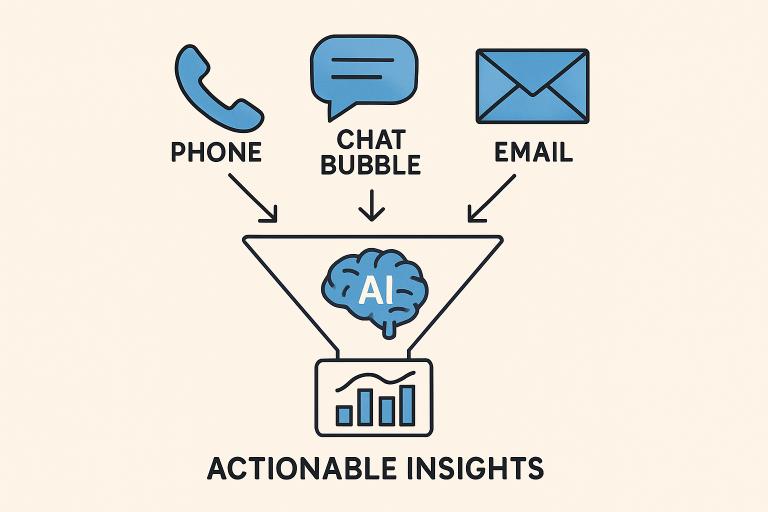
In today’s highly competitive business landscape, the key to growth and customer loyalty lies in understanding and leveraging every customer interaction. Whether it’s a support call, an email thread, or a quick conversation through a chatbot, each dialog holds the potential to inform critical business decisions. Integrating AI-powered conversation intelligence software enables companies to quickly transform these exchanges into actionable, data-driven insights that can enhance both customer experience and operational efficiency.
Businesses are flooded with vast amounts of customer interaction data across multiple communication channels. The challenge is no longer just about collecting this data, but about filtering through the noise and extracting actionable intelligence to drive better outcomes. By harnessing advanced analytics and artificial intelligence, organizations can identify recurring issues, uncover hidden opportunities, and proactively address evolving customer needs.
Smart, practical analysis of conversations can shine a new light on customer sentiment, expectations, and challenges. Companies equipped with the right tools are well-positioned to create hyper-personalized experiences, quickly adapt their strategies, and differentiate themselves from competitors. This shift not only enhances customer relationships but also has a direct impact on loyalty and lifetime value.
Turning raw conversations into meaningful insights isn’t just a trend—it’s fast becoming a necessity for businesses that wish to stay ahead in a data-driven ecosystem. The transformative potential of conversation intelligence is being realized across various industries, including financial services, healthcare, and beyond.
Understanding Customer Interactions
Customer interactions encompass every touchpoint between a business and its customers, including phone calls, emails, live chat, social media messages, and in-person communications. Each interaction reveals valuable information—ranging from customer satisfaction and preferences to direct feedback on product performance and service experiences. Yet, interpreting this sprawling collection of data can be difficult without a systematic approach to analysis.
Forward-thinking organizations are recognizing that these touchpoints are more than just routine transactions; they are essential to the overall customer experience. They are opportunities to learn directly from the voice of the customer, identify pain points, and rapidly adapt to shifting market demands. Capturing the full scope of these insights is now made easier by digital transformation and AI-driven analytics.
The Role of AI in Conversation Analysis
Modern advancements in artificial intelligence have redefined how companies analyze customer interactions. AI-powered tools go far beyond simple keyword scanning. They use machine learning to process large volumes of unstructured data, identifying trends, sentiments, and emerging topics that might otherwise go unnoticed. For example, natural language processing (NLP) algorithms can analyze conversations to determine whether customers are satisfied, frustrated, or at risk of churning.
This next-level analytical power enables organizations to achieve near-instant insights that were previously impossible to attain at scale. Teams can now spot patterns in their customer feedback, recognize recurring service issues, and understand the underlying reasons behind customer decisions. As Forbes notes, such AI-driven processes are fundamental in enabling proactive and strategic business moves.
Implementing Conversation Intelligence Tools
Transforming conversations into actionable intelligence starts with specialized software platforms known as conversation intelligence tools, which utilize AI and machine learning to analyze customer communications across various channels. Important features of these tools include: sentiment analysis for real-time understanding of customer emotions; topic modeling for identifying recurring themes; trend detection to spot new opportunities or concerns early; and performance metrics to evaluate agent effectiveness and process quality. Successful implementation necessitates integration with existing customer relationship management (CRM) and communication platforms, with the most effective systems embedding actionable insights into daily workflows. This empowers both frontline staff and leadership to make informed, data-driven decisions efficiently.
Benefits of Actionable Intelligence
Turning customer conversations into actionable insights drives major value across multiple areas of business:
- Enhanced Customer Experience:Real-time understanding of customer sentiment enables organizations to tailor responses and improve satisfaction.
- Operational Efficiency:Automation and analytics can shorten feedback loops, helping businesses resolve issues faster and allocate resources more effectively.
- Informed Decision-Making:Synoptic, data-driven overviews allow leaders to prioritize initiatives, refine offerings, and identify growth opportunities.
Industry studies reported by Harvard Business Review confirm that companies leveraging these tools consistently outperform competitors in customer retention and operational agility.
Challenges and Considerations
While the benefits are clear, businesses must also navigate significant challenges when implementing conversation intelligence solutions:
- Data Privacy:Ensuring compliance with regulations and maintaining customer trust is vital. Strict data protection standards must be upheld at every stage.
- Integration:Seamless incorporation with existing systems is critical to avoid data silos and workflow interruptions.
- Accurate Interpretation:Human oversight remains essential for contextualizing AI-driven insights and preventing misinterpretations that could lead to flawed decision-making.
Real-World Applications
Organizations across sectors—from telecom to e-commerce—are using conversation intelligence to drive results. For example, a customer experience technology leader recently integrated advanced AI into its feedback systems. This move reduced feedback analysis times by over 50%, enabling managers to act on issues and opportunities in near real-time and achieve a measurable business impact. In healthcare, similar approaches have enabled providers to enhance patient engagement and satisfaction by promptly responding to shifts in sentiment and feedback trends.
Future Trends in Conversation Intelligence
The future of conversation intelligence is characterized by key trends, including increased personalization, real-time analysis, and enhanced data integration. Enhanced AI models are expected to deliver deeper insights, enabling organizations to create tailored experiences and offers for their customers. Advances in computing power will facilitate nearly instantaneous analysis of interactions, offering continuous support for customer engagement teams. Additionally, integrating conversation data with various other data types, such as behavioral, transactional, and demographic data, will allow businesses to achieve a comprehensive understanding of the customer journey.
Conclusion
Adopting AI-powered conversation intelligence transforms every customer interaction into a strategic asset. By systematically analyzing these conversations for key insights, businesses can enhance customer satisfaction, streamline operations, and make more informed decisions for long-term growth. The organizations that harness these tools today will set the benchmark for customer-centricity and business agility in the years ahead.