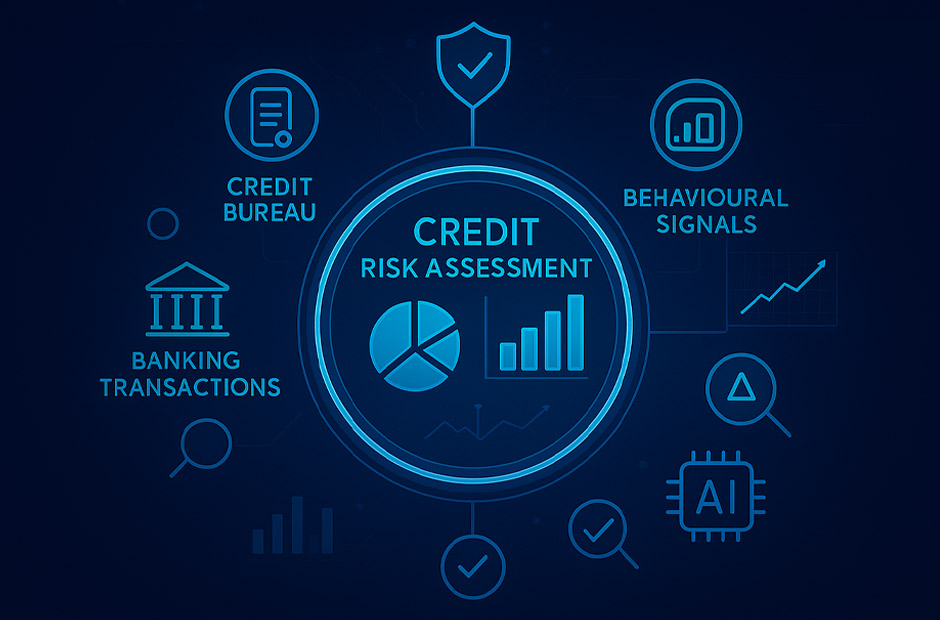
A lending organization’s credit risk assessment strategy can improve a borrower’s financial stability. A robust assessment strategy helps to mitigate potential losses and create a healthy loan portfolio. This assessment usually relies on borrower-specific and external elements. Here are a few factors that influence the assessment of credit risk to help you make informed lending decisions:
Credit History
A borrower’s pattern in past payments can help you determine their likelihood of loan repayment. If they have a good credit score, they likely have a track record of managing debts responsibly. This borrower may repay on time, qualifying them for easier credit approvals and better loan terms.
Assessing credit history helps lending organizations identify borrowers with poor credit scores. A low score usually results from a borrower’s history of mismanaged credit. This borrower may have a higher probability of failing to honor their financial obligations. During assessment, lenders should check a borrower’s outstanding debt and employment stability. If the borrower has a stable job and no outstanding debt, they have higher chances of being able to repay the loan.
Economic Conditions
Economic conditions are variables outside a borrower’s control that may influence effective credit risk assessment practices. When evaluating economic conditions, pay attention to inflation, employment, and exchange rates. A strong economy could mean low inflation and fixed exchange rates. These favorable economic conditions allow a borrower’s cash flow to increase. Employed borrowers may experience better job security and potential wage increases; these factors are key indicators of a borrower’s ability to pay debts.
Cash Flow
Lenders use cash flow data to predict a borrower’s probability of defaulting and meeting financial obligations. You can use it to determine a borrower’s financial health based on various aspects; this includes their income levels, available cash, and debt-to-income ratios. A consistent and positive cash flow shows lenders an individual’s capacity to manage their financial obligations.
If the borrower has an ongoing negative cash flow, this could serve as a warning sign of potential loan default. When conducting cash flow analysis, look into a borrower’s fixed expenses, including rent and utilities. This may help you determine the cash a borrower has after expenses to service a new debt.
Value of Collateral
To include collateral, a borrower pledges a valuable asset, like their car or home, as security for a loan. If the borrower fails to pay their loan, lenders may seize the asset and sell it. The amount earned after selling the collateral is used to mitigate losses. A detailed evaluation of collateral requires determining the condition and market value of a borrower’s proposed asset. It also involves determining how easily it can be sold in the market.
If a borrower fails to pay their loan, their higher-value asset may have greater recovery after seizure and sale. This lowers the loss given default (LGD), protecting the lender’s capital. High-quality collateral serves as a motivator for borrowers to service their debt. The commitment to paying the loan may help them avoid losing their asset.
Geopolitical Factors
Geopolitical events are other variables outside a borrower’s control that influence an effective assessment of credit risk. These events may range from trade disputes to political instability and sanctions. These geopolitical issues sometimes introduce substantial uncertainty in the economy, weakening a borrower’s financial health. Lenders should identify vulnerabilities related to the borrower’s financial market and economy. Geopolitical issues that disrupt the economy may weaken a borrower’s capacity to service debt.
Conduct Proactive Credit Risk Assessment
A thorough assessment of credit risk helps a lending company reduce financial losses. This approach enables lenders to determine the likelihood of default before lending money to someone. Contact a professional consultant today to help you with credit risk assessment, enabling you to make informed lending decisions.